
We are a collective of Indigenous Bunun farmers from eastern Taiwan, primarily based in Zhuoqing Village (including Lamuan, Takluk, and Saiku Tribes). Zhuoqing Village is situated on the edge of Yushan National Park, an area surrounded by forests and streams where most of the residents are Bunun people.
Historical context and environmental transition
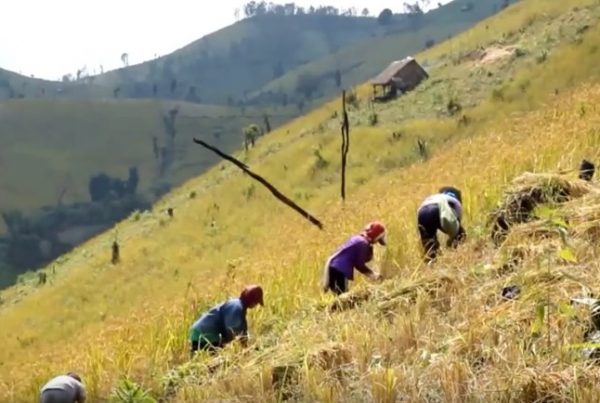
Influenced by Japanese colonial administration (1895–1945) and the subsequent pressures of 20th-century modernisation, the Bunun people’s living environment and agricultural systems have undergone a profound transformation. Our ancestors transitioned from mountain forests at elevations of 1,000–2,000 metres to foothills and river valleys below 300 metres.
Correspondingly, agricultural practices shifted from self-sufficient, low-density shifting cultivation – characterised by polyculture (millet and legumes), agroforestry, and wild foraging – to state-mandated, market-driven sedentary rice monoculture. The 1960s saw the “Green Revolution,” where plant breeders increased rice yields across Asia by breeding high-yield varieties, which led to the widespread adoption of conventional farming which used synthetic pesticides and fertilisers. This in turn resulted in the erosion of Traditional Ecological Knowledge (TEK) and Indigenous practices, thereby disrupting the biocultural balance between people and nature.
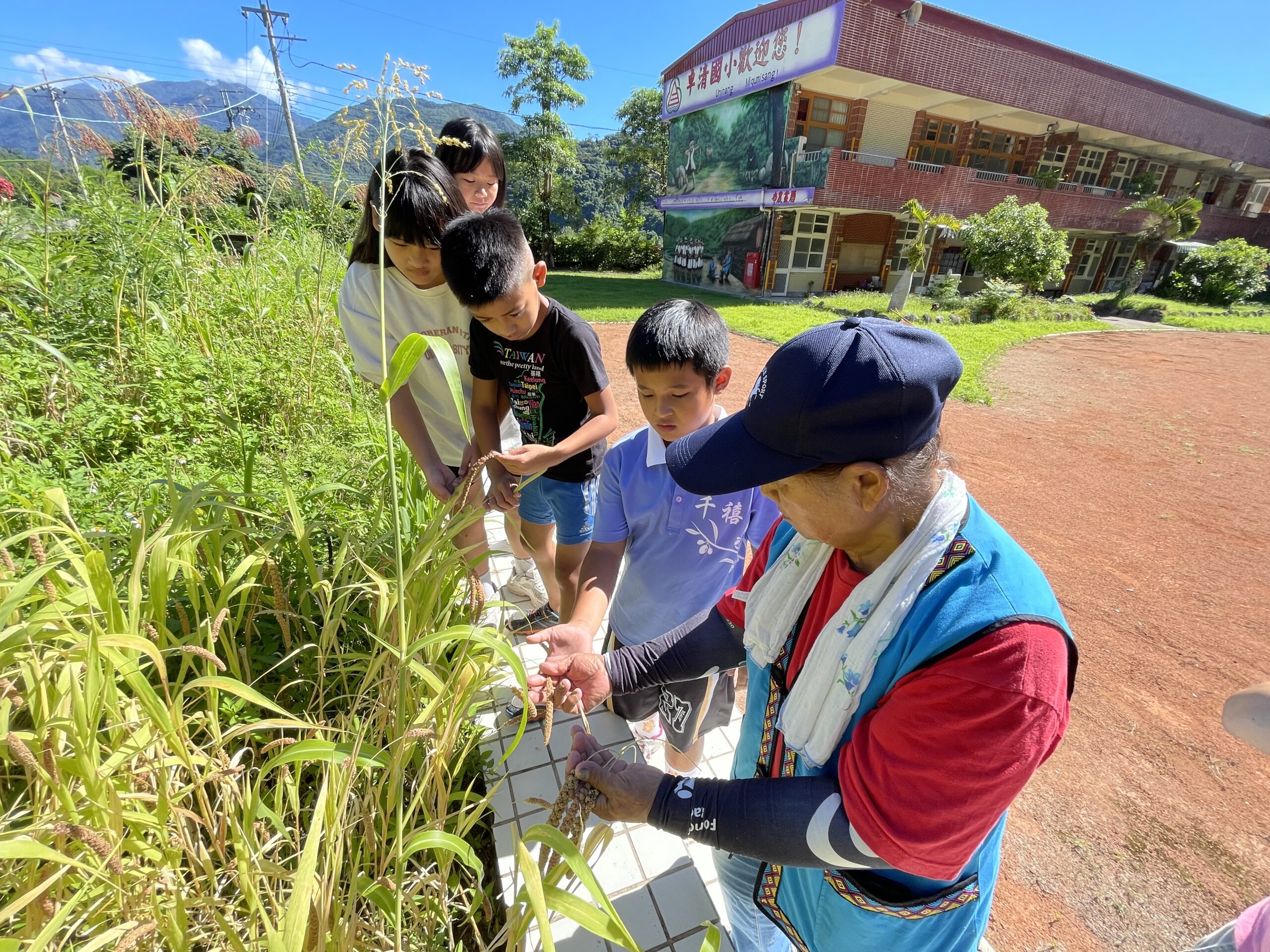
Caption: Establishing a school garden in local elementary schools to guide students through the complete planting cycle of traditional Bunun crops, from sowing to harvest. Credit: HSUAN-YU LI
The beginning of the transition
The process of revitalising Traditional Ecological Knowledge and Indigenous practices began in 2013, when a returning youth took over his family’s rice paddies and mobilised fellow farmers to abandon chemical inputs in favour of organic cultivation.
In 2014, through the coordination of the Yushan National Park Headquarters, corporate funding was introduced, and Tse-Xin Organic Agriculture Foundation (TOAF) was invited to collaborate with the community. Since then, we have established a long-term partnership with TOAF. This partnership initiated a comprehensive transition, which included: learning from elders and documenting Traditional Ecological Knowledge and farming practices, preserving locally inherited traditional crop seeds – especially legumes – and exploring how these knowledge systems and seeds can support biodiversity, cultural revitalisation, and sustainable land use.
Establishing a farmers’ organisation
Despite decades of social and ecological change, Bunun agricultural knowledge has survived, particularly among elder women who continue to cultivate household gardens and maintain traditional cropping practices.
In 2018, with support from the Forestry and Nature Conservation Agency (FANCA), we established the “Bunun Bean Co-op.” This female-led collective, comprising both home-gardeners and rice farmers, is dedicated to the preservation of Bunun agricultural heritage and the stewardship of the local Satoyama landscape.
Satoyama landscapes: a biocultural system shaped by the interaction between the community and nature. Within this system, agricultural production, biodiversity conservation, and cultural transmission are closely interlinked, supporting local livelihoods while sustaining ecosystem services and biocultural diversity, and reflecting a dynamic and resilient balance between humans and nature.
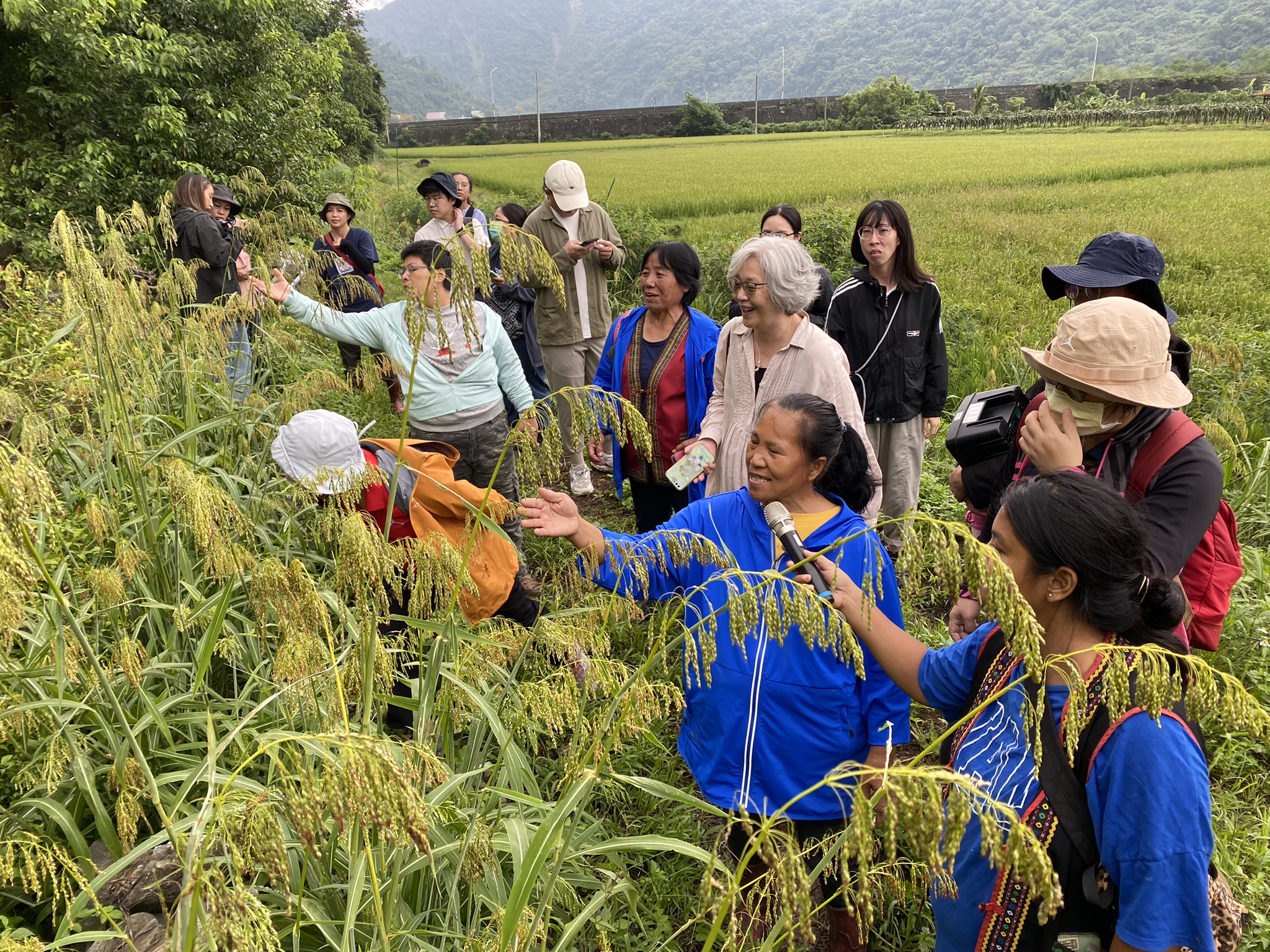
To bridge the generational gap, we created a mentorship programme pairing six pairs of elders and youth. Each month, young participants visit their mentors’ gardens to survey and record crop types, planting arrangements, plant growth, and the surrounding wildlife. The initiative facilitates monthly garden-based workshops characterised by collective farming and communal dining. Through the sharing of traditional Bunun cuisine, these sessions provide an immersive framework for the youth to internalise Indigenous agricultural practices and dietary traditions.
In addition to internal capacity-building initiatives, we facilitate intergenerational collaboration by hosting visiting delegations and delivering Bunun agri-food education activities at external venues upon invitation. This collaborative framework enables different generations to synergise their respective unique strengths, fostering a system of mutual support and knowledge exchange.
Today, this multi-generational group has evolved into a sustainable, Satoyama-based economic model. By hosting farm-to-table events, agri-food educational courses, and community exchanges, we have significantly enhanced both local and external support for the Bunun Satoyama landscape.
Farmer-led and community-based actions
Over the past 12 years, our multi-sectoral collaboration has implemented the following actions, aligning with several targets of the Kunming-Montreal Global Biodiversity Framework:
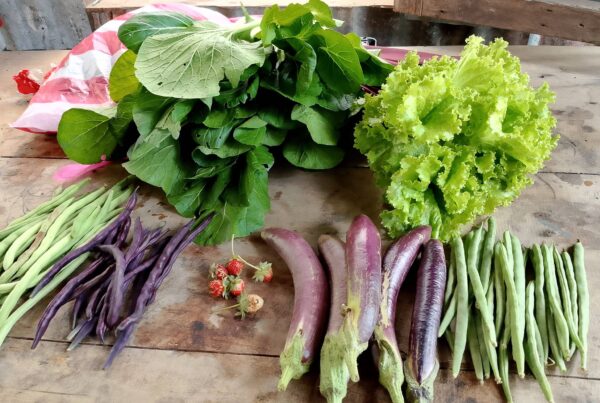
Agroecological restoration and landscape diversity (Targets 2, 6, 7, 11): By creating ecological ponds and ditches, and using traditional crops to form hedgerows, we have increased the complexity and multifunctionality of formerly monocultural rice-paddy landscapes, enhancing habitat diversity and ecological connectivity. We have transformed 20 hectares of farmland from conventional cultivation to organic production, eliminating the use of pesticides and chemical fertilisers, while conserving 17 local bean varieties and 11 grain varieties.
Area-based conservation (Targets 3, 4, 8, 9): Zhuoqing Village plays a critical role in ensuring ecological connectivity and biodiversity-focused spatial planning between Yushan National Park and its surrounding landscape. Twenty-two (22) endangered animal species and three (3) endangered plant species have been recorded in the Zhuoqing farmlands. In August 2025, we applied for OECM certification to the Forestry and Nature Conservation Agency, and the certification was granted in March 2026.
Intergenerational learning and capacity development (Targets 15, 20, 22, 23): Bunun elders teach traditional farming knowledge to Indigenous youth, who adapt it into new forms of agri-food education, eco-tourism initiatives, and community-based sustainability programmes.
School gardens and healthy lunches (Targets 14, 16): Three local schools now host learning gardens where children grow traditional crops and learn farming ethics, with indigenous foods incorporated into school-lunch programs that promote health, identity, and local sustainability.
Multi-stakeholder partnerships (Targets 18, 19, 21): We work with the government (FANCA, Hualien District Agricultural Research and Extension Station), academia (National Dong Hwa University), and the private sector (E.SUN Bank, Yin Chuan sustainable organic farm) to secure financial, technical, and institutional support for long-term implementation.
Conclusion
The “Zhuoqing Model” has been disseminated through academic publications, documentaries, and Taiwan Partnership for the Satoyama Initiative (TPSI) workshops. It stands as a benchmark for Indigenous-led biocultural restoration in Taiwan. By revitalising traditional knowledge to address contemporary sustainability challenges, we hope our experience provides a valuable framework for communities worldwide.
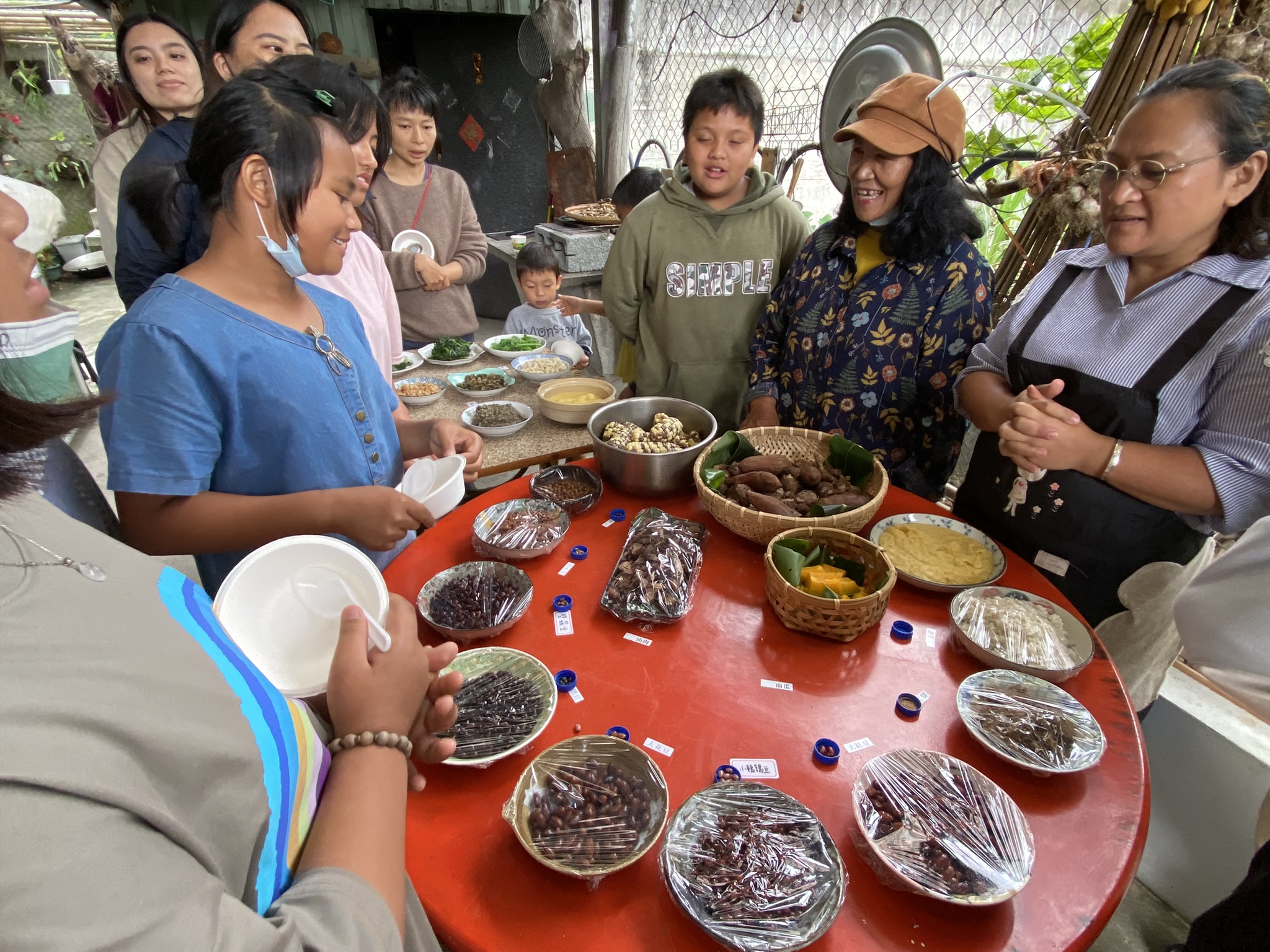
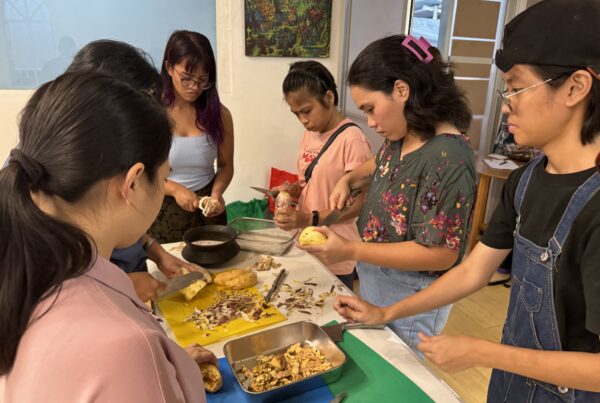
Caption: Guiding elementary school students to explore the authentic flavours of the Bunun people. This session introduces traditional ingredients—including 7 types of grains, 7 varieties of beans, 4 wild-foraged foods, and 4 preserved delicacies—allowing participants to taste their pure, original flavours. Credit: Yu-Chun Chan
Acknowledgments
We acknowledge the support from the Yushan National Park Headquarters, the E. Sun Bank, Hualien Branch, Forestry and Nature Conservation Agency, and the Satoyama Development Mechanism (SDM) for providing funding for the implementation of the project.
Thanks to our partners, Hualien District Agricultural Research and Extension Station, Taiwan Partnership for the Satoyama Initiative, Zhouxi Township Office, Hualien County, Ching-Feng Lin (林青峰), Chih-Chung Lin (林志忠), Jen-Jiun Perng (彭仁君), Hai-Yin Wu (吳海音), Paulina G. Karim(孫夏天), Neqou Soqluman, Laipunuk Cultural Studio(內本鹿人文工作室), Fushin LiPaHak Eco-Farm(富興生態農場), Taiwan Biodiversity Research Institute, ScapesLab of National Dong Hwa University , and Hualien Natural Education & Ecology Consultant Ltd., for showing their passion to our community and providing their professional assistance.
We extend our thanks to Zhuole Primary School(卓樂國小), Zhuoqing Elementary School(卓清國小) and Taiping Elementary School(太平國小). We would also like to thank the Zhuoqing Village who participated in the case and project implementation, as well as the staff and administrators of Tse-Xin Organic Agriculture Foundation who were involved in the project along the way. All their support and work are duly acknowledged.