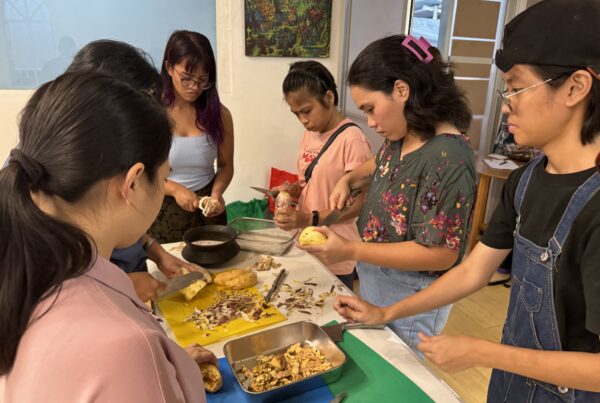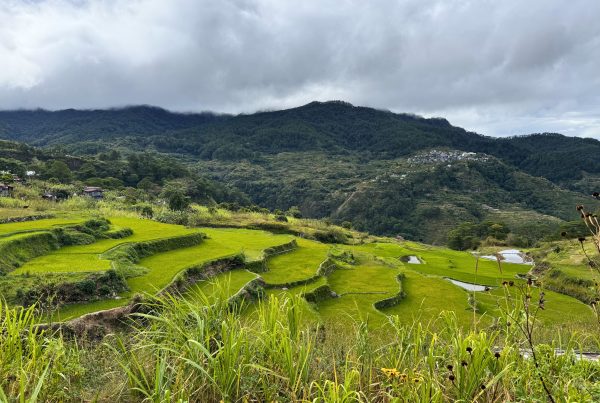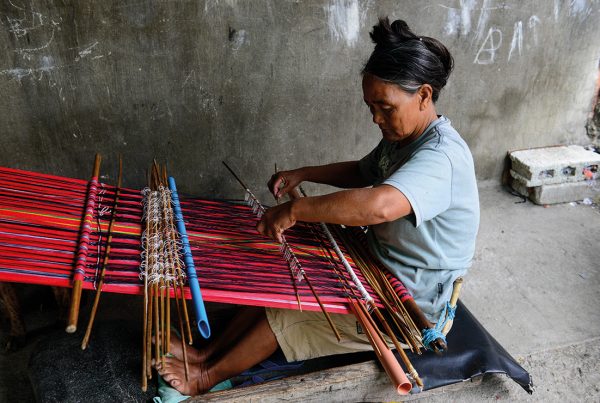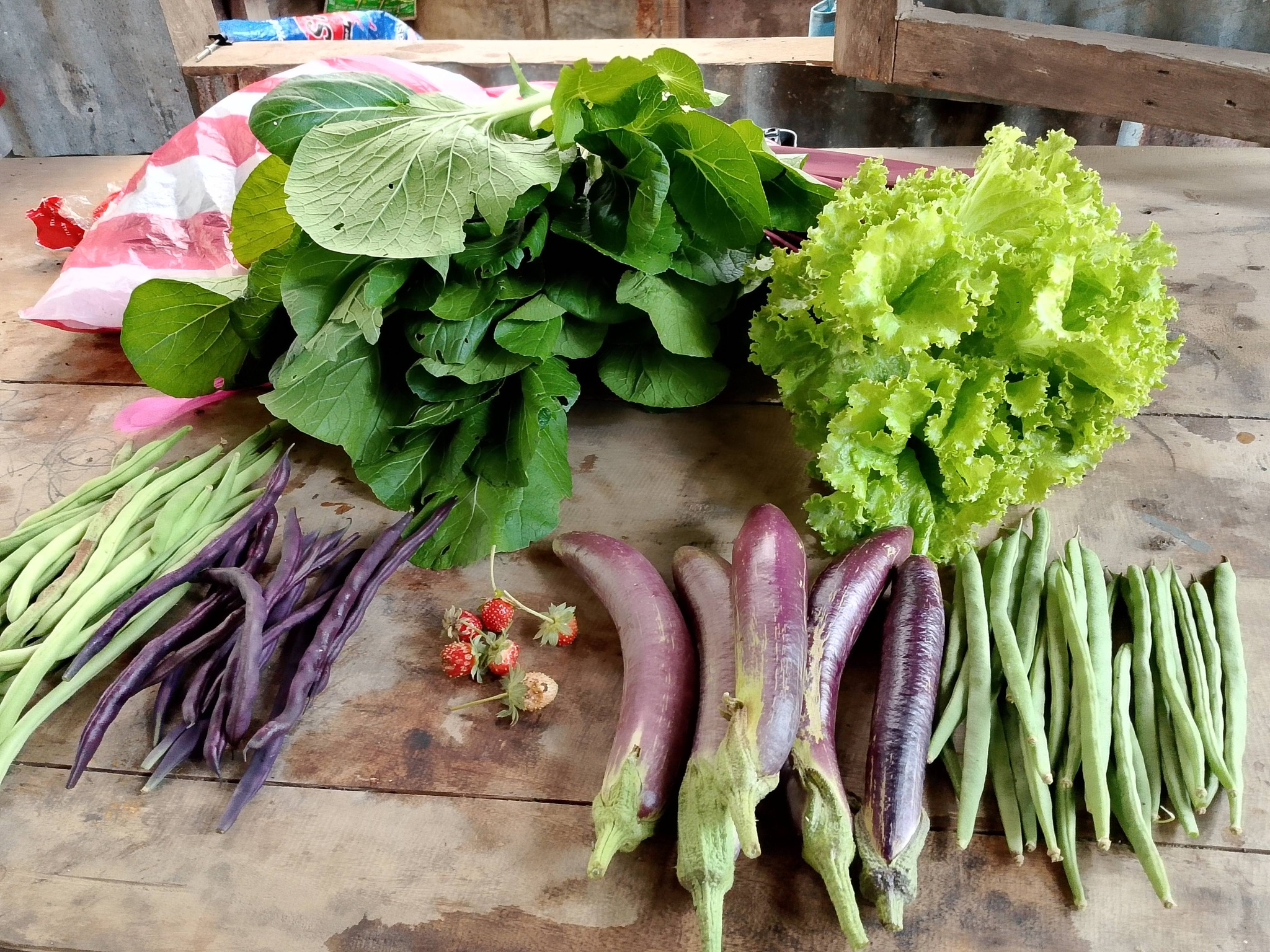

What began as a passionate interest in home gardening during the pandemic has blossomed into a fully-fledged movement for community learning on Indigenous food systems and women’s empowerment towards food sovereignty and sustainability.
In Baguio City, Philippines, a growing number of home gardeners creatively use vacant lots, hillsides, and small spaces through vertical, sloping, and container gardening. They employ recyclable materials, practice organic agriculture, harvest rainwater, and adopt other sustainable methods to grow their produce. In 2023, PIKP began working with these home gardeners through research, gathering their experiences and insights on their role in revitalising Indigenous food systems in the city. Their perspectives were documented in a research paper that underscored women’s vital role in home gardening and emphasised its continuity as a practice sustained for future generations.
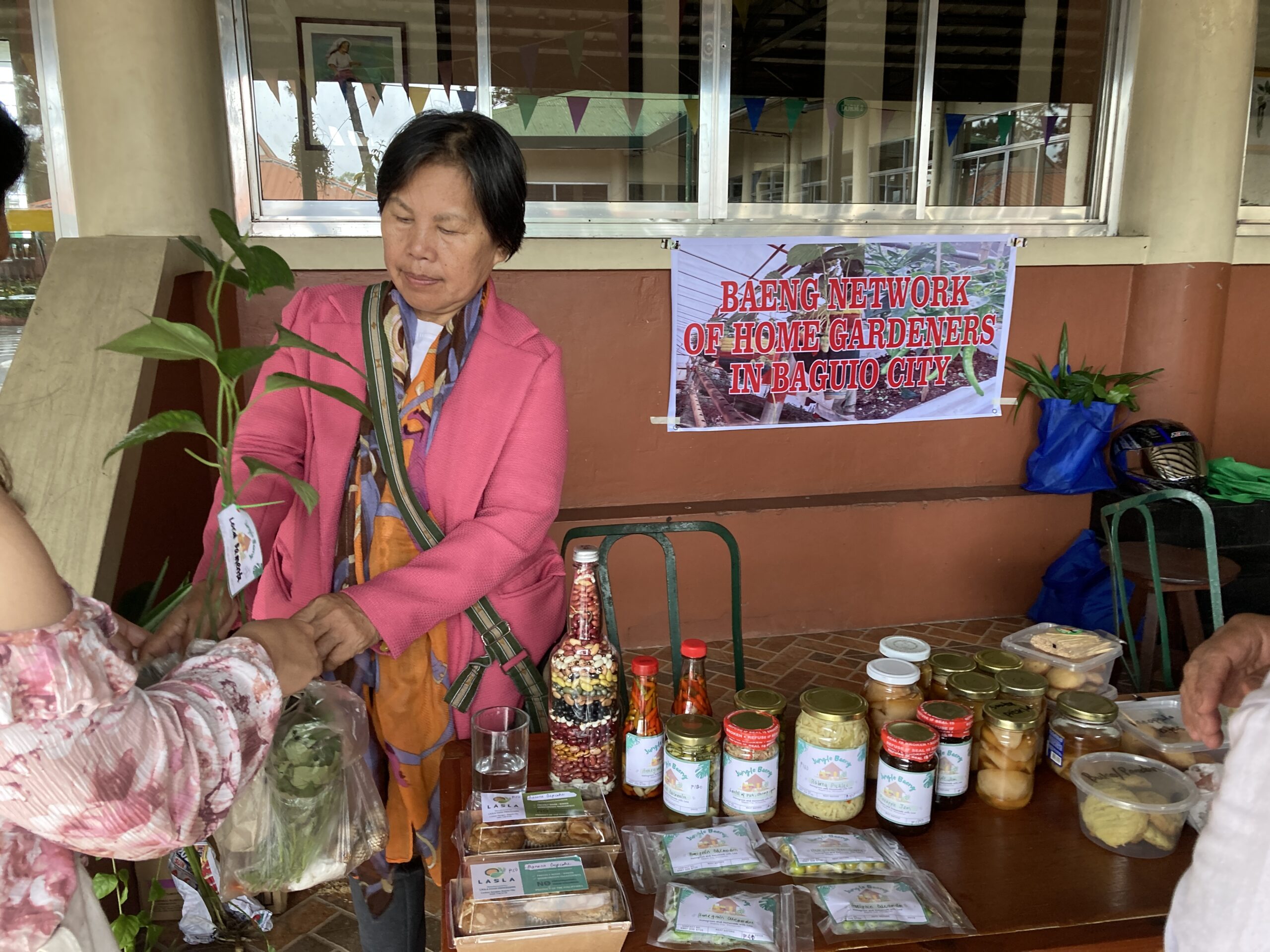
Caption: Cora, Baeng Home Gardeners Association (BHGA) president, hands over a plant to a customer during an Urban Gardening Workshop, where BHGA set up a booth to sell plants, seedlings, and food products made from their surplus produce. Credit: Ella Cariño
The role of women in passing down traditional knowledge
Women, particularly mothers, have emerged as key drivers of household food security through home gardening. According to the Ba-ëng members, most home gardeners inherited their knowledge from their parents, with maternal figures playing a central role in passing down traditional practices.
Brigit shares: “If we keep on doing this, we can create a sustainable household through vegetables and crops, creating big savings for the household. The advantage is also that we know how we took care of the plants, so it will be safe and clean and fit for your consumption. If we also continue planting medicinal plants, we have something to use during emergencies.”
While husbands support physical tasks such as land preparation and garden structures, it is the women who steward the land with practices rooted in traditional knowledge. Their efforts help preserve agrobiodiversity, reduce dependence on monoculture and synthetic chemicals, and ensure soil health. Their conscious preference for organic agriculture over commercial inputs reflects a commitment to ecological balance and resilience.
Growing beyond the garden borders
The growing demand for learning exchanges enabled the Ba-ëng Home Gardeners Association to participate in workshops in the city and abroad. Sustainability fairs organised by the local government provided the members with opportunities to sell surplus produce from their ba-ëng, turning their efforts into livelihood.
Inspired by these experiences, Brigit says they are eager to sustain the momentum of learning and continue expanding their knowledge:
“We start in the community, in our homes, in the village. Us senior citizens, we had seminars and training and we are also open to learning. Us grandmothers, we do it ourselves at home and invite our grandchildren to help us because they are curious. We start in our homes. We include them and we let them participate. They are very curious, like they are playing. It can be fun gardening. Let us make farming fun.”
Brigit Piok, a member of the Ba-ëng Home Gardeners Association
In caring for both the environment and the people in their community, the women of the Ba-ëng Home Gardeners Association are leading biodiversity conservation, one garden at a time.
The Ba-ëng Home Gardeners Association
These individuals doing home gardening began inviting family members, friends, and neighbours and this eventually led to the formation of the Ba-ëng Home Gardeners Association. Ba-ëng, in the Ibaloy language, means home garden for growing food. The community they built not only brought food to their tables but also fostered a deeper appreciation for Indigenous values related to biodiversity conservation and health.
Brigit Piok, a member of the Ba-ëng Home Gardeners Association, says seed sharing and keeping helped in maintaining heirloom seeds:
“In the Ba-ëng Home Gardeners Association, we swap seeds. That is what we do, seed sharing. We preserve heirloom seeds, the seeds that were given to us by God years ago, that is what we save so that we do not have to rely on agricultural supplies and when calamities strike, we have seeds to produce food.”
Brigit Piok, a member of the Ba-ëng Home Gardeners Association
They also integrated medicinal herbs and plants into their gardens in promoting wellness and preventive care. For example, using ginger and lagundi (a medicinal shrub) to relieve coughs and colds, brewing various plants as tea, and processing various plants for anti-mosquito ointments.
Home gardening not only embedded food security but also the continuity of Indigenous values such as binnadang, helping one another; the culture of ayyew, living thriftily and avoiding waste; and kasiyana, maintaining a positive outlook despite challenges, among others.