

The Gunayala Comarca (province) is an indigenous territory located in the east of the Republic of Panama. It is characterised by having a special territorial administration granted by the Republic of Panama in the early 1950s, following years of struggle between its inhabitants and the national police. Since that time, the Guna people have managed their marine natural resources according to their own visions and management systems, with their authority recognised primarily within the framework of terrestrial territory (forests, crops, wildlife, among others). However, little progress has been made in the marine area. In this regard, the proposal for a Biosphere Comarca gains importance.
Conservation and management measures are not new in the province. Years ago, the ancestors of the Guna people practised effective and respectful management measures in harmony with the natural environment.
However, in recent decades certain changes have been observed that are influencing the ancestral conduct of the Guna, weakening their traditional models and affecting their management of natural systems. These new conservation and environmental management models do not fully consider cultural management values, giving more importance to protecting species while rendering invisible the peoples who inhabit these areas.
Guna people act to conserve marine wildlife
Scientific and technical reports, as well as comments from the Guna people themselves, confirm and denounce the changes, most of which are detrimental to their natural systems and indigenous knowledge. The conservation of these indigenous knowledge systems is perhaps one of the primary objectives for maintaining and strengthening the conservation of marine resources.
In response, the Guna people have taken various actions to conserve marine wildlife through customary rules. For example:
- lobster fishing is banned from March to June each year
- the permitted size for lobster capture is regulated
- fishing for lobsters with eggs is prohibited
- sea turtle nesting sites have been declared
- the Turtle Fair is celebrated in May
- fishing with oxygen tanks is banned.
These actions all aim to conserve marine biodiversity and raise awareness among the inhabitants of the Gunayala Comarca.

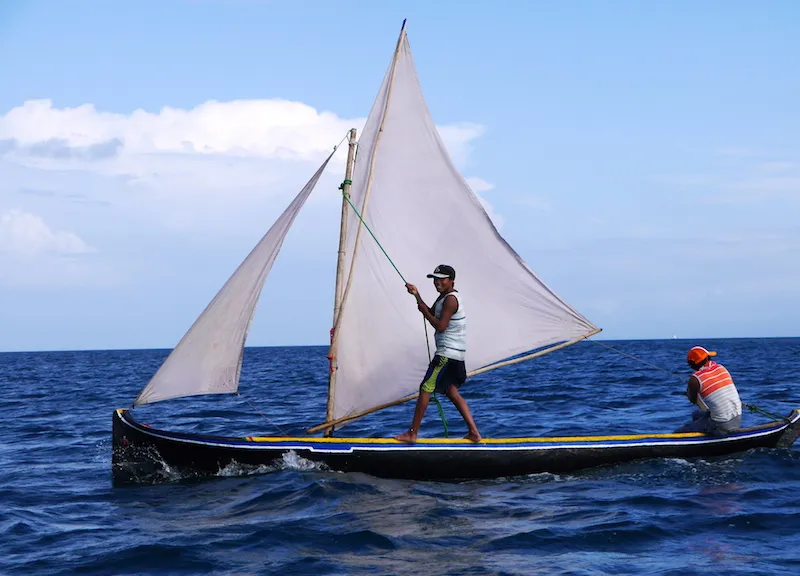
A traditional canoe, called ulu. The Guna people use it both for fishing and for selling local seafood products (lagoon fish, lobsters, crabs, and other shellfish), as well as other artisanal products, such as molas, carefully embroidered textiles. Credit: FPCI.
Author
- Jorge Luis Andreve Díaz and Onel Masardule, Fundación para la Promoción del Conocimiento Indígena
Ecosystems
Type
Year
Date
- This case study is included in the report Enabling Pathways for Rights-based Community-led Conservation, published on September 17, 2025, by the Rights and Resources Initiative, the ICCA Consortium, and the Forest Peoples Programme
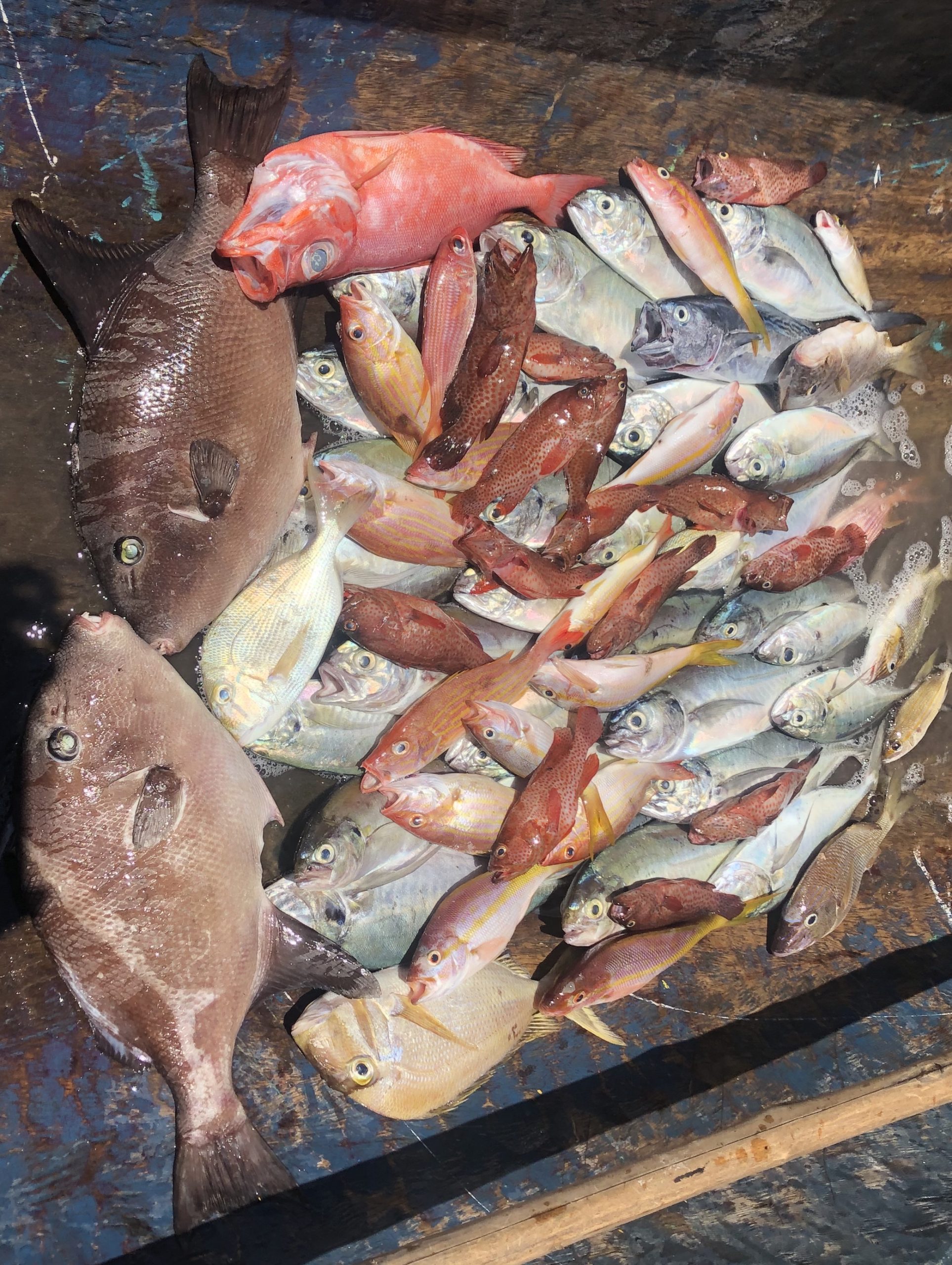
The management of marine resources by the Guna people in Guna Yala allows them to sustain regular fishing, primarily for local consumption by the population and island tourism, which is also managed by the Guna authorities and recognized by the government of Panama. Credit: FPCI.
Indigenous Peoples urgently need their own environmental management models
Responding to the pressures experienced by indigenous and traditional knowledge systems and restoring their vitality is a significant challenge at global, national and institutional levels. Traditional and indigenous practices involve a complex mix of components (laws, policies, cultural norms) and the degree of compliance by society or individuals with the laws and regulations that govern them.
This assertion is not new, as since the 1980s Indigenous Peoples have been advocating in meetings and international conferences for the inclusion and recognition of their visions and actions as a fundamental right, especially within the framework of the Convention on Biological Diversity. For example, during COP 9 (the 9th Conference of the Parties, held in Bonn, Germany), through the International Indigenous Forum on Biodiversity, Indigenous Peoples succeeded in including the following text calling on parties:
“[…] to integrate the traditional, scientific, technical and technological knowledge of indigenous and local communities, consistent with Article 8(j) of the Convention, and to ensure the integration of social and cultural criteria and other aspects for the identification of marine areas in need of protection as well as the establishment and management of marine protected areas.”1
There are different marine environmental management systems around the world, particularly in the Caribbean; however, few adequately consider the cultural realities of Indigenous Peoples. They do not properly address the natural and social dynamics of these peoples, making the creation of their own environmental management models urgent.
A biosphere as a step towards realising territorial rights
Taking this into account, the Guna people are analysing the creation of the Gunayala Biosphere Comarca – a step towards realising their collective territorial rights as a people. To this end, they base their actions on their right to conserve cultural and natural heritage, a right established in international and national instruments, as well as customary laws (the Fundamental Law and the Statute of the Gunayala Comarca), and Law 72 of 2008.
This last law establishes the legal framework for protecting cultural heritage in Panama. This law recognises and protects the cultural rights of Indigenous Peoples, addressing aspects such as the protection of their language, customs, traditions, and forms of artistic expression. Additionally, it establishes mechanisms for participation in managing their cultural heritage and seeks to ensure that their cultural practices are respected and maintained in the face of external influence and modernisation.
These laws aim to ensure that cultural heritage is preserved for future generations and respected for its historical and cultural value.
An urgent task with challenges
The Guna people are certain that conserving natural marine and cultural heritage is the foundation for enhancing the population’s capabilities, revaluing environmental culture or ancestral knowledge, and love for Mother Earth.
Therefore, the integration and development of biocultural aspects is an urgent task, and it is necessary to advance in the formulation and execution of strategies, plans, and comprehensive territorial development programs from within, with a high degree of community participation to foster creativity and social well-being, contributing to the management of the natural and social environment and generating economic income.
However, several challenges need to be considered, including:
- The length of the Comarca (320 km) and the mode of transportation (marine) are subject to climate changes, and to increases in fuel costs, which could raise internal travel expenses for awareness-raising activities throughout the Comarca.
- The plan aims to ensure the conservation of terrestrial and marine biodiversity, sustainable development, and the preservation of natural ecosystems. It also emphasises the importance of having a dedicated management structure to oversee and execute activities. This will require suitable actors for issues related to the creation of a biosphere comarca, and direct and effective participation from cultural knowledge keepers.
- On the other hand, climate change represents one of the most urgent and widely recognised environmental challenges of our time. The population (leaders, religious figures, politicians, educators, professionals, youth, women) must change their attitude toward Mother Earth or revalue environmental culture.
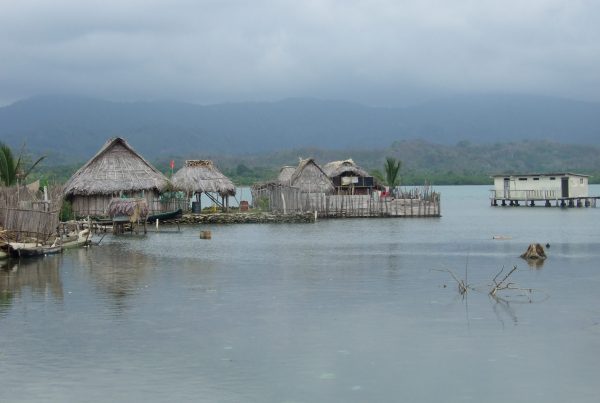
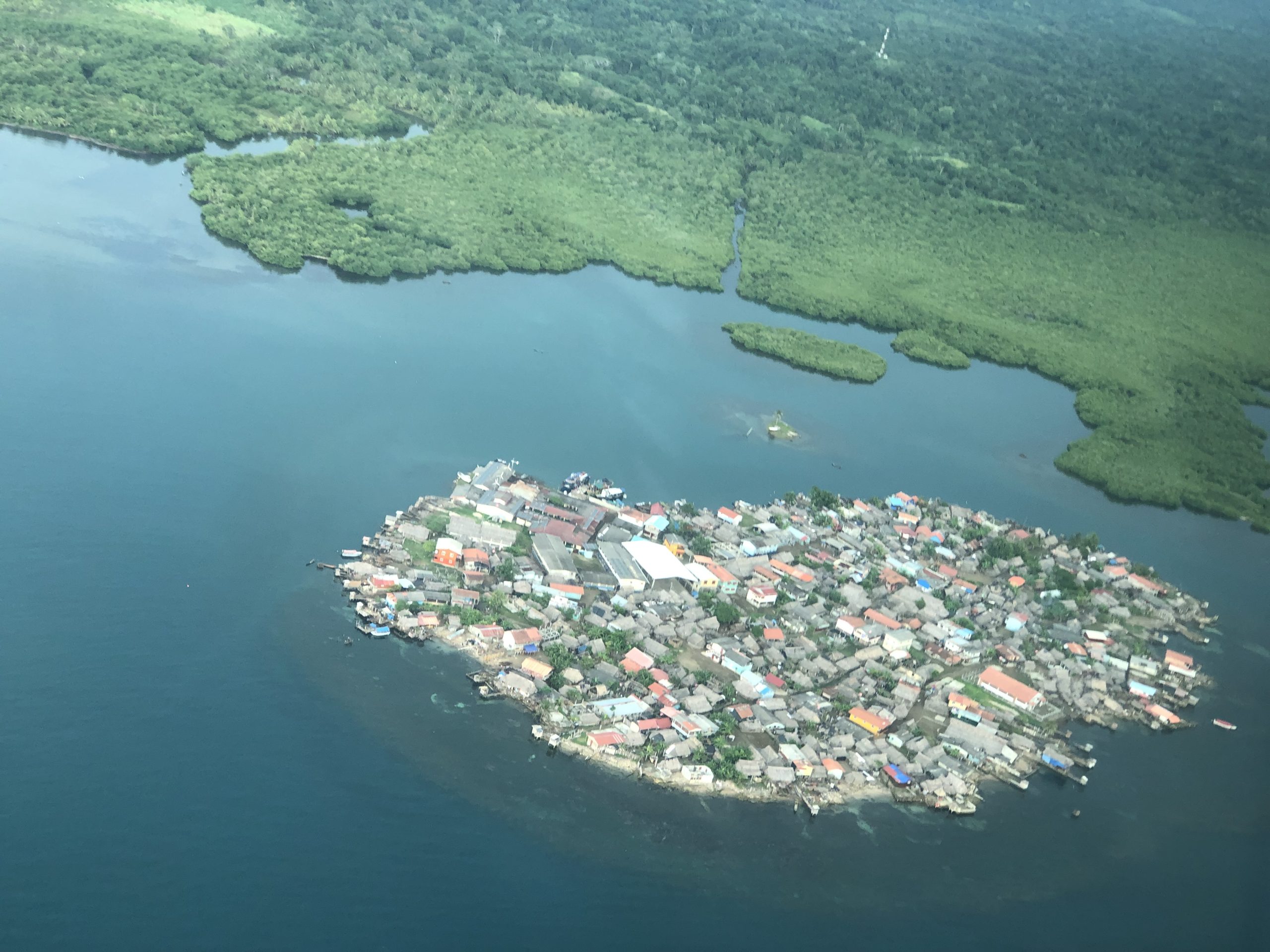
Aerial view of an inhabited island in Guna Yala. This archipelago of 365 small islands lies off Panama’s Caribbean coast, with around 49 inhabited, and forms the ancestral territory of the Guna people, who continue to manage and live from its marine and coastal resources. Credit: FPCI.
Conclusion
Indigenous Peoples have their own holistic and integrated ecosystem management systems based on their knowledge of nature and their customary laws.
These systems are based on their knowledge, worldview, customary norms, and cultural and spiritual values, which have proven to be effective for the conservation of resources and ecosystems, as well as for the sustainable use of biodiversity.
Knowledge and practices have been transmitted from generation to generation for thousands of years, resulting in the conservation of ecosystems through cultural use and management, expressed in their own systems that have allowed them to conserve biodiversity based on their knowledge.