
In the Democratic Republic of the Congo (DRC), local biodiversity has been severely disrupted by the introduction of genetically modified organisms (GMOs) and non-native species as part of humanitarian programmes set up in the wake of crises and armed conflicts in the region. These interventions, intended to address food emergencies, have, however, led to unexpected ecological consequences, including the disruption of ecosystems and the gradual disappearance of certain local species.
In this context, Indigenous women play a central role. As custodians of traditional knowledge and guardians of local biodiversity, they have seen their way of life profoundly affected by these changes. Yet, far from giving in, they have developed strategies for resilience based on their ancestral knowledge. By drawing on their traditional knowledge, they have committed themselves to restoring biodiversity, promoting agroecological practices and protecting the traditional species that form the basis of their cultural identity, their food supply and their traditional medicine.
Background: conflicts and ecological changes
The 1994 war in Rwanda led to a massive influx of refugees into the provinces of North Kivu and South Kivu, in the east of the DRC. At the same time, internal conflicts led to significant internal displacement. These mass movements placed considerable pressure on natural resources, particularly forests, agricultural land and fisheries.
In response to this situation, several humanitarian organisations implemented food aid programmes aimed at displaced populations and host communities. These programmes often relied on the distribution of improved seeds, agricultural cuttings or introduced animal species, which were expected to rapidly increase production.
However, these interventions have sometimes disrupted traditional agricultural systems and encouraged the emergence of invasive species. The introduction of new plant and animal varieties has altered existing ecological balances and contributed to the gradual disappearance of certain local species formerly used in the diet, traditional medicine and cultural practices of indigenous communities.
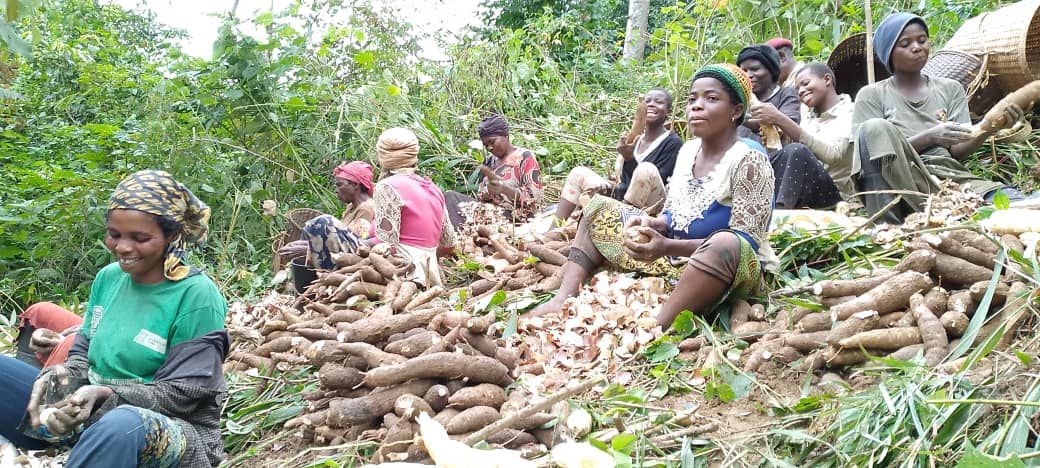
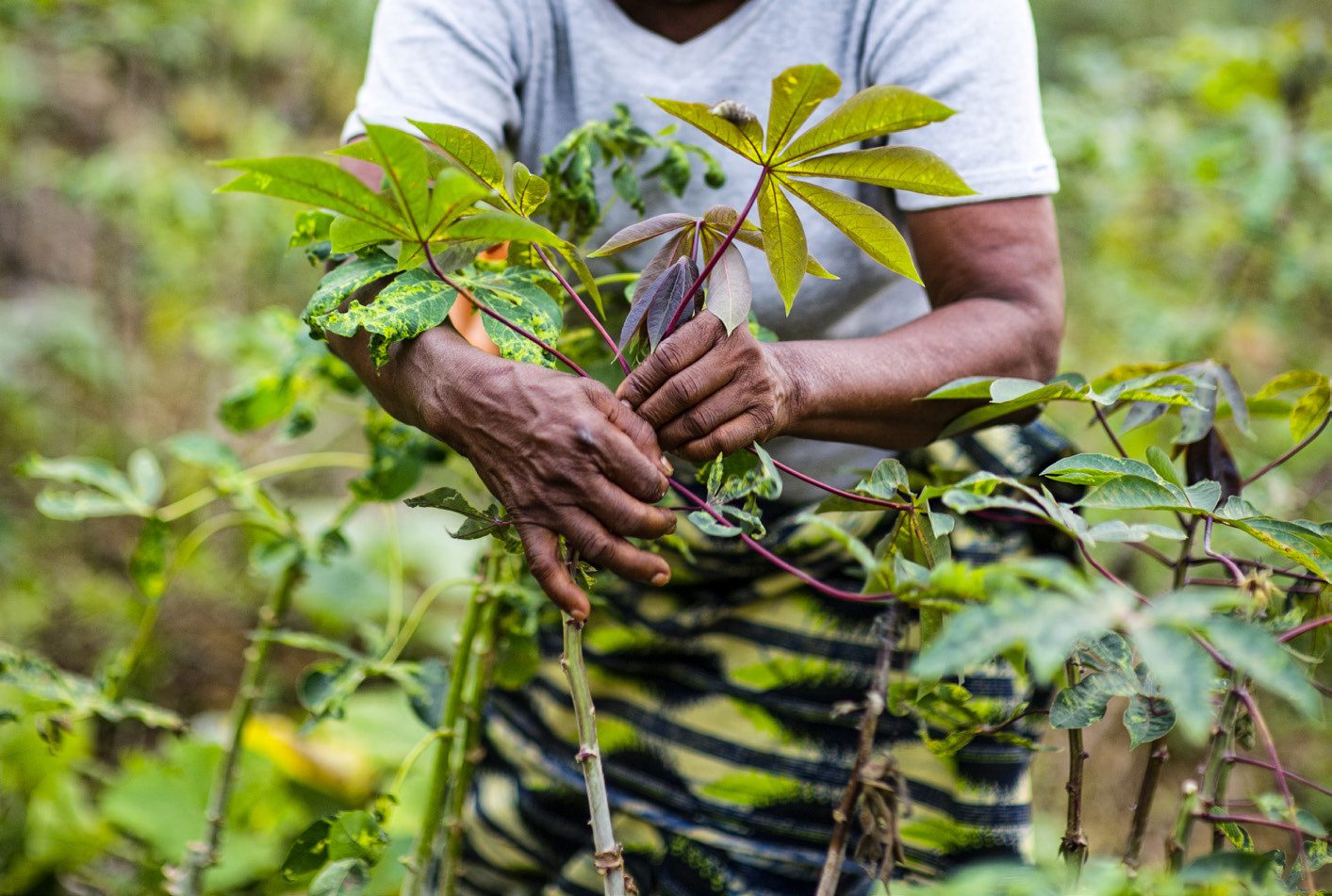
Caption: The results of the healthy cuttings restored by the indigenous women of ‘Talent des femmes autochtones et rurales ASBL’. These 7 hectares, where the women are currently harvesting, have been allocated to 10 women’s groups, comprising 145 households that have benefited from healthy cassava cuttings; this activity is now an annual occurrence for these 145 beneficiaries, whilst a community field has also been established to serve as a distribution centre for healthy cuttings. These women, in turn, distribute the cuttings to neighbouring communities; it is estimated that two women’s groups in the Kalehe territory have now taken up the restoration of healthy cassava cuttings. These are the MUBUGU and KALIMA groups in South Kivu, in the east of the DRC. Today, women have resumed utilising the medicinal properties of this plant following its revival by indigenous and rural women. Credit: Taylor Buzima / Talent des femmes autochtones et rurales / maharifa ya wamama vijijini ASBL)
The consequences of introducing non-native species
Several examples illustrate the impacts of these introductions on local ecosystems:
In 2000, the distribution of cassava cuttings by an international organisation gradually replaced the local varieties that had been cultivated for generations. This agricultural transformation led to the gradual disappearance of certain traditional varieties which were valued not only for their nutritional value but also for their medicinal properties, particularly in preventing anaemia and other diseases.
In total, around seven local varieties of cassava have disappeared, including Nambeere, Nakasusanya, Namusunya, Namafuta, Nambiyo Biyo, Nangunga and Nakabumbwa. This loss has undermined food security and reduced the genetic diversity of local crops.
In 2012, a tilapia distribution programme designed to support local fish farming caused a further ecological disruption. The introduced fish gave rise to fry known locally as Kavimba, which feed on the eggs of the Birombi fish, a local species highly prized in the diet and culture of indigenous communities.
In 2015, the introduction of new banana varieties also led to the emergence of a disease known as ‘Kabungu’ in the local language. This disease causes the leaves to turn yellow, the plants to rot and the gradual destruction of plantations. Local communities have few means to combat this disease effectively.
These changes have had significant consequences for the food security and economic stability of indigenous households. However, they have also raised awareness within the communities, which have begun to reassess the importance of preserving local species and protecting their traditional agricultural systems.
Restoring traditional varieties of cassava
In response to these challenges, the Indigenous and Rural Women’s Talent organisation has launched several initiatives aimed at restoring local agricultural biodiversity.
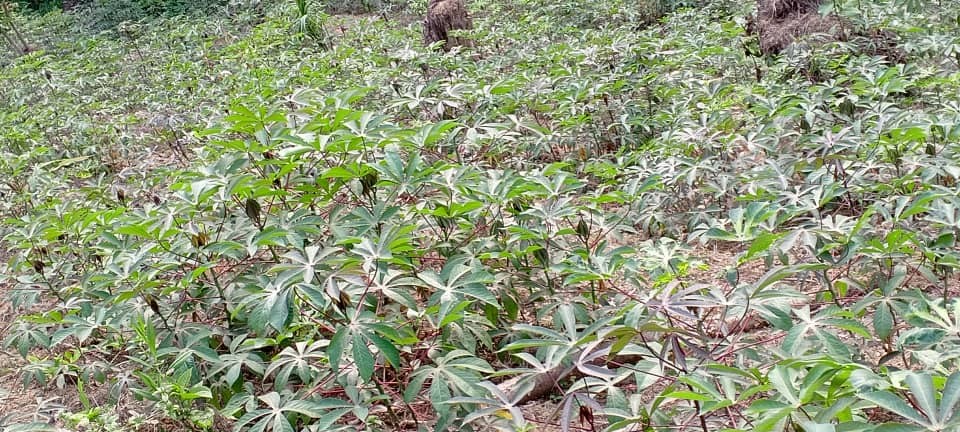
One of the most significant actions involved reintroducing traditional varieties of cassava that had almost disappeared. These cuttings were rediscovered thanks to elderly women in the community who had preserved certain varieties in their own fields and had not fully adopted the cuttings introduced by external programmes.
These women, true guardians of traditional seeds, had preserved two important varieties on their plots: Nambiyo Mbiyo and Nakabumbwa. These varieties are distinguished by their medicinal properties and their resistance to certain destructive diseases that affect the introduced varieties.
In order to restore these crops, a community assessment mission was organised to understand the causes of food insecurity and low yields observed in the villages. Following this assessment, awareness-raising activities were carried out to encourage the conservation of traditional seeds and to highlight their cultural importance.
Activities to select and propagate cuttings were also launched with a view to gradually rebuilding stocks of traditional seeds. Thanks to these efforts, two varieties were successfully safeguarded and reintroduced into local farming systems: Nambiyo Mbiyo and Nakabumbwa.
The return of these varieties has had several positive effects. It has helped to increase agricultural production, improve women’s purchasing power and strengthen the local economy. It has also helped to preserve the traditional pharmacopoeia used for the wellbeing of families and communities.
Ecological fish ponds and food sovereignty
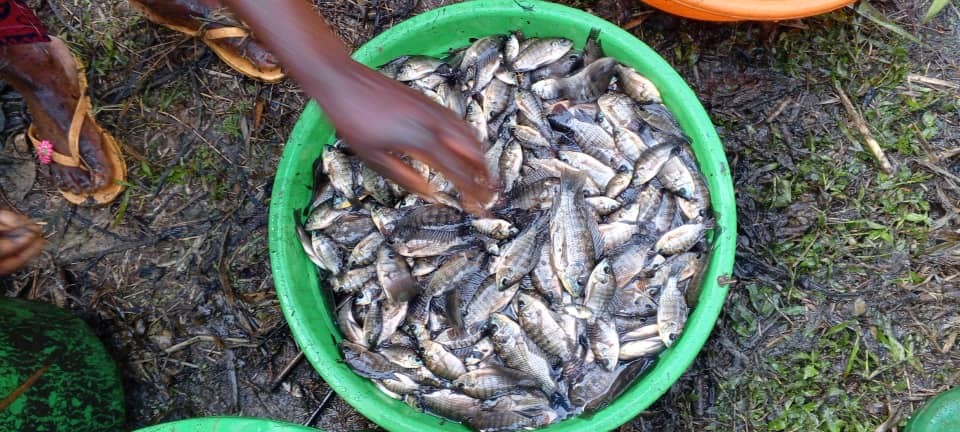
Alongside the revival of traditional crops, indigenous women have developed eco-friendly fish ponds to improve food security within their communities.
These ponds are based on an agroecological approach that combines agriculture and fish farming. Agricultural activities take place around the ponds, and plant waste from farming is turned into organic fertiliser used to feed the fish and enrich the soil.
The use of organic fertilisers is prioritised to avoid the introduction of chemicals that could disrupt ecosystems and introduce new invasive species. This approach helps to preserve traditional seeds and maintain the ecological balance of agricultural systems.
These ponds play an important role in the food sovereignty of indigenous communities. They help to diversify food sources and support a local bio-economy based on the promotion of traditional knowledge. This bio-economy strengthens the link between culture, biodiversity and indigenous ways of life.
The cultural role of the Birombi fish
The Birombi fish holds a special place in the culture of indigenous communities. This species is associated with solidarity and social cohesion. According to local traditions, when social cohesion is strong, Birombi populations are abundant. Conversely, when families are divided, these fish become scarcer.
Fishing practices are also governed by cultural rules. For example, it is discouraged to use bladed weapons such as knives or machetes to catch these fish, in order to prevent their extinction. Furthermore, when the fish begin their seasonal migrations, all families must be informed. Keeping this information secret is seen as a breach of solidarity and may result in social or spiritual consequences for the person concerned.
Thanks to community fish-farming initiatives, Birombi’s fish stocks have gradually improved. Fish ponds enable certain species to be domesticated and ensure their presence in local food systems.
When the ponds are opened for the harvest of mature fish, families come together to share the catch. These moments of collective harvesting strengthen solidarity and help to consolidate community unity.
Eels and cultural norms
To combat the proliferation of Kavimba fry, some communities have introduced eel farming, as eels are natural predators of these fry. Eels are native to the region, but their consumption is governed by certain cultural rules.
In several indigenous communities, the consumption of eels is traditionally reserved for young men who come to formalise their engagement with the young woman’s family. This gesture symbolises the future husband’s respect and commitment to his partner’s family. For this reason, young women do not generally eat this fish.
These cultural rules have long limited the use of eels in food systems. However, their ecological role in controlling invasive species has led some communities to encourage their presence in fish ponds. Restoring soils and strengthening community cohesion.
Initiatives led by indigenous women have also helped to improve soil fertility. Water from fish ponds facilitates the irrigation of agricultural land, whilst agricultural waste is converted into organic fertiliser. This conversion of plant residues naturally enriches the soil and increases its productivity.
These initiatives have also strengthened community cohesion. Farming and fish farming activities are carried out collectively, and decisions regarding the management of harvests and the use of profits are taken in a participatory manner.
The sharing of harvests is an important moment of solidarity. Each family receives a share of the produce, which strengthens the sense of belonging and promotes the collective management of natural resources.
A lesson in ecological resilience
The experiences of indigenous women in North and South Kivu demonstrate that traditional knowledge can play a vital role in restoring ecosystems and protecting biodiversity.
Drawing on their ancestral knowledge, these women have succeeded in restoring certain crop varieties, strengthening food security in their communities and rebuilding forms of social solidarity centred on the collective management of natural resources.
This experience shows that indigenous communities are not merely victims of ecological change, but also key actors in the protection of biodiversity. Their experience offers an important lesson: sustainable solutions to ecological crises require the recognition and promotion of traditional knowledge, as well as the active involvement of communities that live in close connection with their territories.