
Every evening, a small group of villagers sets out on patrol along the banks of the Dikhu River in Mokokchung District, moving quietly through the forest with alert determination. Their task is to watch over the community forest and ensure that no one violates the village’s conservation rules. Among them walks Ashong, a man from Ungma village, who once hunted in these same forests. Years ago, he would have carried a gun along these trails. Today, he walks the same paths with a different purpose: protecting the wildlife and forests he once pursued.
Ashong’s story reflects a wider transformation taking place across many villages in Nagaland, a mountainous state in northeast India. In communities where hunting was once a common livelihood practice, villagers are increasingly taking on the role of forest guardians. Motivated by a shared responsibility toward their land and future generations, communities are protecting forests that sustain both biodiversity and cultural identity.
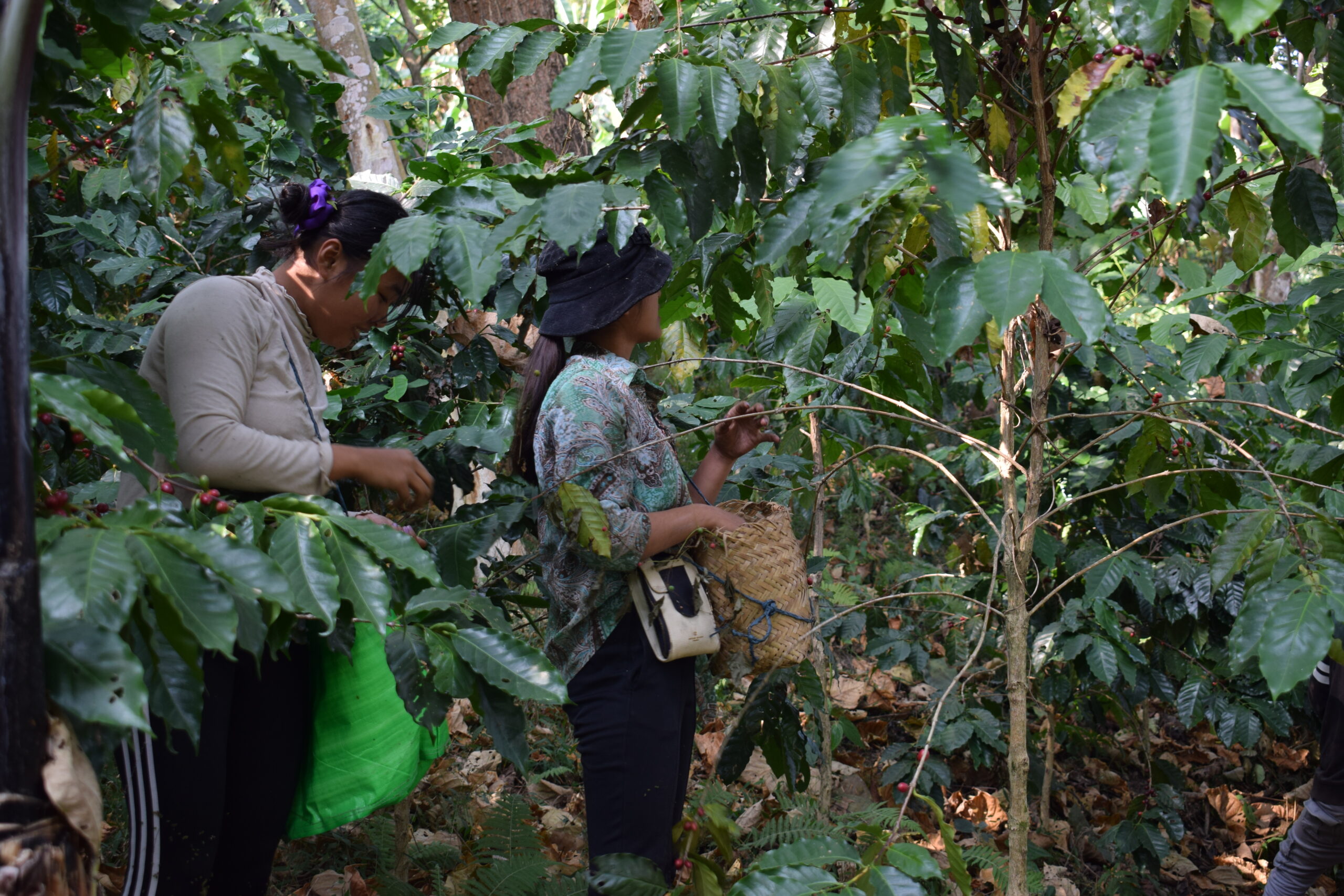
Caption: Young women harvesting coffee at Kebenstin Farm (KAAS) adjoining Sendenyu community Biodiversity and Wildlife Conserved Area, Sendenyu village, Tseminyu, Nagaland. Credit: Sendenyu Community Biodiversity and Wildlife Conservation Board and Kenono Foundation
Indigenous governance and Community Conserved Areas
Across Nagaland, forests have long provided food, livelihoods, and cultural identity for Indigenous Naga communities. These landscapes hold deep cultural meaning, forming part of a relational worldview in which people, forests, rivers, and wildlife are interconnected. For generations, communities have governed their lands through customary institutions led by village councils and elders, collectively deciding how forests should be used and protected.
In recent decades, however, many villages have started to notice environmental changes. Previously, hunting was a customary cultural practice linked to subsistence and tradition-based rituals. However, modern weapons and the commercialisation of wild meat, along with the erosion of traditional taboos on over-exploitation, led to an increase in hunting. Wildlife populations were declining, hunting pressures were increasing, and some water sources were becoming less reliable. Concerned about the long-term future of their forests and livelihoods, communities began taking collective action.
Through village assemblies and community resolutions, many villages voluntarily established Community Conserved Areas (CCAs); forest zones where hunting, logging, and other extractive activities are restricted to allow ecosystems to recover. Unlike externally imposed conservation models, these initiatives emerge from local governance systems and are sustained through collective responsibility rather than external enforcement.
Village councils and elders guide decision-making, while community norms help ensure that conservation rules are respected. Youth groups and student unions often assist with forest patrols, wildlife monitoring, and biodiversity documentation. Habitat restoration initiatives such as planting fruit trees, protecting nesting sites, and maintaining salt licks and waterholes used by wildlife have further strengthened forest ecosystems.
“The forest is not only for our generation. It belongs to our children and the generations after them. Protecting it is our responsibility as a community,”
Heirang Lungalang, a community member from Benreu village who also served as the Chairperson of the Nagaland Community Conserved Areas Forum (NCCAF)
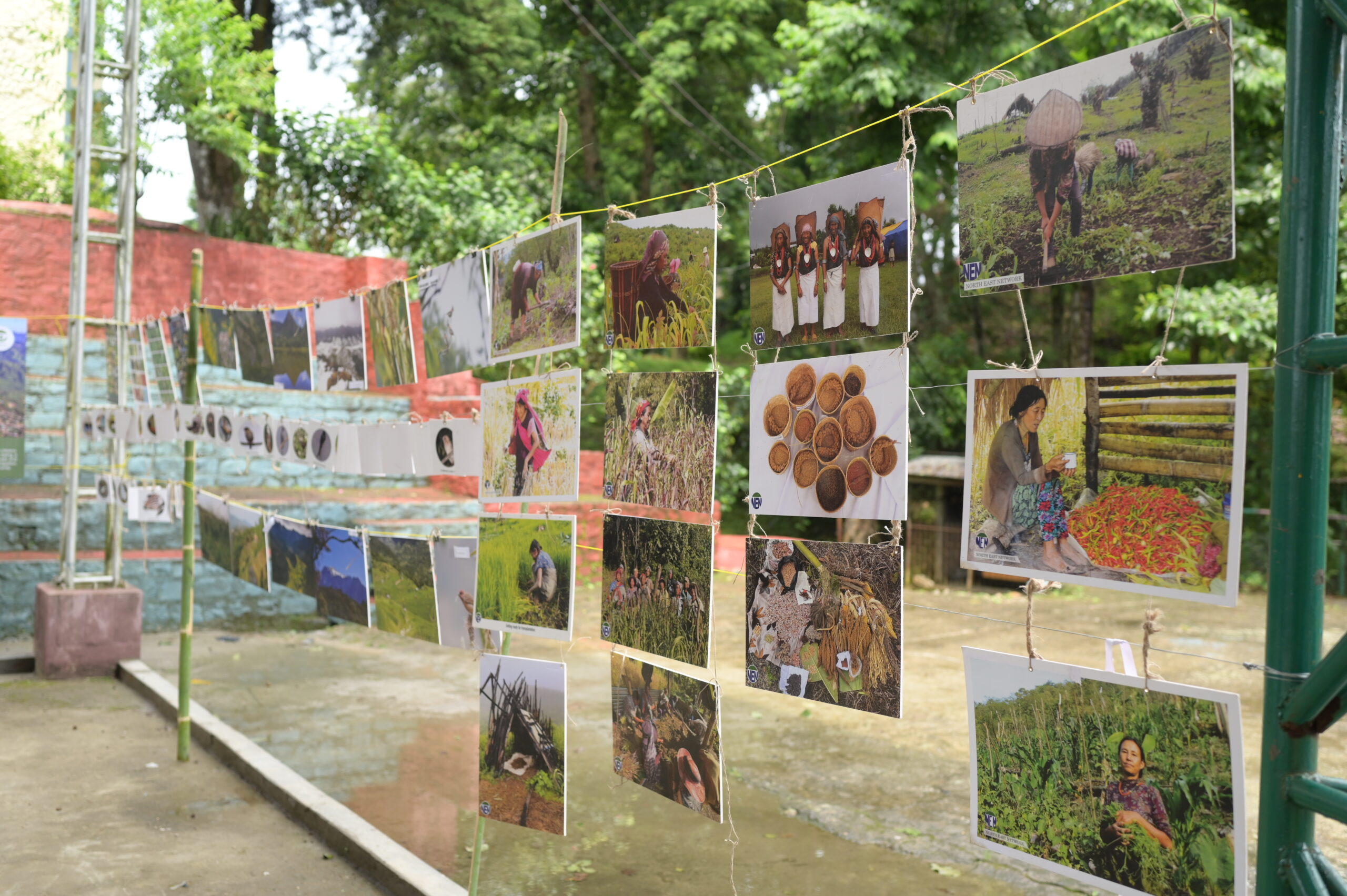
Caption: Photo Exhibition showcasing the women and its integral relationship with local biodiversity during Nagaland CCA Meet 2024 at CTC, Aolijen, Mokokchung. Credit: Nagaland Community Conserved Area Forum and North East Network
Connecting communities through the NCCAF
While many villages had established conservation areas, these initiatives often developed in isolation. Recognising the need for collaboration and shared learning, community leaders and conservation practitioners established the Nagaland Community Conserved Areas Forum (NCCAF) in 2014. The forum was created as a platform to connect community conserved areas across the state and globally, and strengthen collective conservation efforts grounded in Indigenous stewardship. Today it is a member of a larger global network – the ICCA consortium – for solidarity and self-strengthening of such movements globally.
Today, the network has membership from 38 Community Conserved Areas (CCAs) across 139 villages and connects over 407 other CCAs protecting nearly 1,700 square kilometres (170,000 hectares) of forest in Nagaland. The NCCAF works within the globally significant Indo-Burma Biodiversity Hotspot, one of the world’s most biologically important yet threatened regions. Through meetings, workshops, and knowledge exchanges, the forum enables communities to share experiences, discuss conservation challenges, and strengthen local governance. The NCCAF also supports biodiversity documentation, management planning, and youth engagement initiatives that help communities monitor wildlife and manage their forests more effectively.
By linking villages across the state, the forum also promotes a landscape-level approach to conservation. Fragmented forests can threaten wildlife survival, particularly for species that depend on large, connected habitats. Through dialogue and cooperation among neighbouring communities, efforts are being made to protect ecological corridors and maintain contiguous forest landscapes. The forum also engages with policymakers and partners to advocate for greater recognition of community conservation within state-level environmental policy.
Across Nagaland, these forests are increasingly safeguarded, not only through government initiatives, but also through the collective efforts of communities themselves. Village councils enforce conservation rules, youth document biodiversity, and communities work together to protect their lands.
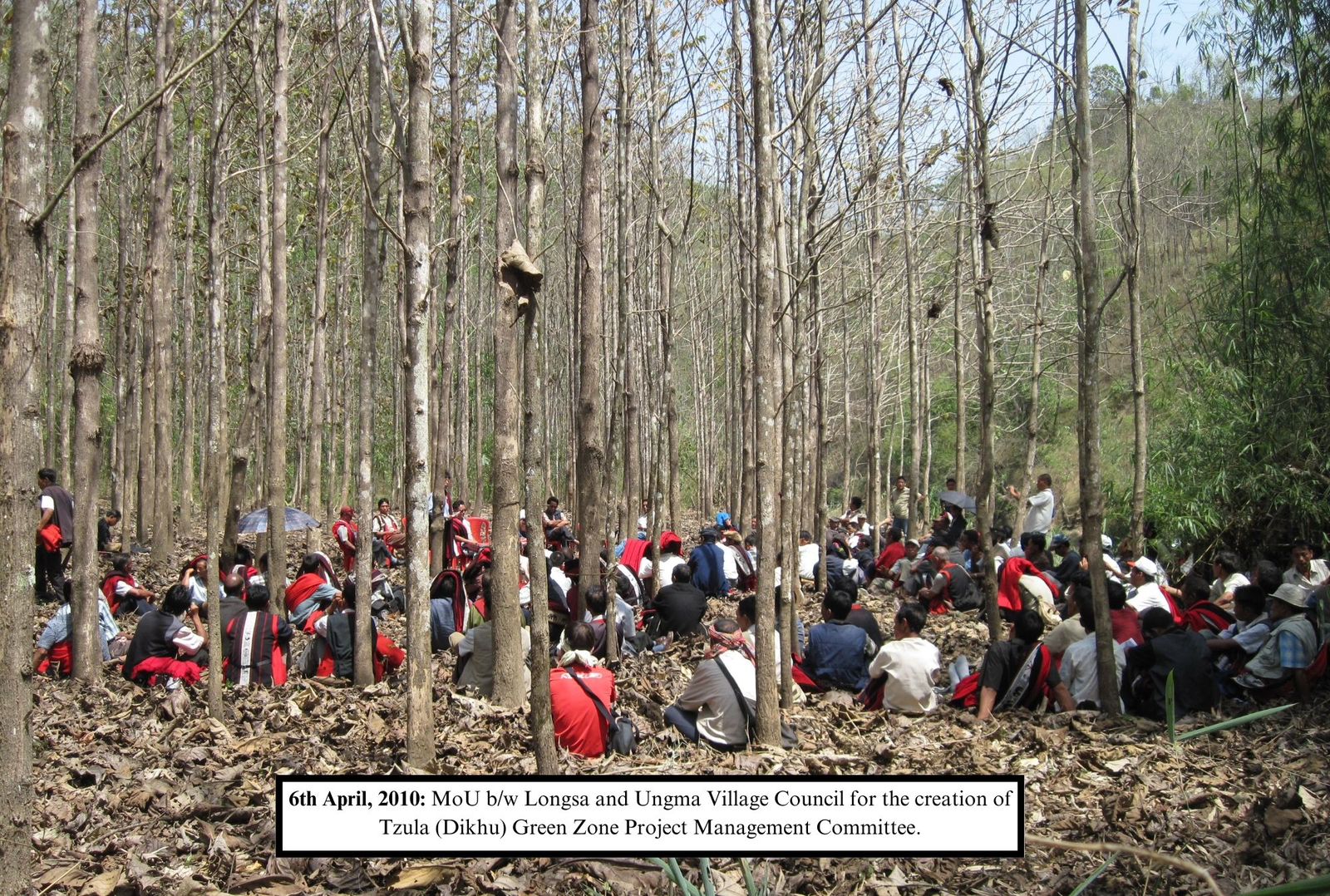
Caption: MoU between Longa and Ungma village Council for creation of Tzula (Dikhu) Green Zone Project Management Committee, Mokokchung District, Nagaland. Credit: Tzula (Dikhu) Green Zone Project Management Committee
Biodiversity protected by community forests
The forests protected by community conserved areas in Nagaland support remarkable biodiversity and provide habitats for several globally threatened species. Among them are the Great Indian Hornbill, Blyth’s Tragopan (the state bird of Nagaland), the Western Hoolock Gibbon, and the Chinese Pangolin.
Recent scientific discoveries further highlight both the richness and the still largely unexplored nature of Nagaland’s biodiversity. In recent years, researchers have described new species such as the flowering plant Aeschynanthus clarkei and the hill-stream catfish Exostoma sentiyonoae from the Dzuleke River. The horned frog Megophrys dzukou was identified from the Dzükou Valley, while botanists have also rediscovered species long thought absent from the region, such as the flowering shrub Silene vagans after more than a century.
Other findings include new plant records like Saxifraga rufescens var. Rufescens, recorded in Nagaland for the first time this decade, and newly discovered species such as Curcuma ungmensis from Ungma in Mokokchung district, recorded for the first time in 2024. For more species discovered within Nagaland, please see the annex below.
In addition, rare butterflies and other lesser-known invertebrates continue to be recorded across community forests. These discoveries demonstrate that Nagaland’s forests remain an important frontier for biodiversity research, where community-protected landscapes often provide critical habitats for species that are still being documented by science.
Many of these species depend on large, intact forests for nesting, feeding, and movement. Hornbills, for example, play a crucial ecological role as seed dispersers and require tall, mature trees for nesting. Similarly, the Western Hoolock Gibbon, the only ape species found in Northeast India, relies on continuous forest canopies for survival.
Community conservation initiatives therefore focus not only on protecting forests but also on restoring habitats that support wildlife. In several villages, hunting bans and community patrols have helped reduce pressure on vulnerable species. Habitat restoration initiatives such as planting fruit-bearing trees, maintaining salt licks, and protecting waterholes have further improved ecological conditions.
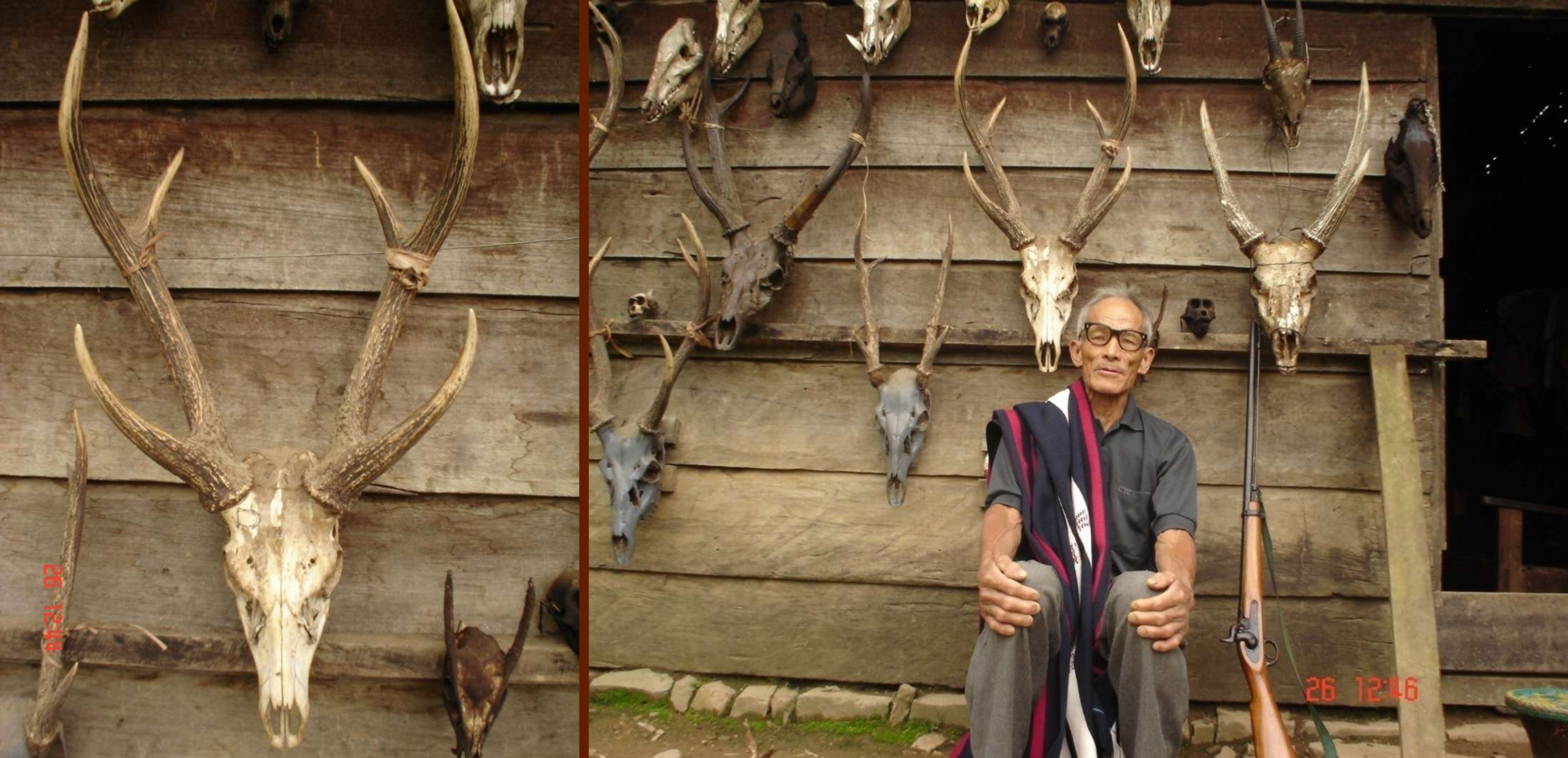
Caption: Trophies of Sambar heads displayed at a Clan’s headman's house in Sendenyu village, Tseminyu district. Display of animal trophies outside the house is a tradition in Naga culture. Credit: Sendenyu Community Biodiversity and Wildlife Conservation Board
Success stories: community-led conservation actions
Pangti, Wokha district
One of the most widely recognised conservation successes in the region involves the protection of the migratory Amur Falcon. The Doyang Reservoir, Pangti, in Wokha district is globally recognised as the “Falcon Capital of the World” due to it hosting the single largest congregation of these migratory raptors ever recorded.
The falcon was heavily hunted during its seasonal stopover in Northeast India for local consumption and commercial sale with over 120,000 birds estimated to be killed annually in Nagaland as of 2012. However, the bird’s fate changed through community awareness and collective action. Village leaders, churches, women and youth groups promoted conservation values, and communities voluntarily stopped hunting the falcons. Today, the arrival of thousands of Amur Falcons during migration is celebrated as a symbol of ecological recovery and community pride.
“The Amur Falcon migrates across continents – a journey that represents a free world without borders.”
Nuklu Phom, from Yaongyimchen village, Longleng district, who received the Whitley Award for outstanding conservation action due to leading an initiative to protect the Amur falcon
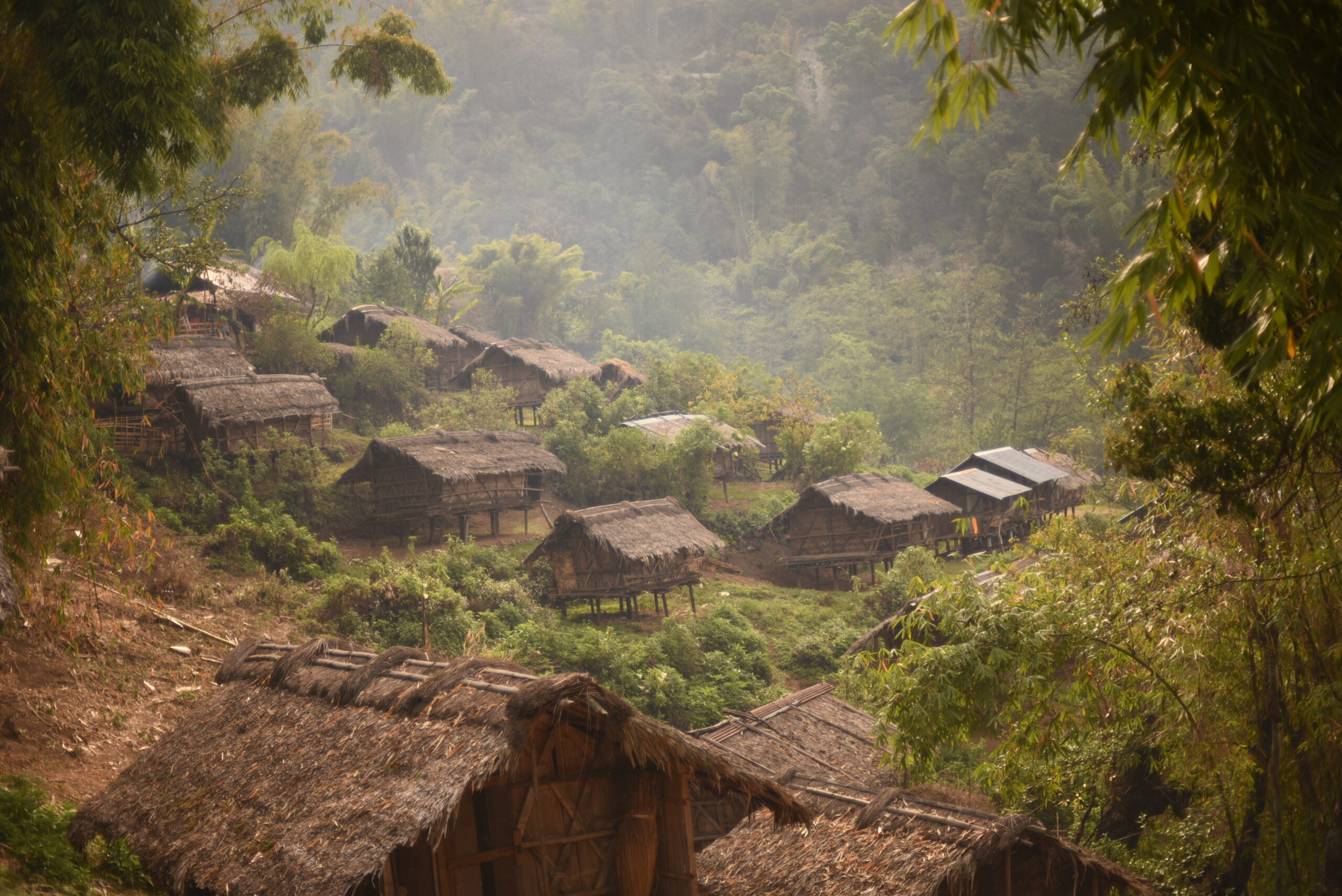
Caption: Rice granaries at Choklangan village, Noklak District, Nagaland. Granaries serve as an integral part of the food security ecosystem in the Naga community. Credit: Choklangan Community Conserved Area Committee and LEMSACHENLOK
Khonoma, Kohima district
Several other villages also illustrate the impact of community-led conservation. The village of Khonoma, in Kohima district, often recognized as India’s first “green village,” offers a particularly clear positive example of Indigenous community governance for biodiversity conservation.
After around 300 Blyth’s Tragopans were reportedly killed in the village in 1993, the village council, following several years of community deliberation, established the 2,000-hectare Khonoma Nature Conservation and Tragopan Sanctuary in 1998 and extended a hunting ban across the village. The community subsequently created a local trust, established conservation rules and penalties, and involved village youth as wardens to monitor compliance. Restrictions on timber extraction and other resource use further protected the forest habitat.
Kalpavriksh reports that wildlife populations that had previously declined under hunting and habitat pressure were beginning to recover, with villagers reporting increasing sightings of Blyth’s Tragopan and other wildlife. While no reliable longitudinal population estimate is available to quantify the increase, the case demonstrates how community rules, monitoring and enforcement can reduce hunting pressure and support wildlife recovery.
Caption: Photo Exhibition showcasing the women and its integral relationship with local biodiversity during Nagaland CCA Meet 2024 at CTC, Aolijen, Mokokchung. Credit: Nagaland Community Conserved Area Forum and North East Network
Sendenyu village, Tseminyu district
Similarly, Sendenyu village in Tseminyu district offers a strong example of community-led conservation. Concerned about declining wildlife and habitat, villagers established a wildlife reserve in 2001 and adopted the Sendenyu Village Council Wildlife Conservation Act, introducing restrictions on hunting, trapping, fishing and forest-resource extraction. Youth groups and community members participated in monitoring and enforcement.
The community also planted fruit trees for birds, protected vulnerable forest areas and constructed micro-check dams and water-harvesting ponds to recharge groundwater and provide drinking water for wildlife. These measures helped restore habitats and reduce pressure on wildlife. Recent community-supported camera-trap surveys recorded 11 mammal species, including the clouded leopard, red serow, sambar and northern red muntjac, providing a baseline for future monitoring. The landscape has also yielded the newly described Caecilian Ichthyophis sendenyu, named after the village.
Together, these examples demonstrate how Indigenous governance systems and community stewardship can effectively sustain biodiversity across landscapes while strengthening ecological resilience and cultural responsibility.
Challenges and emerging responses
Despite strong community commitment to conservation, forests in Nagaland face several challenges. Deforestation, agricultural expansion, hunting pressures and habitat fragmentation continue to threaten biodiversity and reduce ecological connectivity. Climate variability and changing rainfall patterns are also affecting forest ecosystems and water sources. At the same time, livelihood patterns are changing, from largely subsistence-oriented farming and traditional forest-based livelihoods, toward more market-oriented agriculture, cash-crop production and greater commercial use of forest resources. Population growth and shortening jhum fallow cycles can further increase pressure on land and forests. These changes highlight the need to strengthen community-led conservation systems that can adapt to evolving livelihood needs while maintaining biodiversity and ecosystem services.
In response, community networks are promoting collective solutions that combine traditional knowledge with contemporary conservation approaches. Awareness programmes, nature education initiatives, and collaborations with researchers and civil society organisations are helping strengthen conservation practices while engaging younger generations.
Lessons for global biodiversity governance
Across the hills of Nagaland, Indigenous stewardship continues to sustain forests and wildlife through deep cultural relationships with nature. The experience of community-conserved areas demonstrates that biodiversity thrives when local people remain at the centre of conservation and when their governance systems, knowledge, and rights are respected.
The work of the Nagaland Community Conserved Areas Forum also offers important lessons for global biodiversity governance. Community-led conservation initiatives show how Indigenous institutions can contribute meaningfully to international goals such as the Kunming–Montreal Global Biodiversity Framework, which calls for stronger recognition of Indigenous Peoples and Local Communities in protecting the world’s biodiversity.
Ultimately, conservation is not only about protecting forests; it is about sustaining relationships between people, land, and future generations. As one community youth leader reflected, “Our elders protected these forests through tradition. Today we continue that responsibility, but we also see that our conservation efforts matter not only for our villages but for the world.”