

We, the Indigenous Peoples, have for millennia stood our ground in our territories, defending human rights and life in all its forms. In Colombia, amidst the historical dynamics of the internal armed conflict, we have not only resisted but have also built sustainable peace processes: peace between communities and peace with nature. Thus, we have strengthened alliances such as the one that brings us together today: a partnership between the CIASE Corporation, a mixed-gender feminist organization, and the Gran Tescual Pan-Amazonian Indigenous Reserve, united by a fabric of transformative resilience and active hope.
This partnership has been forged through years of collaborative work, with the most recent milestone being the development of the Biodiversity and Climate Change Management Strategy. This strategy is conceived as a collective, long-term response to the climate crisis and biodiversity loss, which fundamentally reshapes the relationships between territory, biodiversity, culture, the economy and self-governance.
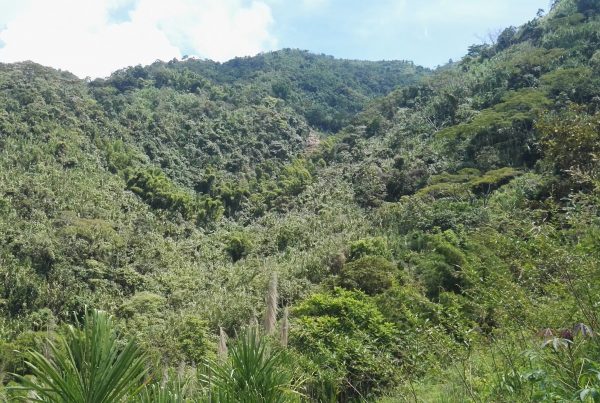
The territory of the Gran Tescual Indigenous Reserve is situated within a transitional ecosystem between the Andes and the Amazon, constituting an ancestral Pan-Amazonian indigenous territory of vital importance for the conservation of biodiversity and river basins. It has been inhabited for millennia by the Indigenous People of Los Pastos; the reserve covers an area of 10,174 hectares, and a further 26,000 hectares are currently subject to precautionary measures for restitution.
Geographically, the Resguardo is situated in the municipality of Puerres in the department of Nariño, in the south-western part of the country; it is one of the 15 largest municipalities in the department, covering an area of 478 km². It lies at an average altitude of 2,700 metres above sea level and has an average temperature of 12°C. On the map of Nariño’s physiographic regions, the municipality lies within the Andean region of the Eastern Cordillera.
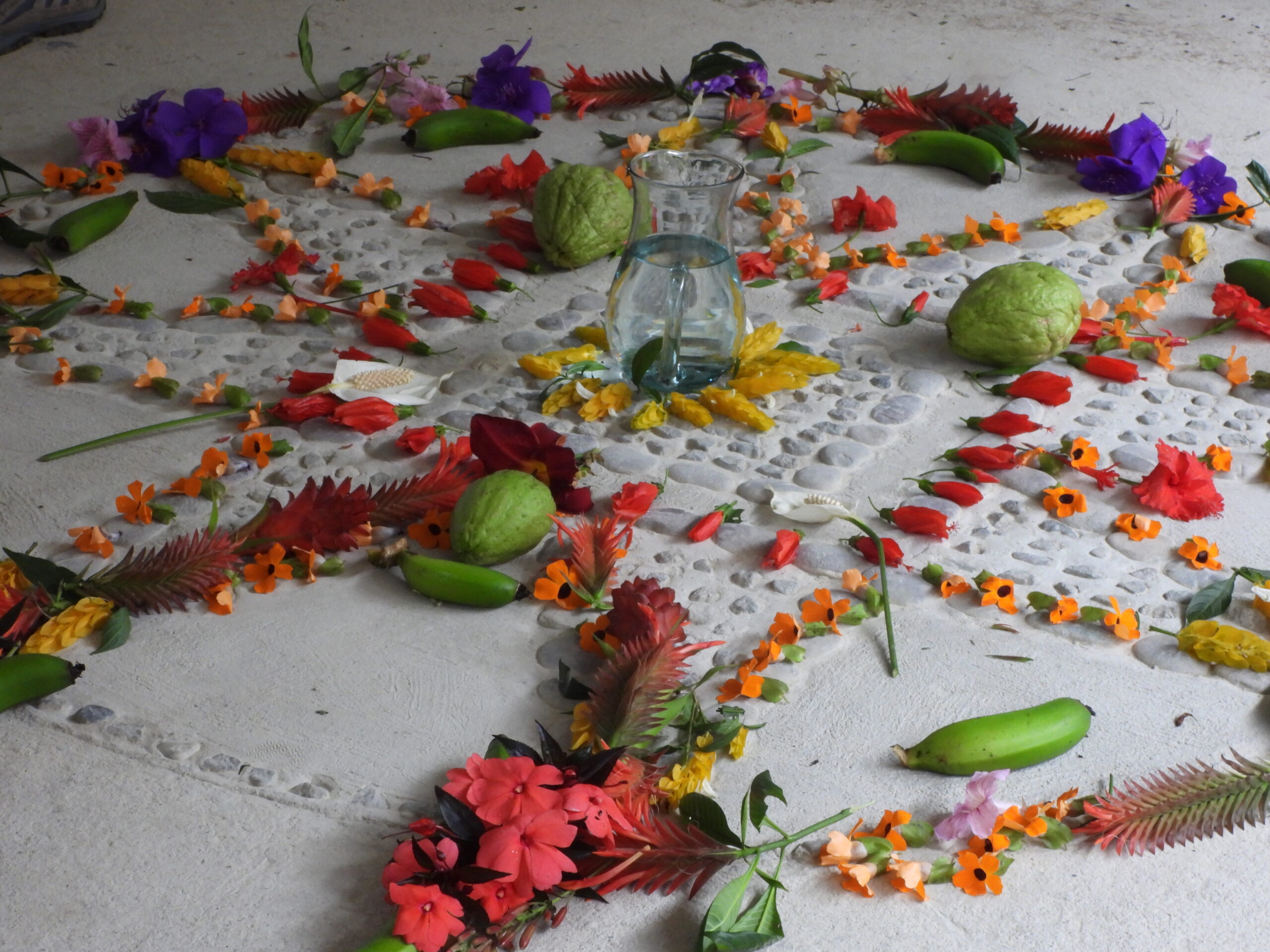
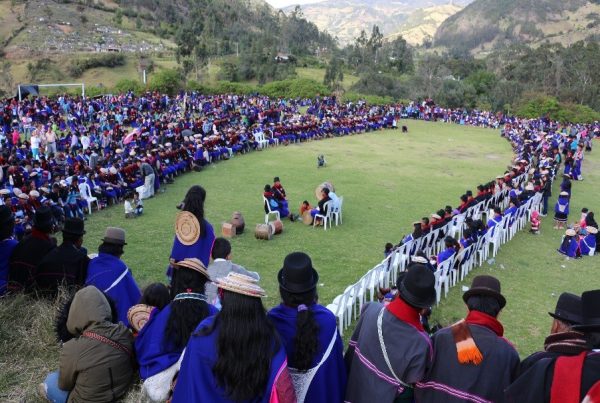
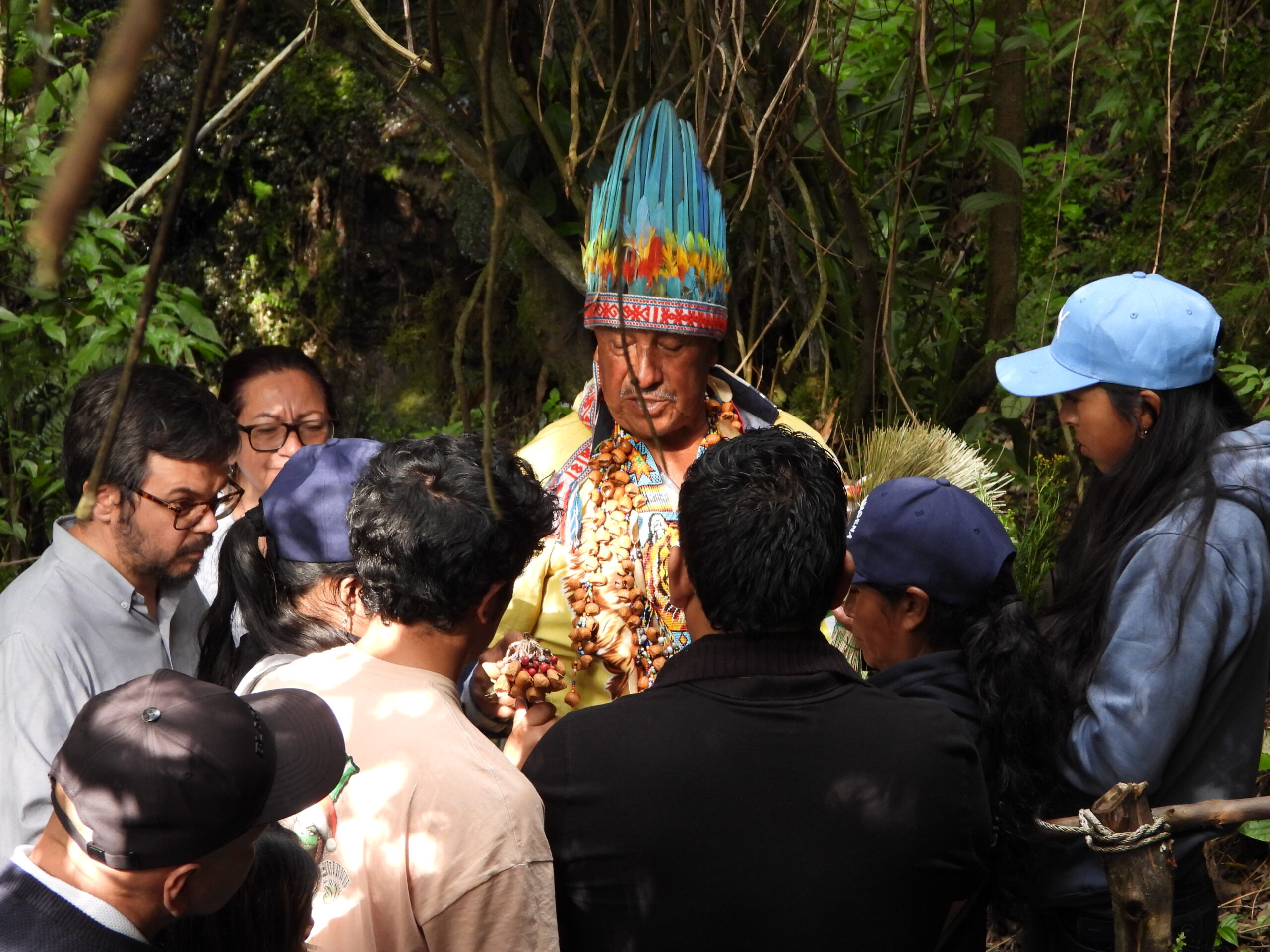
Image: Harmonisation ceremony. Credit: Elízabeth Hernández
Contributions to the targets of the Kunming-Montreal Global Biodiversity Framework
The Gran Tescual Strategy makes a concrete contribution to Goals 1, 3, 21, 22 and 23, which seek to ensure full, equitable and effective participation in the conservation and sustainable use of biodiversity, as well as to promote indigenous knowledge and forms of territorial governance, as set out in the table below.
- Recognises and strengthens Indigenous self-governance as the legitimate authority for the management of land and biodiversity (Targets 1 and 3)
- It incorporates ancestral knowledge as the basis for climate and ecological planning, moving beyond extractive or purely technical approaches (Target 21)
- Promotes the differentiated participation of indigenous women, young people and older people, ensuring inclusive and intergenerational governance (Target 22)
- Defends the territory as a living entity, linking biodiversity, spirituality, culture and Buen Vivir (Target 3)
- It positions the city of Pasto as a key player in climate and biodiversity issues, with the capacity to exert influence at local, national and international levels (Target 20).
Initiatives or activities carried out in the region
Une bonne planification de l’aménagement du territoire (aménagement du territoire), which enables the use and management of resources on an ecological basis and through the direct and full participation of the whole community. Independent ecological monitoring.
Traditional and agroecological agri-food systems, in which the chagra is established as a hub for biodiversity conservation, the transmission of knowledge and food sovereignty.
Transformative and care-based economies, which incorporate community-led energy transition, biocultural tourism and local economic cycles that are consistent with ecological limits.
An inclusive and transformative democracy, strengthening self-governance, community-based political education, intergenerational dialogue and multi-level advocacy on public policies relating to climate and biodiversity.
Intercultural knowledge management, through the integration of ancestral knowledge and conventional science. This is combined with the latest technology to strengthen our impact on the younger generation, as well as on national and international institutions. For example, we have an environmental geovisualiser embedded on our website, which is used to locate and map different places and processes of importance to the whole community. In addition, there is the ‘Escuela Viva’ and other forums for the exchange of knowledge, which bring together environmental and climate science with ancestral knowledge.
These measures are aimed at transforming the structural conditions that affect biodiversity, whilst ensuring effective participation, indigenous leadership and territorial control, as described below.
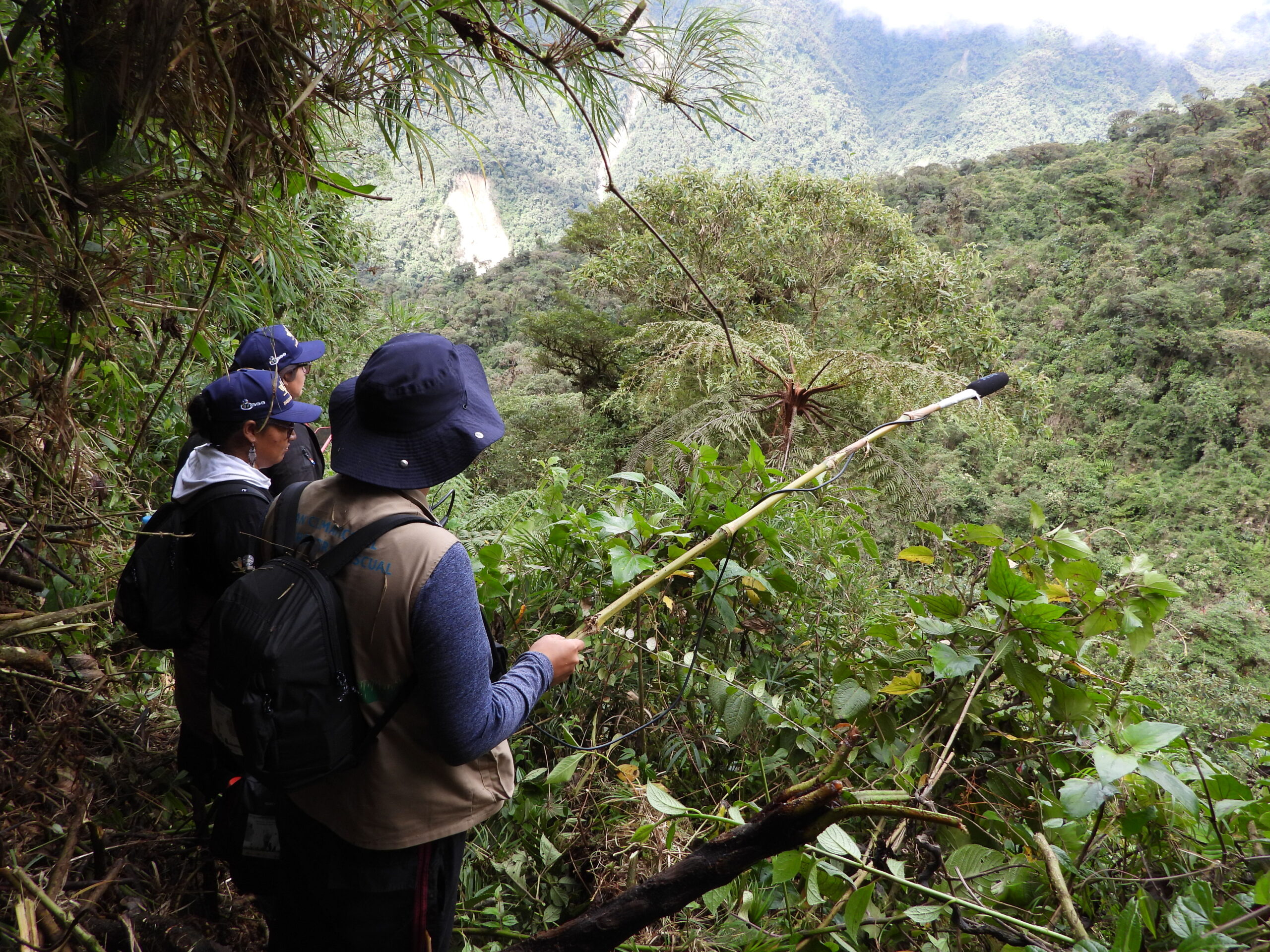
Image: Participatory environmental monitoring. Credit: Elízabeth Hernández
Une bonne planification de l’aménagement du territoire (aménagement du territoire)
The Andean-Amazonian landscape of the Gran Tescual Resguardo is organised according to an ecological worldview centred on water systems. This is where the ‘flying rivers’ flowing from the Amazon converge with water sources centred on the páramo ecosystem and the Amazonian foothills, as well as groundwater. For this reason, in their own language the territory is called ‘Tescual’ – ‘water from afar’ – and is conceived as a feminine territory, in accordance with the territorial interpretation, the worldview and the wisdom of the elders.
In-house monitoring and analysis of the territory
Community initiatives centred on the Indigenous Environmental Guard – a community organisation run by the Indigenous Peoples themselves – aim to monitor, protect and care for the territory and life through self-governance. These initiatives take the form of patrols with a biocultural approach that connects with sacred sites and areas of ecological importance. They foster intergenerational participation among women, older people and young people, who take part in and lead community monitoring programmes to protect species such as the Andean bear and flagship bird species through everyday practices, supplemented by camera traps, sound recorders and monitoring carried out by local guides.
The field trips are complemented by collective thinking sessions and knowledge-sharing workshops, which help to identify perceptions of change in ecosystems, water sources and species conservation within the territory. Furthermore, work is being carried out using social cartography to add records to the Community Geographic Information System, and to compile ethnobotanical, ethno-ornithological and Amazonian orchid guides. All these tools bring together Indigenous and scientific knowledge.
Every year, the community has celebrated Global Big Day – an annual international birdwatching event – as a platform to promote bird research and observation. Within the community, this event brings together scientists, young people and local experts from the Andean region and the Amazonian foothills, highlighting bird diversity based on the number and classification of species.
Conservation measures to counteract external pressures
It is important to note that the Andean-Amazonian biome is subject to considerable external pressures. On the one hand, there is pressure from mining companies seeking to explore for and extract copper and its derivatives; on the other hand, there are oil companies responsible for transporting hydrocarbons from the Amazon to the Pacific via the Trans-Andean Pipeline. To counteract this situation, measures to protect and conserve the territory have been sought through local governance mechanisms, including the establishment of the Resguardo, TICCA, OMEC, KBA and the Cerro Negro-San Francisco Protected Area Declaration.
In this way, the Resguardo, as a legal framework recognising the territory, has enabled the community to exercise its collective right to administer the territory through self-governance, guiding a process under the motto ‘reclaim our way of thinking to reclaim everything’. It has now been registered as a ICCA (Indigenous Peoples’ and community conserved areas and territories) territory at national and international level, recognised by UNEP-WCMC. Furthermore, efforts are being made to establish an OECM (other effective area-based conservation measures) territory, based on the páramo and high Andean forest ecosystems that are vital for endemic and migratory birds.
Similarly, within this high-mountain páramo ecosystem, a process of study and dialogue is underway regarding the designation of a protected area known as ‘Cerro Negro – San Francisco.’ This is a strategically important environmental area, shared with other indigenous reserves, which is to be registered within the National System of Protected Areas (SINAP) in accordance with Colombian legislation, with a view to conserving biodiversity and regulating activities. What is important about this Protected Area is that it prioritises respect for, and the application of, the existing forms of self-governance within our Gran Tescual Indigenous Reserve. We also wish to ensure that this area is registered as a contribution to Target 3 of the Kunming–Montreal Global Biodiversity Framework, as an Indigenous and Traditional Territory, thereby supporting the proposals of the International Indigenous Forum on Biodiversity (IIFB).
Furthermore, a dialogue has been established between the indigenous self-government and government bodies through the implementation of Decree No. 1275 of 15 December 2024, which recognises the environmental authority of Indigenous authorities within our own territories at national level, the implementation of effective conservation measures, and co-governance between institutions and communities for the benefit of the community.
These measures aim to strengthen and protect the territory through the law, foster cultural initiatives and ensure effective environmental conservation.
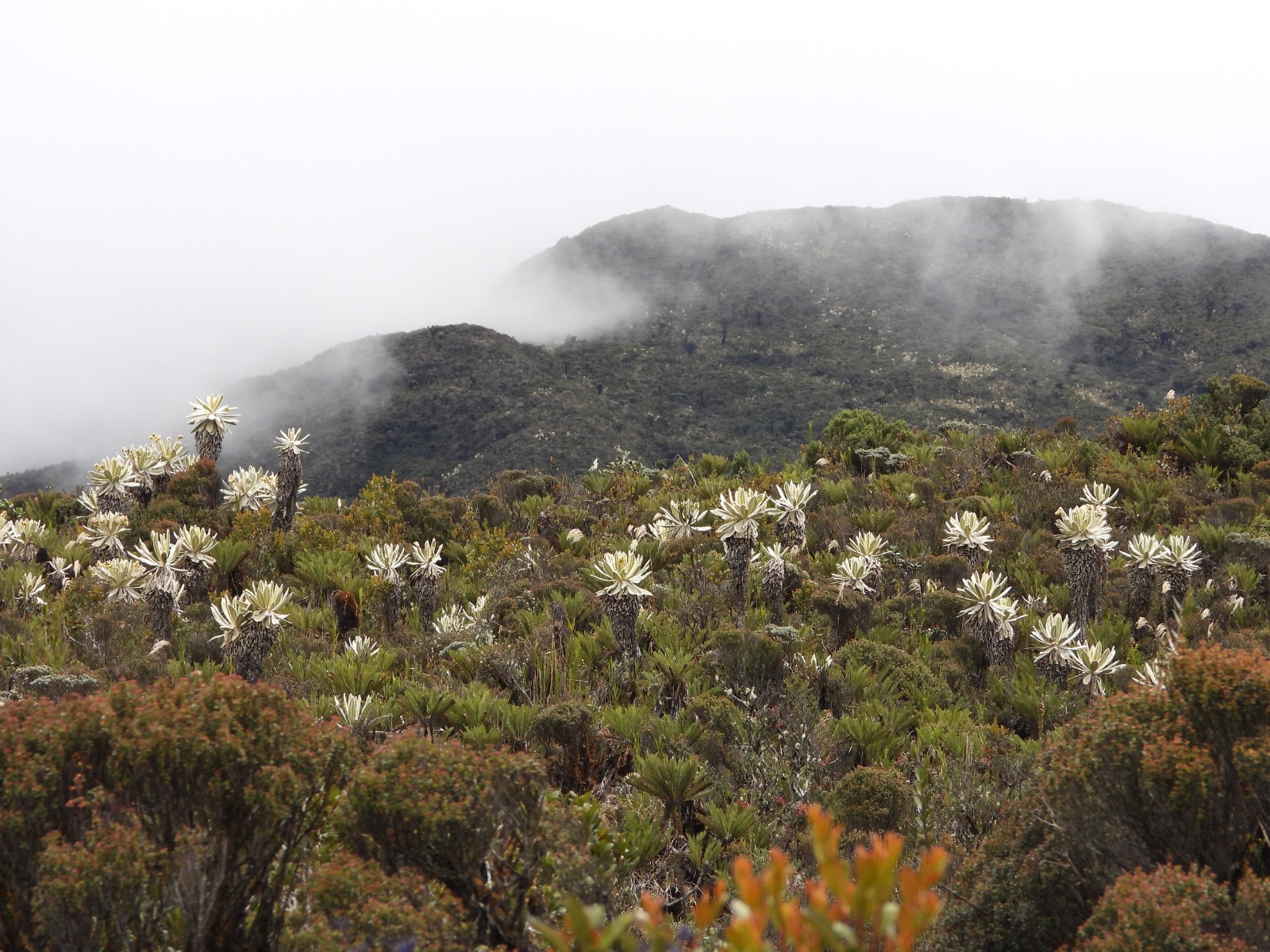
Image: Panorámica del territorio indígena del Gran Tescual. Credit: Elízabeth Hernández
Consequences of the armed conflict and measures to counter them
It is important to put into context how the internal armed conflict that Colombia endured led to environmental, cultural and territorial impacts. Water sources were contaminated, highly sensitive ecosystems such as the páramo were affected, and endemic species such as the Andean and Amazonian tapirs were lost. Following the signing of the Peace Agreement, the community called for measures to clear the territory of anti-personnel mines, which enabled progress to be made in establishing mine-free zones.
Currently, through a legal claim against the Colombian State, the community is seeking the urgent adoption of interim measures to ensure the protection, security and collective redress for the territory and the community in the face of the harm caused by companies, institutions and armed groups. Consequently, strengthening community governance and knowledge of the territory enables us to accurately identify the challenges facing our own land-use planning, thereby strengthening the peace processes, indigenous territorial rights and preventive measures.
Ecological restoration strategy
Furthermore, the use of ecological resources is determined by analysing the relationship between food production and the conservation of ecosystems. The ecological restoration strategy, guided by the natural principle of ‘restoring the mind to restore the land,’ recognises that reforestation processes are driven by the propagation of native plant seeds, day-to-day plant care practices, propagation techniques, and careful attention to growth and harvesting. This dialogue between the spiritual, medicinal and everyday perspectives on plants has strengthened both traditional knowledge and the community.
To this end, there are nurseries in the Andean and Amazonian foothills, built using eco-construction methods based on traditional techniques such as adobe, thatched roofing and timber. These processes of adaptation to climate change serve as centres for learning, plant propagation and initial care, carried out by women from the reserve. Seeds are collected from the forest, mountain humus and other native sources. Seed propagation using a trial-and-error approach has helped to identify effective techniques for the region.
Key areas, such as ecological reserves, have been reforested with the support of the community, moving away from eucalyptus monoculture towards a diversity of native plants such as motilón, carbunquillo and moquillo. Other measures implemented have focused on the georeferencing of conservation areas, such as water sources and water-stressed zones, to facilitate the regeneration of forests and páramo.
This monitoring and research process has yielded a number of outcomes, including the illustrated botanical guide to the Gran Tescual Reserve, the biodiversity and livelihoods assessment, and the climate adaptation strategy. Work is currently underway to produce guides on chillies, birds, amphibians and ferns.
Traditional and agroecological agri-food systems
The Indigenous community’s experience has been shaped by a perspective centred on caring for food. Fundamental to this has been the dialogue, drawing on ancestral memory, regarding production techniques based on caring for the soil, seeds, sowing, cultivation and harvesting, guided by the cycles of the moon. In this sense, the agroecological transition process has been understood not only as a system of actions, but also as a social movement that fosters awareness, participation and social activism around agroecology. It offers an opportunity to look after the physical, mental and emotional wellbeing of every Indigenous family, connecting them with the power of the land.
This technique, as a traditional practice within communities, is based on soil restoration, as the soil has been under pressure from agricultural practices involving the use of pesticides. To this end, transitional systems have been implemented involving the preparation and application of organic fertiliser to restore microbial life, thereby fostering a relationship of care for the soil that enables the sowing of native seeds and the production of food that promotes health as the foundation for life and well-being.
The shagra or chagra, acting as a hub for community engagement and scientific research based on a knowledge-centred approach, has succeeded in identifying the working methods documented in field studies and the replication of lessons learnt. It has strengthened a process of transition in establishing agroecology as a social movement for health and life, gradually moving beyond conventional agriculture.
Culturally, priority has been given to the values and principles that govern the community, based on work on the chagra, as a means of implementing a form of education of their own. This education combines research into biodiversity with an understanding of customary law and natural law, in order to appreciate how caring for the entire production cycle requires preparation. This preparation centres on the transmission of knowledge, including an ongoing intergenerational dialogue, which ensures the continuity of the production cycle and the passing on of knowledge from the elders to the children and young people of the community.
Biodiversity, understood in relation to the chagra, encompasses a much broader definition. The Indigenous community associates the chagra mayor with the existence of the mountain as a source of water reserves, which flows to moisturise the soil; and this, in turn, together with the seed, gives life to the cycle of germination that links time and space. These traditional beliefs, which are linked to the chagra, have led to progress in water management planning to maintain living soils and, consequently, to produce healthy food.
The crops that have been the mainstay of farming on the smallholdings are determined by the soil’s suitability for production. In the Andean region, this is represented by the cultivation of potatoes, barley, maize, blackberries, vegetables and fruit trees, which enable sales and trade. As for the Amazon region, efforts have been directed towards improving soil quality to ensure a more profitable production cycle and better plant care, primarily for sugarcane, fruit trees and forestry crops. This has made it possible to identify areas of importance for the conservation of biodiversity, thereby ensuring autonomy both in the methods used and in the outcomes of the experimental chagra – that is, experimental intercropping schemes within the larger chagra or the family chagra.
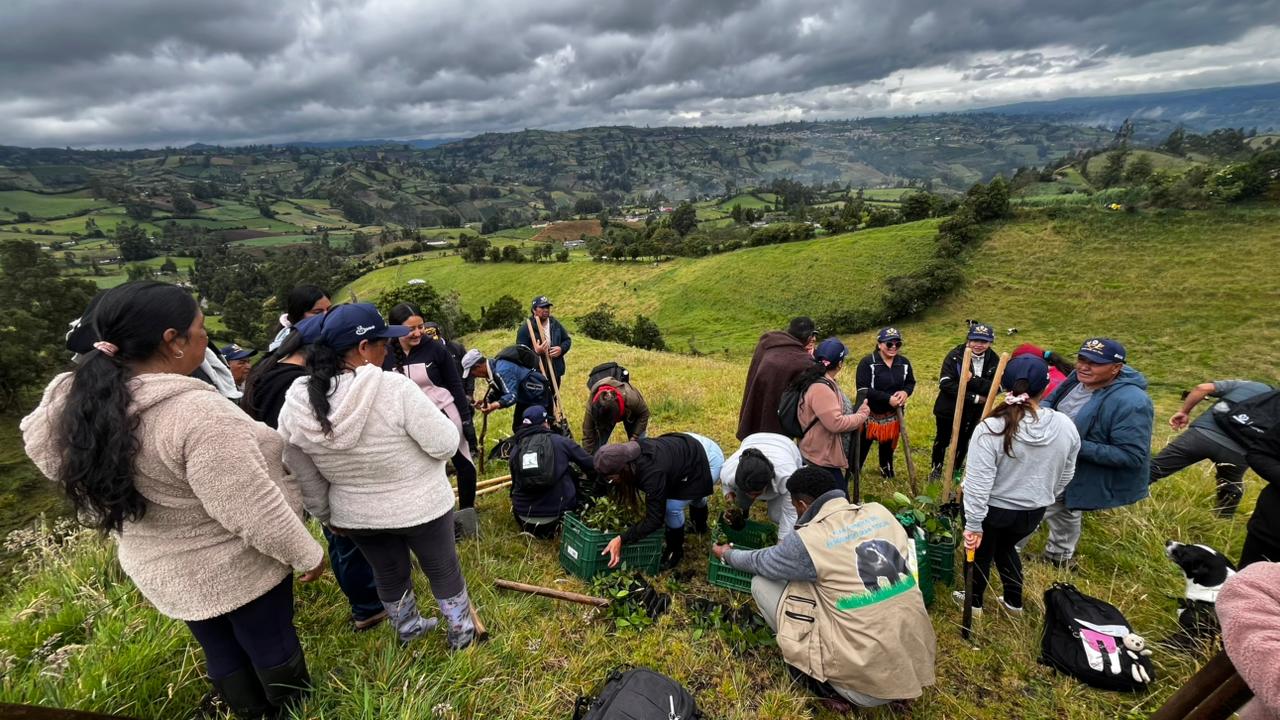
Image: Collective work for food security. Credit: Elizabeth Hernández
Transformative and care economies
Transformative and care-based economies represent the driving force that enables the Pasto people of Gran Tescual to sustain life without relying on extractive models or markets that fragment the territory. They reshape the relationship between energy, labour, spirituality and community. These actions seek to eliminate the gender division of labour between men and women, recognising the excessive care burdens borne by women in rural areas. Caring for the territory is a joint endeavour between women and men, strengthening the community ties that sustain life. This is why the need to move beyond individualised approaches to entrepreneurship and towards collective, interconnected and territory-based initiatives is emphasised.
It is important to understand how a system of thought emerges that transforms planning and everyday practices. This new perspective challenges the structures of a system that controls cultural systems, leading to an extractivist dependence on natural resources.
The Gran Tescual is founded on a body of knowledge that places the care of life, the natural environment and human beings at its heart, encompassing a holistic understanding of the connection between well-being and the sustainability of life in all its dimensions.
Strategic planning at a local level therefore constitutes an approach that links economic relations to a specific place. It recognises challenges and actions that transform the connection with the land and seeds, as well as strategic innovations in community organisation. All of this creates a concept of wealth insofar as it involves a place free from pollution of water sources and the air, the protection of biodiversity, productive soil for growing healthy food, and the creation of fair-trade networks that promote economic sustainability and a strong social fabric.
Biocultural tourism, economic circuits and a just transition
In this way, a range of initiatives are carried out through biocultural tourism as a strategy for collective life. The region has a tourism plan based on the ‘five worlds of life,’ as well as a technical process aimed at strengthening community-based tourism, promoting cultural heritage and recognising the region as a living space. This approach highlights the potential of sacred sites, ancestral memory, gastronomy, syncretism and natural wealth. In turn, it is underpinned by productive networks that integrate smallholdings, community reserves and women-led enterprises, ensuring that benefits are distributed equitably and in line with ecological limits.
Local economic networks strengthen autonomy and solidarity through their own practices, such as bartering between the Andean and Amazonian regions, and the ‘mindalae,, a community-based exchange system in which each person contributes and receives goods. These dynamics are intertwined with ancestral celebrations such as the Kolla Raymi (Festival of the Moon), which recognises the value of seeds, femininity, fertility and water.
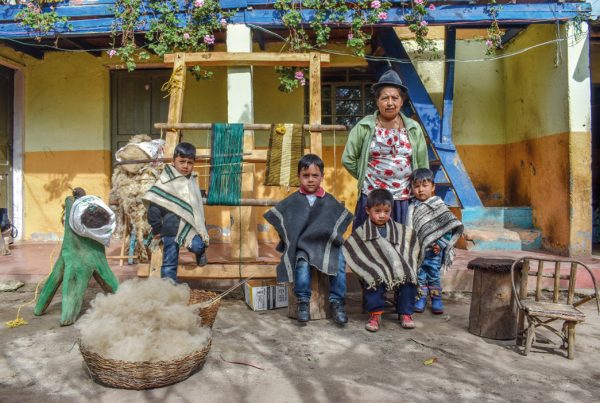
Furthermore, community-led initiatives are being promoted, such as a restaurant run by women, the production of yare baskets, textiles and yarn, and agroecological processes for producing static compost for vegetable gardens and chagras. The demonstration chagras are not only spaces for agroecological transition, but also foster culinary and spiritual practices that sustain social wellbeing. These initiatives are supported by collective structures such as the community enterprise EMAIGRANT, which promotes financial sustainability based on principles of solidarity, and by innovative tools such as the Tescual currency, which redefines economic value in relation to water and time. It is called the Tescual currency because it represents a kind of ‘green label’ for products originating from the agroecological chagras of the Gran Tescual Indigenous Reserve; when these products are purchased, a community-issued agroecological certificate is granted.
The energy transition in the region is understood as a just transition process underpinned by community governance, which seeks to transform inherited extractive practices into sustainable ways of life. In the face of imposed market dynamics, alternatives are being strengthened through everyday life, such as food sovereignty in the chagra and the restructuring of livelihoods, shifting from activities such as charcoal production to more sustainable ones. This process also recognises the spiritual and geographical dimensions of the region, where the South American and Nazca tectonic plates converge – interpreted in the Pasto people’s worldview as ‘the inner fire.’ They represent the connection between the Andean and Amazonian worlds, and how their stability also depends on the balance of the minerals that harmonise the territory’s energy centre and life, keeping it in equilibrium and harmony – or what is known as peace with nature.
Inclusive and transformative democracy
The community of the Gran Tescual Indigenous Reserve recognises and embraces a process of historical memory as the Pasto people. Through this exercise, it highlights the patterns of dispossession and social injustice stemming from the disregard for its own systems of territorial governance. This organisational initiative stems from resistance and focuses on the recovery of territory as a cornerstone for cultural survival in the face of processes that render the community invisible and impose identities that are at odds with harmony with nature.
It is imperative to analyse how external colonialism not only exercised territorial control but also fragmented the sense of collective ownership, giving rise to ‘internal colonialisms’. These are reflected in historical dependencies within social, economic and political systems that impose forms of power – such as liberal democracy – which are alien to indigenous communities. In contrast, indigenous forms of organisation stem from a sense of balance and an understanding of the cosmos; hence, cosmocracy constitutes a form of organisation based on respect for natural principles and dialogue with the great spirits.
On this basis, the work of Gran Tescual is situated within the context of resistance and resilience. The latter enables us to understand the dynamics of memory in the face of global crises such as climate change. Only in this way is it possible to establish an epistemological foundation that fosters dialogue between the global and the local, proposing a concept of democracy in constant dialogue with cosmocracy.
In the 21st century, the Gran Tescual is forging a path towards autonomy that engages with ideological diversity to ensure its survival. Faced with the question ‘How should we approach self-governance in the face of climate change?,’ the community responds with a community-based policy of ‘care for life.. By recognising international and national regulatory frameworks, the Resguardo has developed spatial planning tools that harmonise global debates with local practice. This challenge fosters a collective consciousness capable of influencing public policy and transforming our relationship with the land in the face of multiple global crises.
Consequently, the community-based actions of Gran Tescual, guided by an approach centred on the care of life, are grounded in everyday practice as a political and intercultural act. This ongoing dialogue brings together men, women, elders, young people and children, who form a community base capable of influencing not only decision-making forums within self-governance but also environmental public policy and research processes on biodiversity. These forms of leadership stem from the recognition of the individual as the driving force behind transformation; a transition that begins by integrating ancestral wisdom with technical knowledge. This balance enables a local response to global dynamics, creating systems of innovation in planning towards a fairer climate management framework that is in harmony with the survival of communities across time and space.
Intercultural knowledge management
Intercultural knowledge management in the Gran Tescual Indigenous Reserve represents a commitment to strengthening the relationship between ancestral memory, community education, innovation and territorial defence. It is not merely a matter of passing on information, but of sustaining a dynamic process of collective learning in which the traditional knowledge of the Pasto people engages in dialogue with tools for analysis, documentation, monitoring and communication.
Along this journey, the Escuela Viva has established itself as one of the leading educational and community spaces. It is a strategy that provides ongoing support for the various organisational processes across the region. Through this strategy, a range of issues are addressed in line with current needs and challenges: biodiversity, climate change, community monitoring, water stewardship, territorial governance, care economies, food sovereignty, biocultural memory and intergenerational learning.
As part of the Conserva Aves project, Escuela Viva has played a significant role in facilitating community training initiatives on land stewardship, bird conservation and the strengthening of monitoring systems. These initiatives have helped to generate new knowledge that complements the expertise and skills of the local leaders who work on the ground to protect biodiversity. The school’s facilities have enabled the wider community to take part in experiential learning activities; it is worth noting that environmental knowledge is not limited to technical aspects, but is intertwined with the history, traditional uses, life cycles and shared responsibility for the life and spirituality found within the reserve.
One of the key developments worth highlighting has been the creation of a technological tool known as the Gran Tescual Reserve Geovisor. It is integrated into the website and enables users to locate and visualise places, processes and elements of ecological, cultural and organisational significance. This tool complements the collective memory of the territory and the knowledge held by local experts, facilitating an accessible dialogue between local knowledge and institutions, partners and new generations.
A significant step forward in the area of knowledge management is the systematisation of the experiences and events that have shaped the work of Gran Tescual. This has been highly significant in revitalising the memory of territorial resistance, community identity and organisational social work, whilst also strengthening spaces for encounter from an intercultural perspective. We have been able to empower the younger generations so that they can bring to light the history, the struggle, the organisation and the resilience amidst conflicts, as well as the dynamics of governance underpinned by collective thinking and ‘good living’ in harmony with the land.
The importance of systematising the memory of the Gran Tescual has fostered significant interaction with other ethnic communities, Indigenous Peoples and civil society organisations, which has enabled the recognition of processes of transformation from a perspective of resilience. We are a community that has emerged from contexts of resistance, amidst armed conflict and stigmatisation stemming from a historical lack of understanding of ethnic identity – a situation generally caused by the various forms of colonisation suffered by Indigenous Peoples in Colombia. This has enabled us not only to draw on our history but also to validate the important ideas and contributions that Indigenous communities can make in the 21st century; in particular, El Gran Tescual, through its ability to recognise the multiple global crises surrounding climate change, the economy, food security and social issues. At the same time, this enables us to explore ways of working and responding from within our territory to ensure the cultural and physical survival of Indigenous peoples in harmony with nature.
These lessons were incorporated into the ‘Gran Atuczara’ climate planning strategy, a living document comprising three pillars: water and restoration; transformative and care-based economies; and democracy and relationships. Its lines of action are to mitigate, transform and advocate, representing a political vision that strengthens the reserve’s own governance and its life plan. We face the challenge of implementing and realising a locally-driven adaptation plan that serves as a source of global inspiration.
Link to Colombia’s National Biodiversity Strategy and Action Plan
This study of the Gran Tescual Reserve is linked to the National Restoration Strategy, which focuses primarily on two aspects:
- National Restoration Strategy (ENR 2023–2026): Focused on restoring biodiversity with targets aligned with the Global Biodiversity Framework (2020–2030); one of these targets (Target 3) is to restore 30 per cent of degraded ecosystems by 2030
- Targets for 2030: Colombia aims to ensure that 34 per cent of its terrestrial, continental and marine-coastal areas are conserved through protected areas and community-managed territories.
From this perspective, it is clear that Indigenous and Traditional Territories represent a key means by which Indigenous Peoples can contribute to conservation, provided that their recognition is based on territorial rights, the strengthening of self-governance, and autonomy.
The National Strategy also recognises the need to make progress on the legal formalisation of territorialities. To this end, it will be necessary to incorporate the ‘Plans for Life’ and local forms of land-use planning, to strengthen community-based systems for biocultural information and monitoring, and to define qualitative and quantitative indicators that enable the measurement of the territorial contribution to Target 3.
The Colombian experience of coordinating actions and indicators with Indigenous Peoples within the framework of the Biodiversity Action Plan to 2030 is also highlighted. Among other measures, this involves designing and adopting the category of ‘indigenous territories’ for the national report on indigenous contributions to conservation, identifying territories according to agreed criteria, and establishing a coordinated inter-institutional roadmap for the effective implementation of Target 3 of the Kunming-Montreal Global Biodiversity Framework.