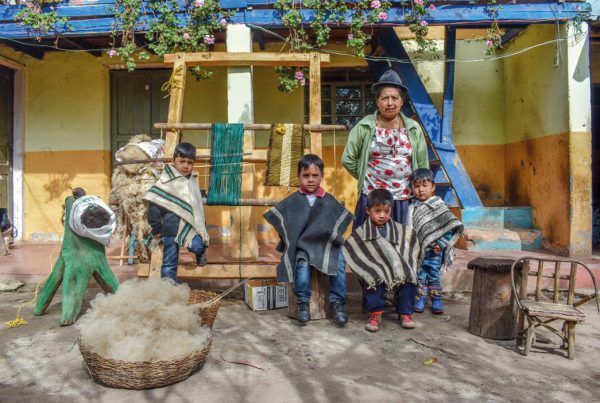

The MUTESA Cultural and Ecological Women’s Weaving and Knowledge Corporation, which has been championing the voices of Colombian women for over two decades, has established itself as a model of ongoing resistance and the transformation of indigenous women’s own ways of thinking. Its work is underpinned by women’s identity and sense of leadership, based on food sovereignty and the promotion of ancestral knowledge. This is reflected in the practice of traditional knowledge, drawing on their own knowledge and wisdom, and is grounded in the defence of the Amazon’s biodiversity, the defence of life, culture and the rights of indigenous peoples, with a particular focus on women’s rights.
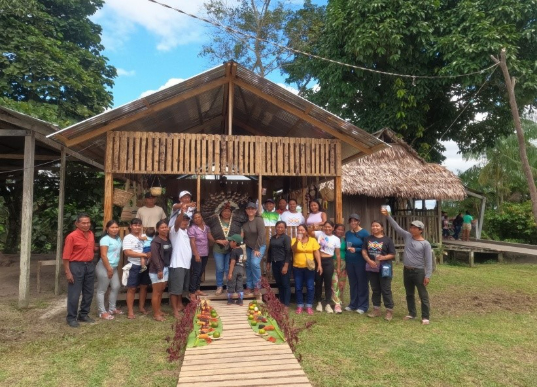
Caption: MOWACHA Restaurant, making the most of the bounty provided by the Amazon rainforest of the Nazaret Amazonas Indigenous Reserve. Indigenous women, together with the MUTESA Corporation, are working with the network of indigenous women in Colombia to promote food sovereignty. Credit: MUTESA Women
Context
The Amazon, regarded as the ecological lung of the world, faces constant threats in the context of environmental globalisation – a fact that many tend to overlook. It suffers from deforestation, extractivism and agricultural practices unsuitable for the rainforest. Furthermore, successive governments have neglected the participation of indigenous Amazonian women and the need to include them in various decision-making forums. These women have been caretakers and guardians of the territories for millennia, drawing on their own knowledge and wisdom for the care, use, management and control of the environment.
The MUTESA organisation, drawing on its political strength and entrepreneurial spirit, creates spaces for political participation that enable indigenous women to exercise their economic autonomy and participate effectively in order to strengthen their rights and defend them.
One of MUTESA’s most successful initiatives is the Copoazú Restaurant. It is a restaurant serving traditional Amazonian cuisine in the city of Bogotá, Colombia, brimming with the aromas, colours, flavours and biodiversity of the Amazon. The restaurant provides a source of income for women displaced by the conflict, as well as for vulnerable women and female heads of households living in the city. It is these women who cook, manage and receive training at the restaurant, with the support of MUTESA, which empowers women to become entrepreneurs. The restaurant also serves to educate city dwellers, raising awareness amongst those who have had no contact with the rainforest and who are unfamiliar with the dynamics of caring for the rainforest, biodiversity and, specifically, food sovereignty.
Activities
The MUTESA organisation is a network built on its own knowledge and expertise, led by indigenous women.
- Copoazú Restaurant, serving traditional Amazonian cuisine. Aromas, colours, flavours and knowledge: a space of wisdom created by Amazonian indigenous women. What this restaurant offers is a link between the city and the jungle, as the produce that reaches the restaurant is linked to the use, management and control of the land, as well as to the management of time according to the traditional calendar. The restaurant tailors its menu to the seasons of abundance in the Amazonian wilderness
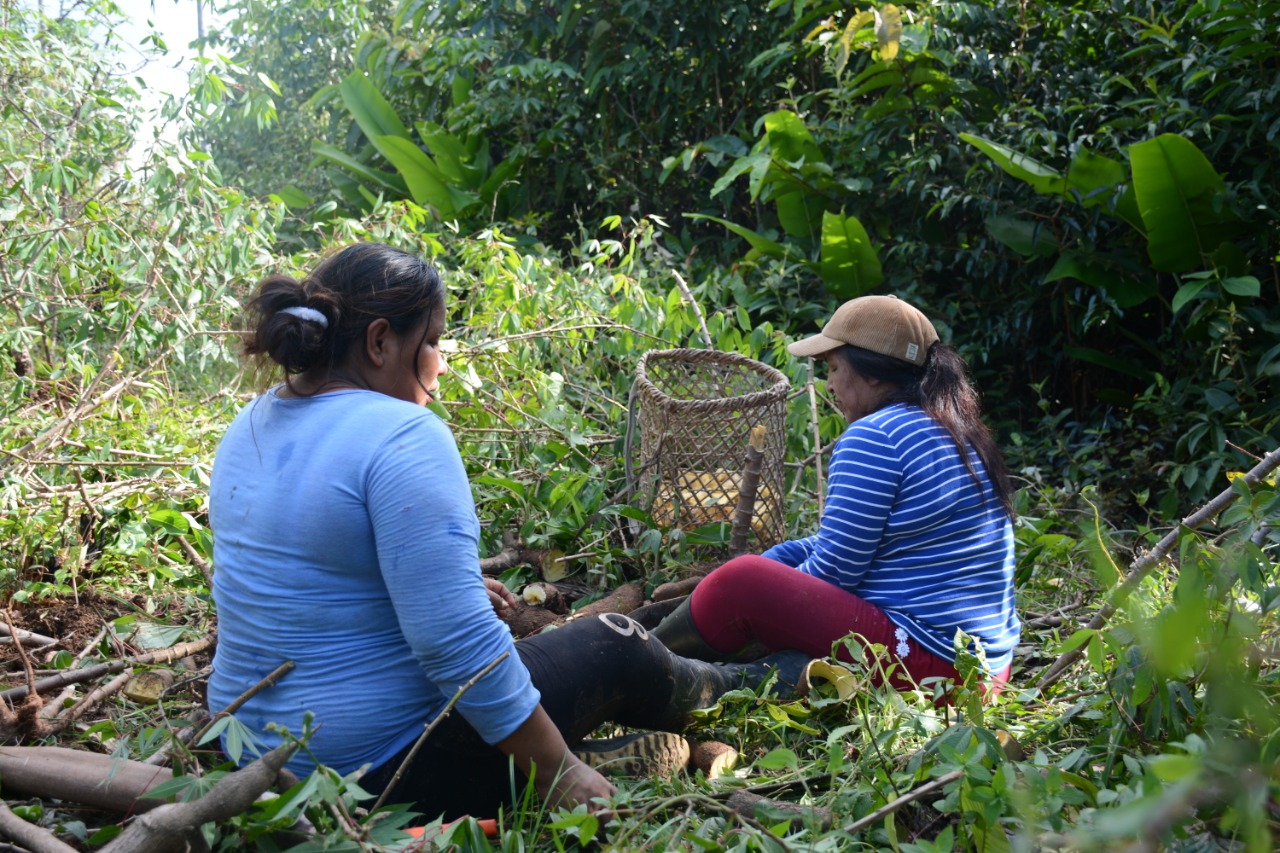
- La Chagra: food sovereignty and ancestral knowledge. The chagra is a space for life and wisdom, health and balance for every family. It sustains life and food sovereignty through the cultivation of traditional foods and the care of traditional seeds. For example, after harvests, the land is left fallow with fruit trees and native trees planted to nurture the soil. The chagra offers women the opportunity to lead their own economic ventures based on their ancestral knowledge systems
- Economies for life: productive projects that build capacity and revive culture. We are supporting twelve enterprises nationwide, paving the way for the economic autonomy and sustainability of women and their families. These initiatives take various forms, ranging from support for setting up restaurants and ice-cream parlours to providing machinery to women artisans and Amazonian women who supply products. They contribute to an economy for life, as they address the needs of women who are victims of the conflict, preventing discrimination in the workplace, identity-based discrimination and rejection simply because they are different
- Education with dignity: scholarships for adult Indigenous women. More than 1,000 adult indigenous women have gained access to education to strengthen their academic knowledge. It is worthwhile for women to receive an education, as, upon obtaining their A-levels, they are better able to express themselves and participate more actively in organisational and institutional activities, advocating for and defending their rights
- Seeds of the future: training and shared knowledge, workshops, gatherings and talking circles. Women take part in a programme of activities organised by the MUTESA team. It is a space for relaxation, self-care and spiritual healing for women, and is run by indigenous female psychologists drawing on their own knowledge and wisdom. These spaces foster a collective endeavour that reaffirms the power of the spoken word as a political and spiritual tool; a space that promotes mental health and self-care
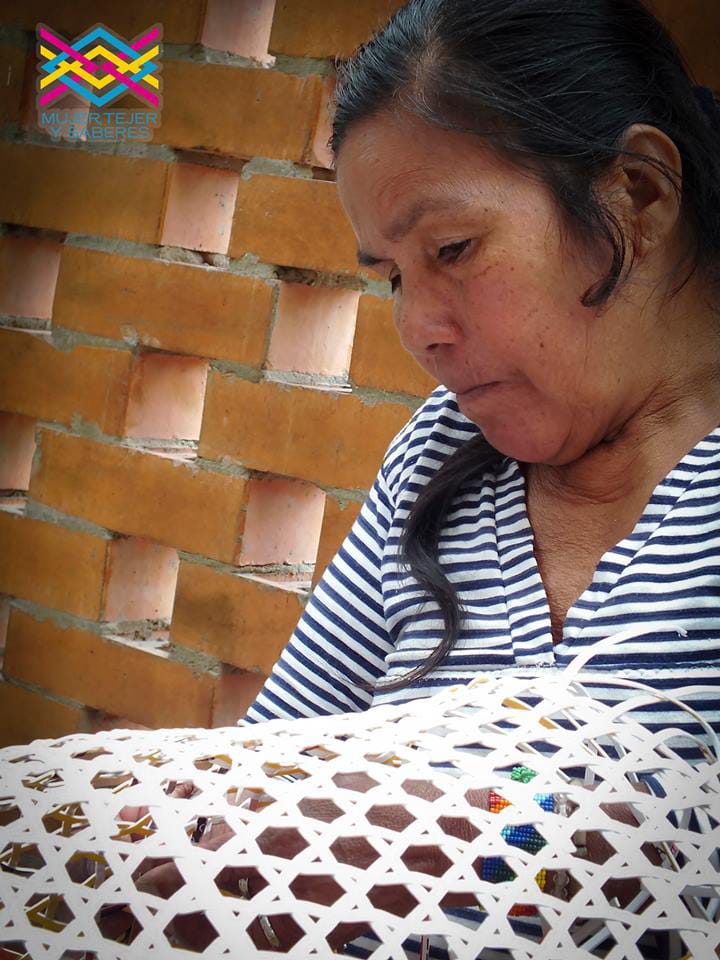
- Arts and crafts: Cultural, spiritual and ancestral value: The arts and crafts of indigenous women embody living memory, spirituality and ancestral heritage. Each piece conveys traditional knowledge and respect for biodiversity. In addition to their cultural value, they now generate income without losing their essence, expressing identity, resilience and community continuity in harmony with the land.
One participating woman said in a talking circle: “The chagra is not just food; it is our way of caring for life and teaching our daughters that the forest speaks to us.”
Facts, figures and evidence
- The MUTESA corporation has supported more than one thousand (1,000) adult Indigenous women by providing them with guaranteed educational grants to enable them to study for their A-levels
- Support for 12 productive projects based on entrepreneurial initiatives drawing on their own cultural, spiritual and territorial knowledge and wisdom has now resulted in a network of Indigenous restaurants that are sustainable and respectful of biodiversity
- The COPOAZU restaurant, serving traditional Amazonian cuisine, has become a space for recognition, knowledge and dialogue, as well as a symbol of the value and identity of food sovereignty. It serves as a model for other Indigenous communities
- The chagra serves as a space for the living practice of knowledge and wisdom, ensuring the protection of biodiversity and food sovereignty. Caring for the chagra involves managing the ecological calendar, as well as managing nature and the territory
- Chagras are elements and mechanisms for tackling climate change within the framework of territorial governance.
Next steps
The MUTESA organisation, acting autonomously, will continue to strengthen and safeguard its educational initiatives, food sovereignty and self-sustaining economies, with the aim of expanding its political influence in environmental and territorial matters. We are part of the International Indigenous Women’s Biodiversity Network (IWBN), and through this network we raise awareness of our environmental initiatives. This will have a positive impact by monitoring the conservation of Amazonian biodiversity and safeguarding the way of life of Amazonian communities to ensure their well-being.
The next innovative step is the establishment and launch of an ice-cream parlour specialising in Amazonian wild fruit ice cream in Bogotá. It would be a space for making the most of the harvests our territories provide, utilising and managing what our own seasonal cycle offers, without harming nature, but with the aim of planting many more trees that provide us with this raw material.