
“For many years, we watched outsiders come and go, each with promises to bring back life to our hills,” shared an elder from the Maragoli Hills, her voice steady yet filled with memory. “But the forest did not listen to them, because they did not listen to us.”
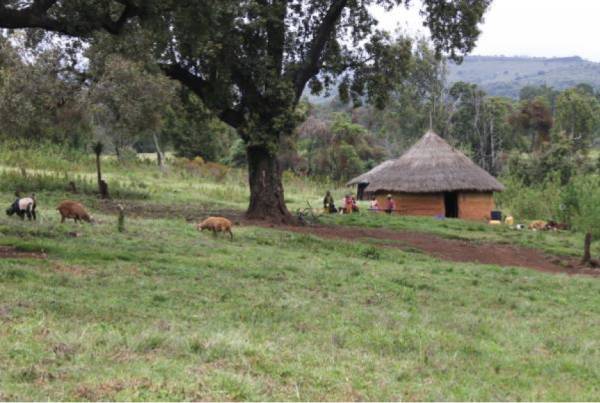
Her words capture the spirit of a land stripped bare by decades of deforestation and neglect. Once a thriving green haven in western Kenya, the 400-hectare Maragoli Hills supported over 2.7 million people before colonial logging and commercial exploitation took their toll. The transformation of the Maragoli Hills landscape did not occur at a single moment, but unfolded in three key phases.
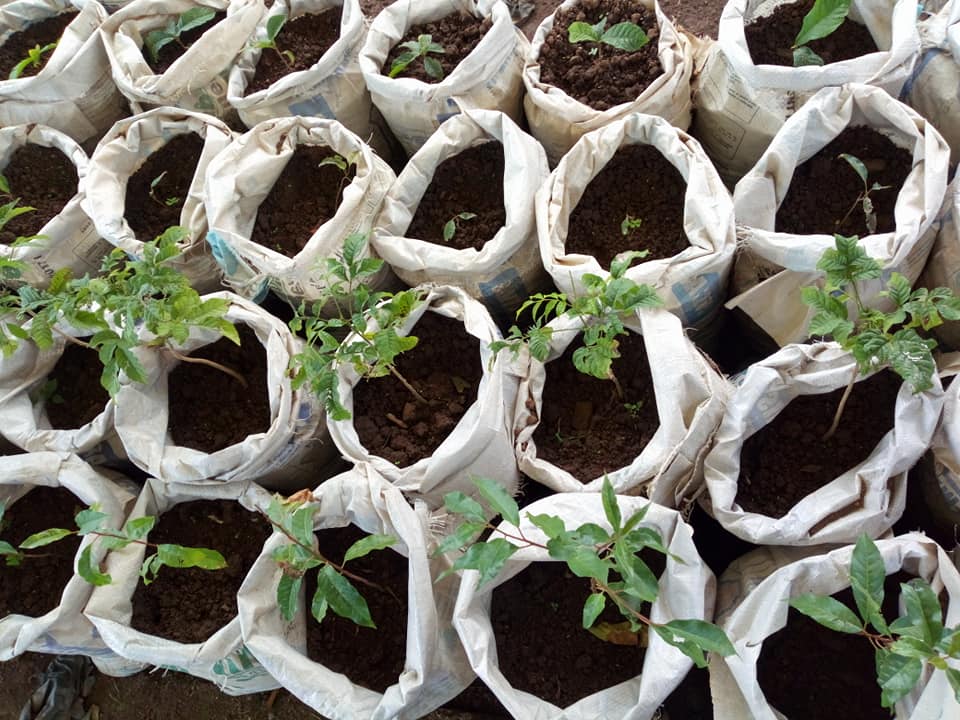
Image: Cement bags used as pots to grow indigenous tree saplings. Credit: Catholic Diocese of Kakamega
Late 1800s–early 1900s (colonial entry and extraction)
With the establishment of British colonial rule in Kenya, large-scale logging and land clearing began. Indigenous forest management systems were disrupted, and land was increasingly treated as a commercial resource.
1920s–1960s (intensified colonial exploitation)
This is when commercial logging, cash crop farming, and administrative land policies significantly accelerated deforestation. Forests were cleared for timber, agriculture, and settlement, often without regard for ecological balance.
Post-independence (1963 onward)
Population growth, land subdivision, and continued agricultural expansion led to further degradation, even as communities relied more heavily on shrinking land resources.
The effects include severe land degradation, ecological decline, land fragmentation, population pressure, cultural loss, and more.
The government and civil society organisations had attempted reforestation initiatives, but without community involvement, input, or consent. This led to distrust and suspicions about their motives – which were seen as externally driven conservation requirements lacking local ownership or participation. It resulted in resistance and opposition, because, in many cases, the initiatives carried unintended negative consequences. Some involved restricting access to land, limiting grazing, firewood collection, or farming activities without offering viable alternatives. Others introduced non-local tree species, affecting water availability and soil conditions.
For communities already living with land scarcity and fragmentation, these interventions felt like a further loss of control over their own territory and survival systems. Resistance, therefore, was not opposition to restoration itself, but to exclusion. Communities were being asked to protect and restore landscapes without being recognised as custodians or decision-makers. This disconnect led to low ownership, limited participation, and in some cases, active rejection of the projects. When these land restoration efforts failed, it became clear they could not succeed without the participation of the people who call the hills home.
The community then took the lead, with guidance from local elders and coordination from the Catholic Diocese of Kakamega, supported by Global Greengrants Fund. When the Catholic Diocese of Kakamega began actively engaging with the community, it listened to the community’s perspectives, building trust and credibility and ensuring that reforestation efforts aligned with local needs, values, and knowledge. As a result, they gained community support and fostered collective responsibility in working toward its success.
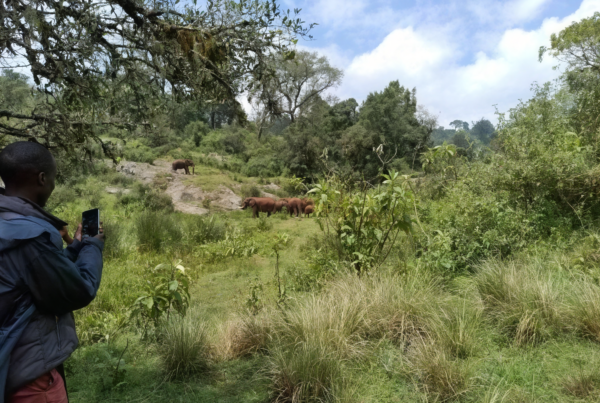
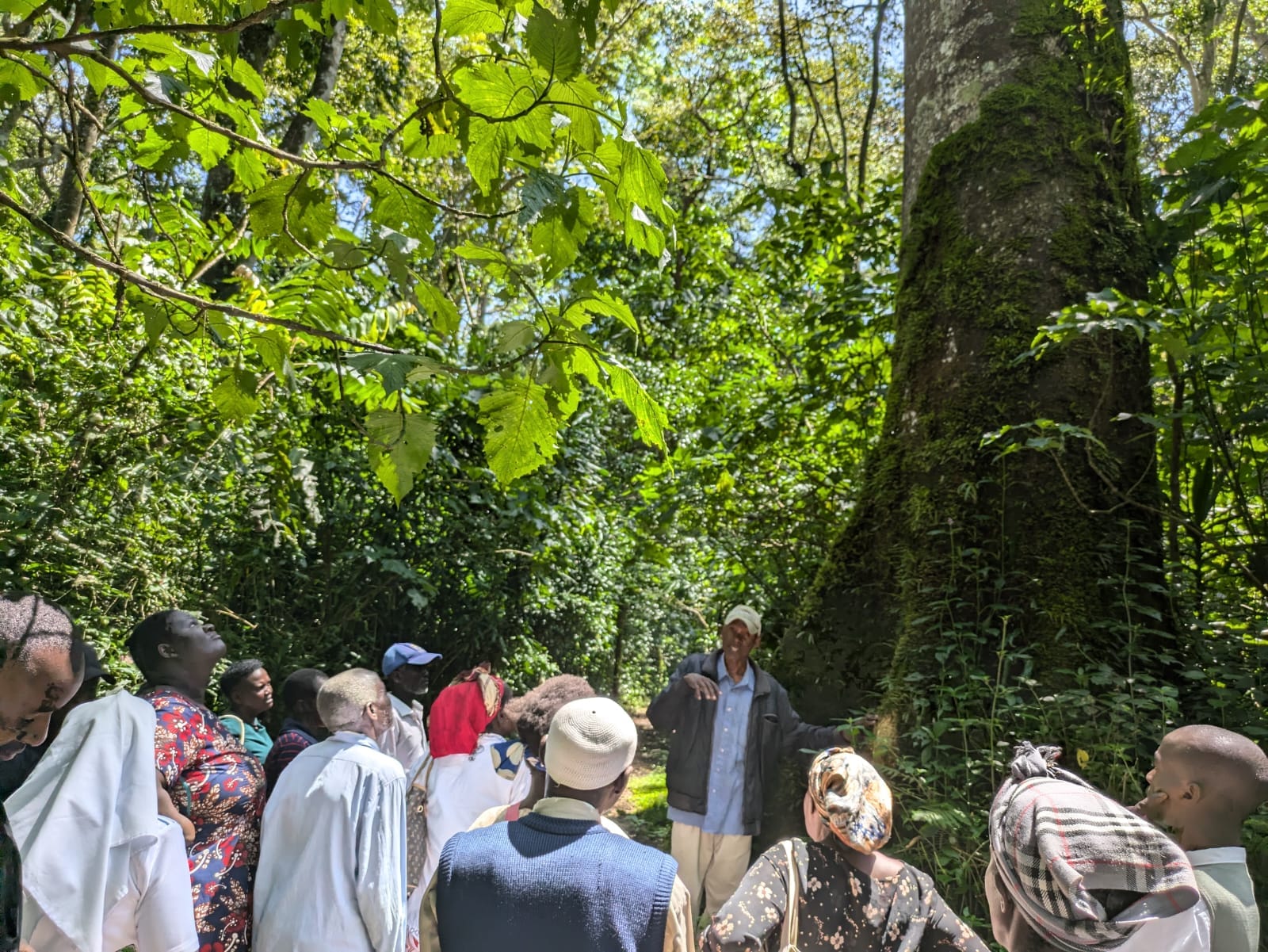
This relational approach to reforestation engaged the community first and prioritised it throughout the entire process. Community members from multiple generations gathered and encouraged the elders to share their memories of the landscape, animals, and what it was like to grow food with the youth. Some elders spoke of a time when the hills were covered in thick indigenous forests, where people could walk long distances under tree cover without direct sunlight. Today, those same areas are exposed, with scattered trees and shrinking vegetation. Others shared that streams and small rivers once flowed year-round, providing water for households, livestock, and farming. Many of these water sources have since dried up or become seasonal, something the younger generation has come to accept as normal. The youth were shocked to hear how much the landscape had changed.
“We, the youth, have seen firsthand how forest degradation has changed our environment and affected our communities. That is why we are asking the Catholic Justice and Peace Department, Global Greengrants Fund, and the County Government of Vihiga to include us in the restorative efforts.”
A community youth member
These discussions were followed by sessions in three locations to assess how environmental problems caused by forest degradation affected nearby communities. As a community, they decided that the first effort would focus on accessing indigenous fruit tree seedlings to learn about the value of trees and connect with practices that support land restoration, biodiversity, and culturally appropriate foodways. By partnering with schools, religious institutions, and surrounding villages, hundreds of community members were trained on nursery establishment and forest management, ensuring that the work of restoration became self-sustaining and deeply rooted in community life.
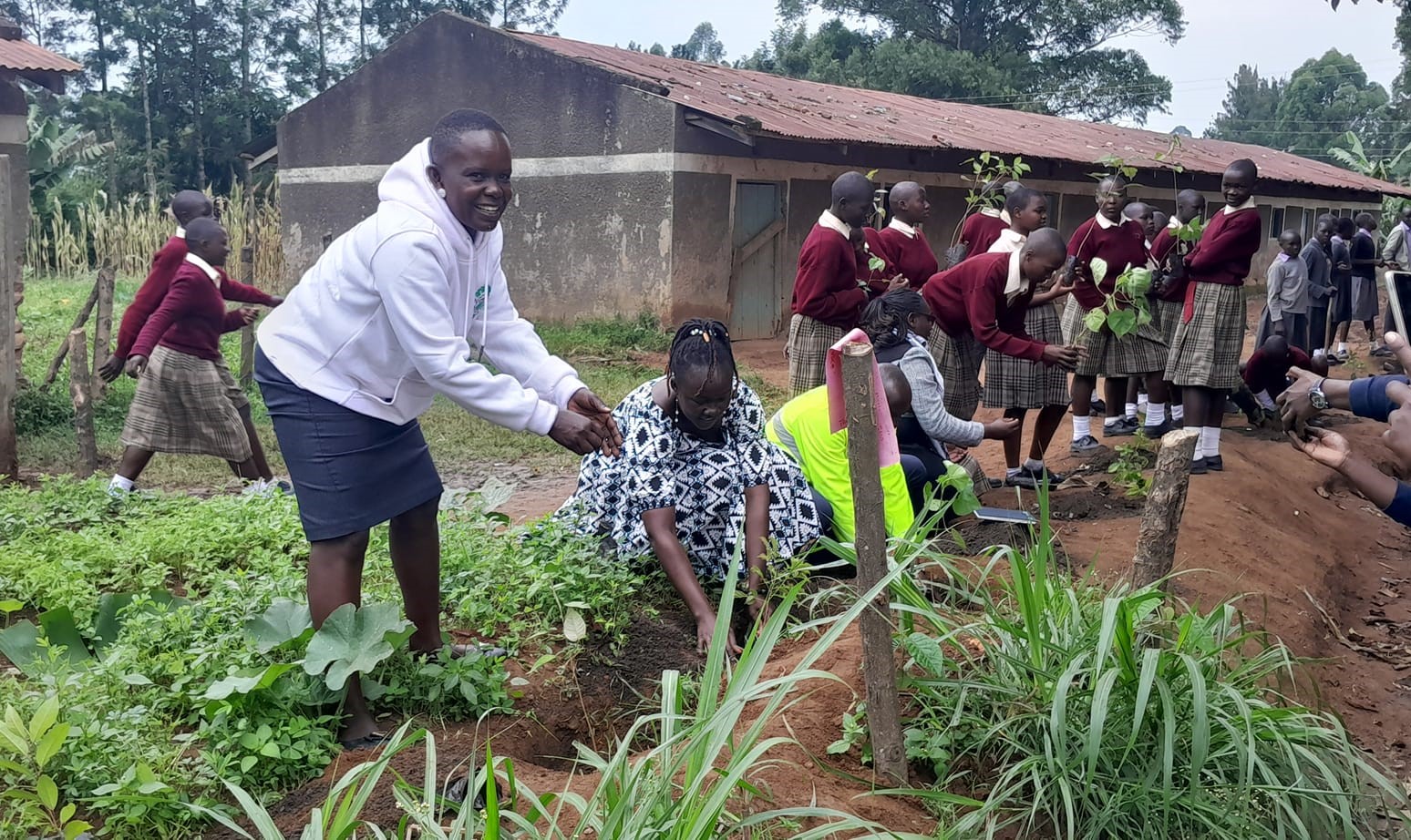
Image: Students and teachers plant indigenous trees in their community. Credit: Catholic Diocese of Kakamega
Further project activities included establishing and managing a community tree nursery at Maragoli Hills with an optimal capacity of 50,000 tree seedlings, training a group of 30 representative community members, and adopting five acres of degraded land in Maragoli Hills for rehabilitation with 1,000 assorted indigenous tree seedlings. The community has also expressed a desire for ongoing community education on land management and reforestation.
“We want to be part of the solution – learning to raise indigenous fruit tree seedlings, restoring biodiversity, and reconnecting with our cultural foodways. By joining hands with schools, churches, and villages, we believe our involvement will ensure that restoration is not only sustainable but also deeply rooted in the life of our community.”
A youth community member
As a result, the community experiences additional ecological benefits, including the return of water flows due to the reforestation that serves both the domestic needs of the local communities and also feeds into Lake Victoria; mitigation of climate change effects thanks to restored balance between people and land, including agroforestry and soil restoration, and the expansion of wildlife habitats. These are a direct result of the reforestation initiatives, which integrate traditional ecological wisdom into every step.
The Maragoli Hills rehabilitation program stands as a living example of Target 1 of the Kunming-Montreal Global Biodiversity Framework, which aims to reduce threats to biodiversity through participatory, inclusive, and culturally grounded approaches. The work demonstrates that when Indigenous and local communities lead, ecosystems recover and thrive. This model has inspired local policy shifts in forest governance and has been recognised in regional conservation dialogues as a pathway to achieving biodiversity goals while honoring Indigenous rights.
Key policy shifts in forest governance
As a result of these community efforts, policy shifts took root not as abstract reforms, but as extensions of ongoing community restoration efforts—formalising and strengthening the local practices, relationships, and knowledge systems already sustaining forests and livelihoods. A few key outcomes include:
Community-led forest management frameworks
Local communities were formally included in decision-making processes, ensuring that governance structures reflected Indigenous knowledge and cultural practices.
Integration of schools and religious institutions in restoration
Policies encouraged collaboration with schools and faith-based organisations to embed conservation, education and the establishment of tree nurseries into everyday community life.
Promotion of indigenous species in reforestation
A shift away from exotic monocultures toward indigenous fruit trees, linking biodiversity restoration with food security and cultural foodways.
Decentralised nursery establishment and seedling distribution
Policies supported community-based nurseries, reducing reliance on government supply chains and empowering villages to sustain restoration independently.
Recognition of forest restoration as a livelihood pathway
Forest governance began integrating restoration with economic opportunities, such as fruit production and sustainable forest products, thereby aligning conservation with poverty reduction.
Cross-sectoral collaboration
County governments, NGOs, and community groups were brought together under shared frameworks, ensuring that conservation was not siloed but part of broader development planning.
Monitoring and accountability mechanisms
Local bylaws and community agreements were strengthened to prevent illegal logging and degradation, with youth and women’s groups actively involved in enforcement.
From their experience, the Maragoli people call on global actors to invest in community-led restoration, safeguard ancestral lands, and recognise traditional governance systems as essential pillars of biodiversity protection. True rehabilitation, they remind us, is not just about planting trees; it is about restoring relationships between people and the earth.