
For pastoralists in Karamoja, a region in North-East Uganda that borders Kenya and South Sudan, the ownership and management of livestock is a key part of their livelihoods, which is linked to social prestige and important in cementing social ties through marriage, trade, and honour. Their strong attachment to livestock is key to their sustainable management of lands and resources, as represented in the following proverb.
“No shepherd would destroy where the herd feast from.”
The age-old stories and traditional knowledge about nature, animals, mountains, social taboos and society held by the community form a significant basis for ecosystem stewardship and protection.
As Karamoja is on the border with Turkana of Kenya and Toposa of South Sudan, Karamojong pastoralists have developed traditional resource sharing mechanisms with their neighbours the Turkana pastoralists to ensure the protection of the diverse shared natural ecosystems, or Akiriketa. They do this through a mechanism called Etamam.
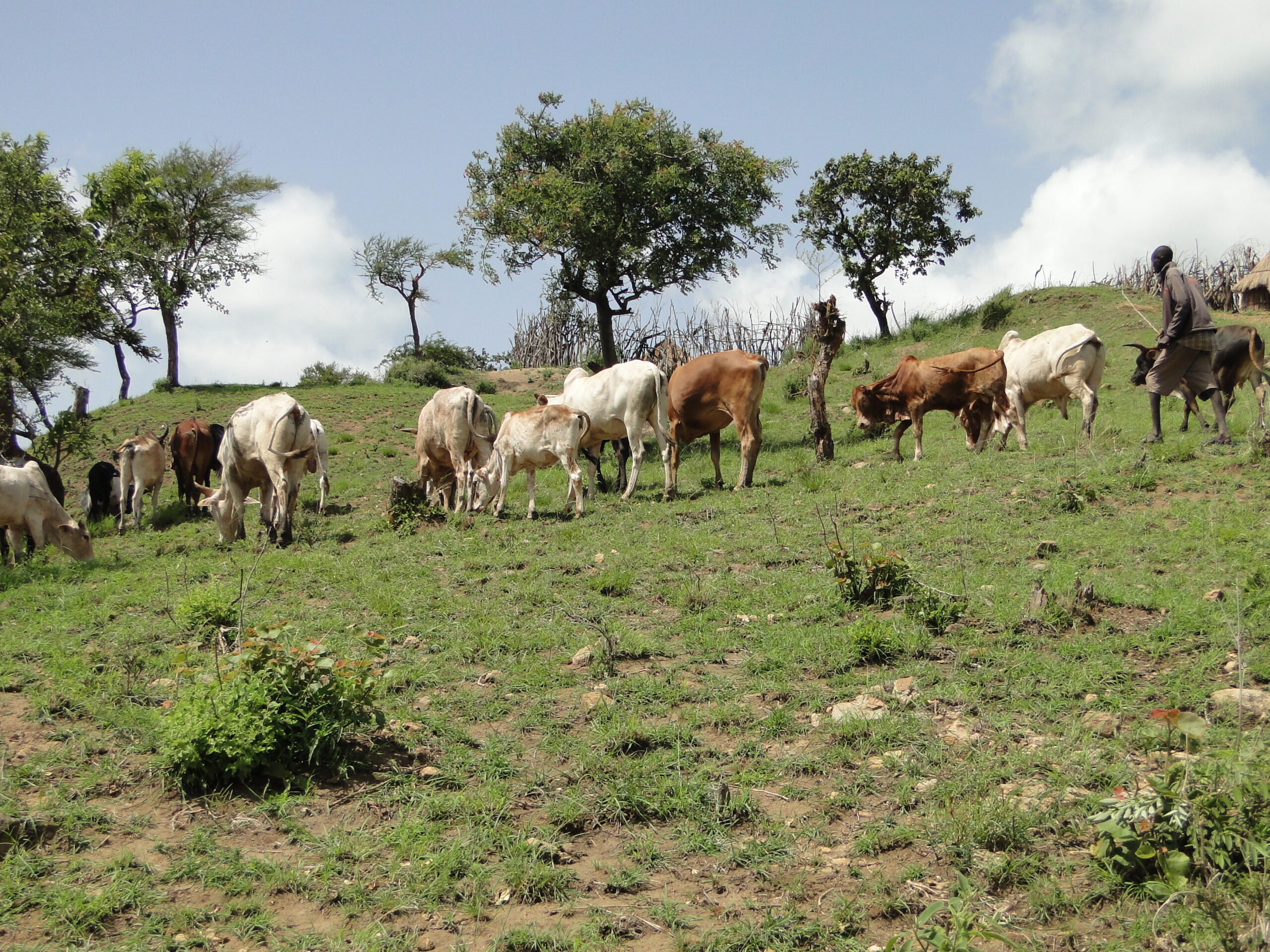
Caption: Ik minority clan shepherd grazing livestock on the Eastern Rift valley escarpment shared dry season grazing site for four clans (Karamojong, Ik, Turkana and Toposa pastoralists) also known for its rich salty grasses site. Credit: Loupa Pius/RCI Africa
Etamam: a traditional resource sharing mechanism
Etamam facilitates dialogues on the process of natural resource sharing and strengthens traditional governance.
Etamam ensures guidelines for mobility and rotational use of water and grazing zones as well as the protection of sacred sites (akiriketa) and cultural landscapes preserved for social and ecological needs. To do this, it identifies areas that pastoralists can use to graze their livestock while halting grazing on other areas to prevent overuse and allowing the rangeland to regenerate.
It also designates rules on biodiversity use in areas such as wetlands, breeding areas and dry season grazing areas, community planning and monitoring of sacred trees, wild animals, grasslands and water points to regulate access and prevent over-use and harvest.
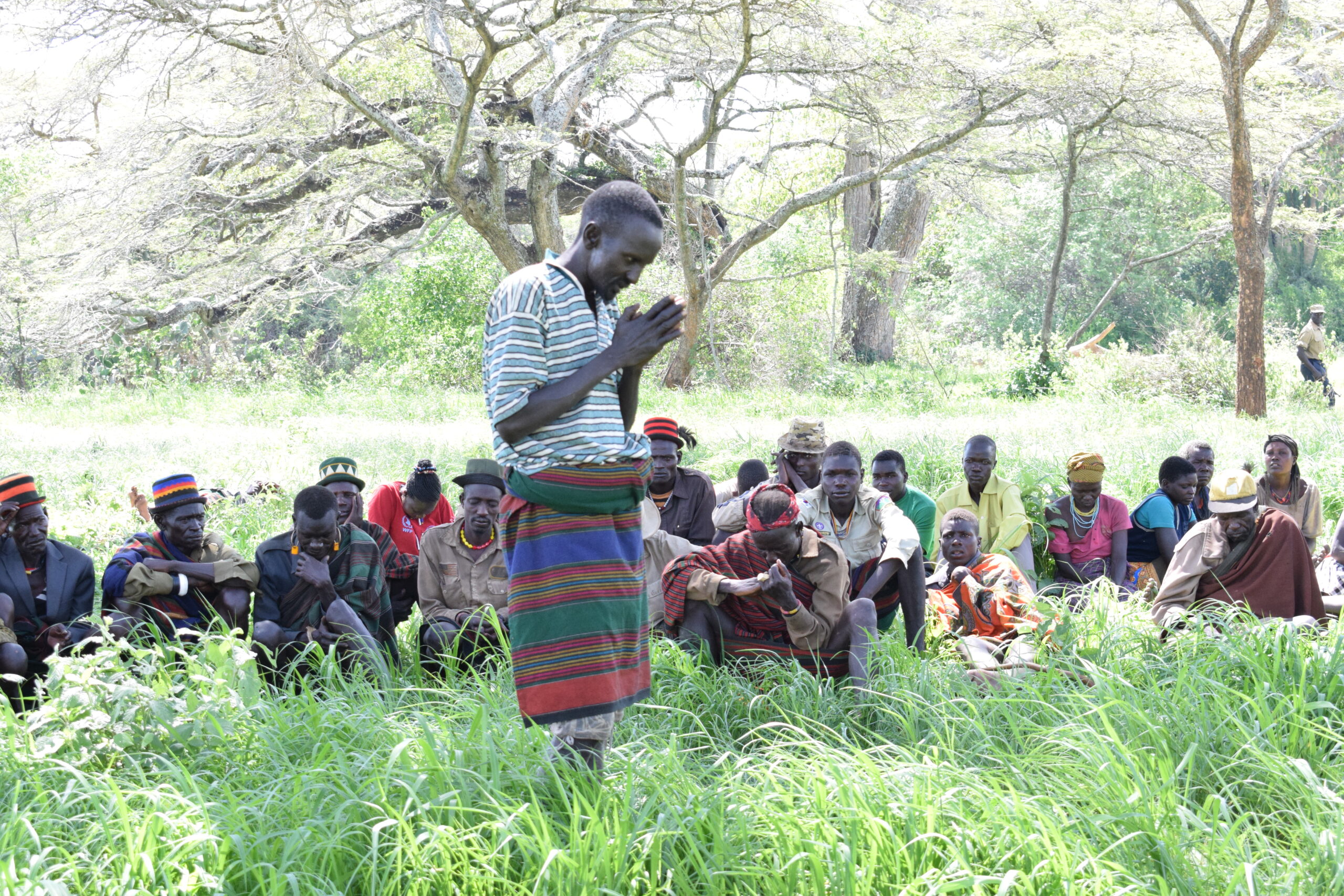
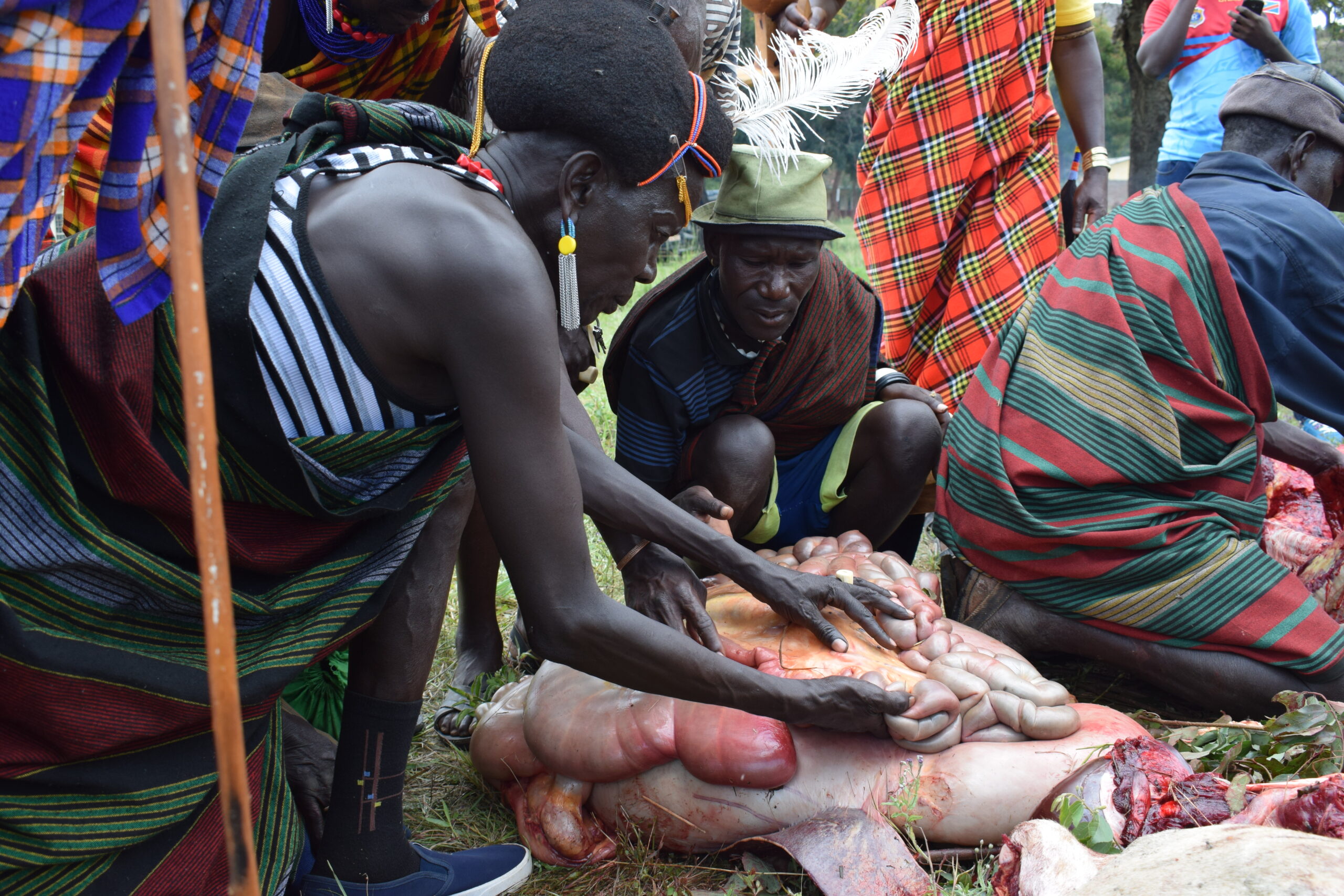
The process of identifying and managing areas for Etamam includes stakeholder meetings, community dialogues, negotiations over resource use, viewing of intestines and resource mapping. These are used to identify sacred waters, grasslands, livestock and wildlife breeding grounds and treescapes that must be protected during livestock migration.
Established mechanisms like Etamam and Akiriket show the importance of cooperation in creating rules to access and use sacred resources. This is becoming more and more important as communities face increased social challenges and environmental stressors due to climate change.
Etamam recognised in regional agreements
The Karamojong pastoralists have an established customary institution, the Akiriket Council of Elders, which forms a traditional parliament. This council has engaged with district level land use and resource management dialogues, including setting up a sustainable development MoU between Uganda and Kenya.
Traditional knowledge has also been incorporated into cross-border resource-sharing agreements between Karamoja and Turkana pastoralists. At the regional level, Etamam has been recognized in the implementation framework of IGAD Transhumance Protocol. This is a 2021 agreement across eight countries in Eastern Africa (the IGAD region) that facilitates the free, safe, and orderly movement of livestock and herders, protecting the rights of pastoralists to find adequate grazing for their livestock. This is even more important as climate change has led to changes in grazing areas and water sources.
Links to the Global Biodiversity Framework
Indigenous pastoralists in Karamoja have developed further community resource governance systems that directly contribute to the Global Biodiversity Framework (GBF) targets on ecosystem restoration, traditional knowledge and the sustainable use of resources.
For example, seasonal livestock mobility systems maintain ecosystem balance, prevent degradation and allow vegetation regeneration across lands that are either conserved or used for agriculture, pastoralism and agropastoralism. These practices align with GBF targets 1, 2, 3, 8 and 11 that focus on restoration, management and integration of traditional knowledge in biodiversity governance.
Protecting critical grazing and wildlife corridors and habitats from agricultural expansion is an avenue to promote peaceful coexistence between wildlife and people. Combining traditional knowledge and scientific data on ecosystem restoration is a key part of this, as well as recognising that pastoralist mobility is a way to promote climate resilience.
Indigenous people have used traditional knowledge to manage landscapes for centuries. As we face the interconnected biodiversity and climate crises, it is important to incorporate the traditional mechanisms of Etamam and Akiriket into national biodiversity and land use policies to ensure the success of the GBF.