
Indigenous Peoples have a symbiotic relationship with land, forests and other natural resources. For generations, Indigenous Peoples have managed their natural resources through customary governance institutions and systems which are deeply rooted in the traditional knowledge, values, and social norms of their ancestors (Sherpa, 2024). They have been collectively and customarily managing natural resources through their customary laws and practices since time immemorial.
The self-governance systems of these customary institutions contribute to the sustainable management of natural resources, ecosystems and biodiversity based on their traditional knowledge, skills, cultural values and practices (Sherpa, 2024). The governance structure has not only managed the forest and ecosystems but also maintained collective solidarity of Indigenous communities and their practices of self-determination (Sherpa et. al, 2021).
While government-led initiatives have long dominated formal conservation actions, there is a growing global and national recognition that these informal, community-driven systems are essential to achieving the milestones of the Kunming-Montreal Global Biodiversity Framework. The global discourse on conservation is shifting from exclusionary, top-down models toward bottom-up decentralized, community-led initiatives (Dawson et al., 2024).
By examining the Shyagya tradition of the Tsumba people and the Barghar system of the Tharu community, this case study illustrates how Indigenous governance structures serve as effective mechanisms for biodiversity protection and environmental stewardship.
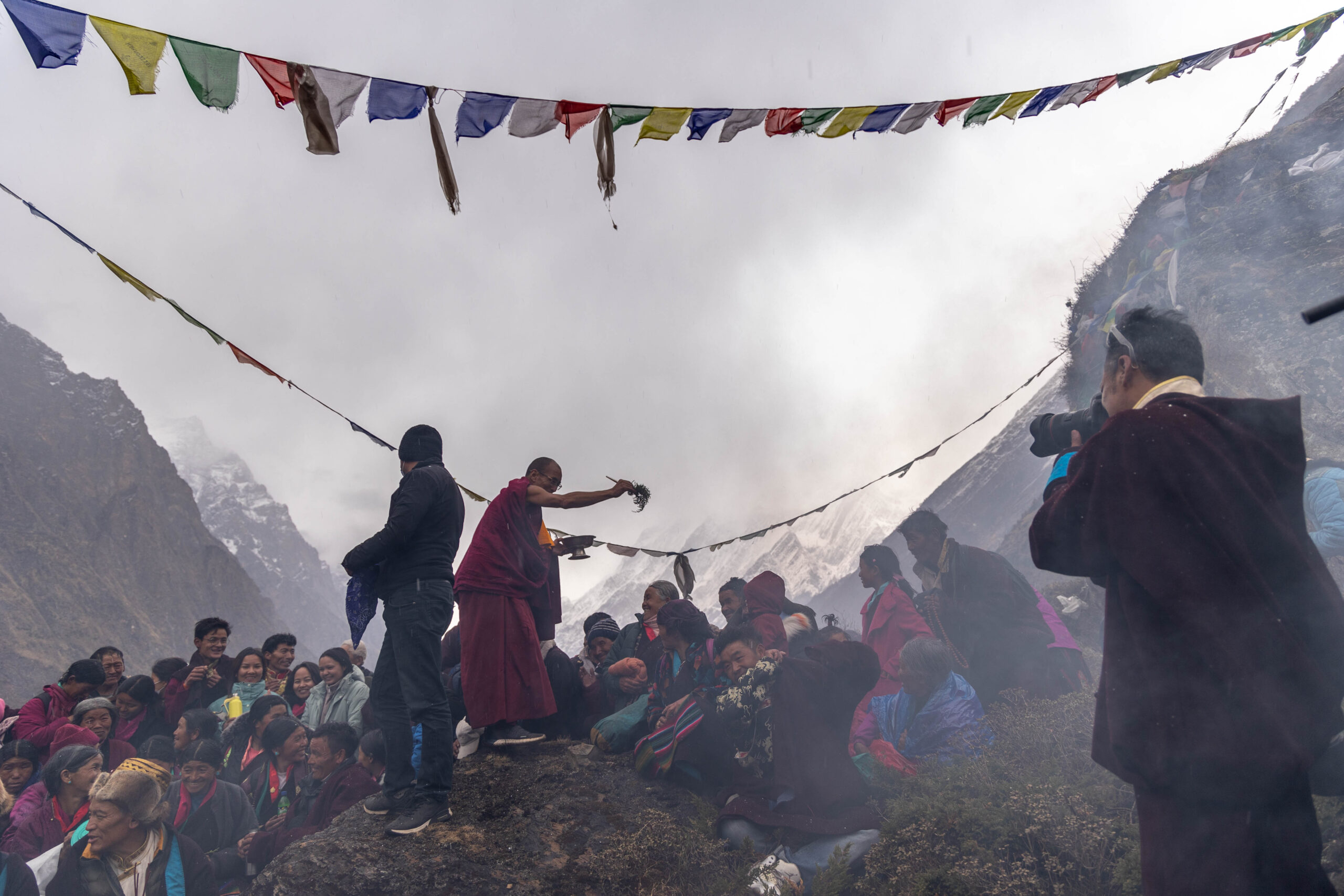
Caption: The Lamas and Villagers performing Rhi-lung Thuisol (Nature Worshiping) Puja. Credit: CIPRED
Case 1: the Shyagya tradition of Tsum Valley
Tsum valley, in the northern Gorkha region in Nepal, is a high-altitude valley home to the Indigenous Tsumba people. These communities follow the Shyagya tradition, which is a living example of how a customary governance system contributes to the protection and conservation of natural resources.
Shyagya tradition is rooted in Buddhist principles of non-violence. For the Indigenous Tsumba people, conservation is not a rule imposed by the government, but a day-to-day practice that contributes to conservation. This practice restricts killing of any living beings including activities such as hunting, fishing, and even honey extraction, which allows rare Himalayan wildlife to live safely alongside them. Instead of overusing the land, they use ancient local knowledge to manage resources sustainably, ensuring the environment remains healthy for generations to come.
The tradition is a peaceful way of living that turns the entire valley into a safe home for all living things. Under this tradition, people follow a few simple but strict rules to show respect for nature:
First, there is no killing of any kind. This means livestock cannot be slaughtered, and wild animals or birds cannot be hunted or trapped. The water is also kept sacred, so fishing is not allowed. Beyond protecting animals, the community works hard to protect the environment. Starting forest fires is forbidden because it destroys the homes of living creatures, and even honey hunting is restricted to keep the bee population healthy.
By following these rules, the people of the valley ensure that every part of nature, from the fish in the rivers to the bees in the trees, can live in peace and balance.
Shyagya is all about interconnectedness. The people of Tsum Valley believe that harming nature eventually harms humans, too. By choosing non-violence, they maintain a unique ecosystem where humans and animals live together in a rare kind of harmony.
After continued effort and advocacy from community-based, Indigenous Peoples’ and non-governmental organisations, the Tsum Nubri Rural Municipality passed the Shyagya Tradition Conservation Act in 2023. This is a key milestone in the recognition and promotion of Indigenous customary systems, as it is much more than just a set of rules; it is the spiritual heartbeat of their community. By choosing not to harm any living beings, the people believe they are building a reservoir of positive karma that shields their valley from misfortune and brings about lasting peace and prosperity.
This practice does more than just protect nature; it defines who the Tsumba people are. The deep-rooted commitment to non-violence naturally spills over into their own relationships. By practicing kindness toward animals, the community fosters a gentler way of life, reducing tension and strengthening the bonds of empathy between neighbors.
Shyagya is an excellent example of a Community-Conserved Area, proving that local traditions can protect nature better than state laws. By banning hunting and forest fires, the Tsumba people have created a safe place for various wild animals and secured their own water supply. Managed by local leaders rather than outside guards, this spiritual “non-killing” policy fosters climate resilience and attracts eco-friendly tourism. Ultimately, it shows that when culture and conservation align, the environment thrives naturally without the need for fences.
“The legal recognition of the Shyagya does more than just protect trees and animals; it strengthens the unity of the people. It proves that the most resilient way to guard the environment is to make it a collective cultural duty. Today, the Shyagya stands as a global model, showing that when a community treats nature with respect and non-violence, both people and wildlife can flourish together.”
Nima Lama, Chairperson, Tsum Nubri Rural Municipality
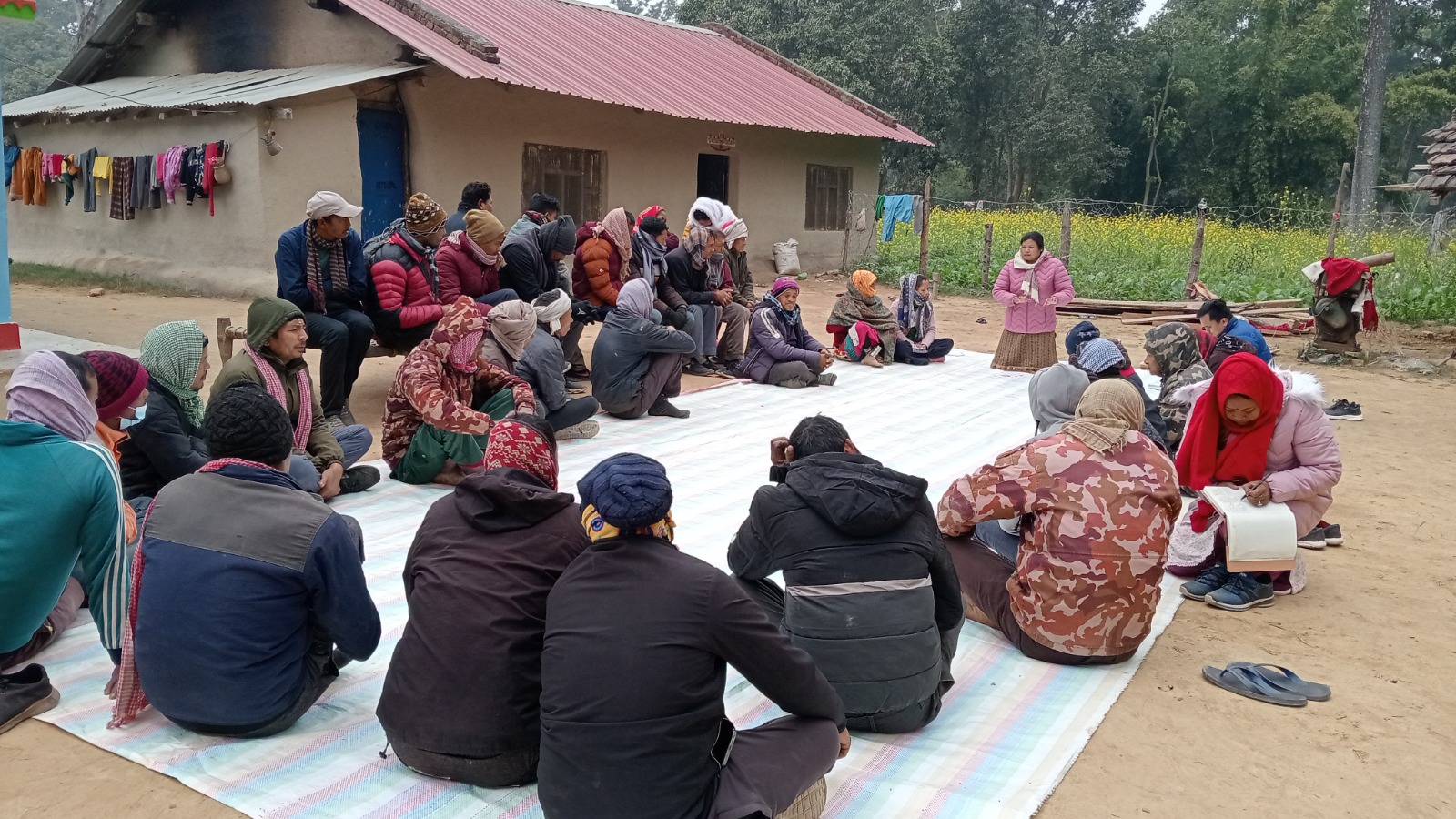
Caption: Customary governance leaders of the Tharu Community (Bhalmansa) meeting in Laljhadi Rural Municipality of Kanchanpur district, Nepal. Credit: CIPRED
Case 2: the Barghar customary system of the Tharu community
The Barghar system is the traditional and Indigenous organisational system in the Tharu community of Tarai region of Nepal. The names and terminologies for Barghar customary governance systems may be different in different geographical regions, but the working procedure remains the same.
In the Tharu language, the word Barghar means a village head who is responsible for community development, maintaining social order, social harmony and unity, as well as preserving and continuing the community’s social, cultural and religious rites, rituals and practices. Barghar’s are chosen every year based on consensus. The major roles of Barghar’s are:
Culture: Preserving traditional dances, songs, attire, food, festivals, and rituals, as well as traditional skills.
Social: Facilitating marriages, funeral rites, social and community construction activities, and mutual cooperation among villagers.
Economic: Promoting agricultural productivity, supporting villagers facing economic hardship, and encouraging participation in income-generating activities.
Judicial: Resolving disputes, conflicts, injustices and damages within the village, and mediating boundary-related issues.
Spiritual: Protecting traditional religious institutions, rituals and deities, and overseeing regular worship practices.
The Barghars also contribute to the sustainable management of forests, lands, and natural resources. They set rules and regulations for their territory and community, which govern the natural resource management in their area. For example, they decide on the date to open the forest to collect firewood and other forest products to ensure that they are not over-exploited. The Barghar also acts as a liaison with state representatives (including elected officials), coordinating activities and mobilising community participation in development initiatives.
The Tharu communities in Kanchanpur, Banke, Bardiya, Dang, and Kailali districts have been practicing the Barghar customary governance system for many generations.
“When there are any unpleasant incidents at the village, the Barghar is the first person to be sought out. Barghars work collectively to understand the truth and solve the problem. Cases like the division of property among brothers are handled in an equitable manner. But in cases where a village cannot resolve an issue, they seek the assistance of the court, police station, or law enforcement.”
Barghar Jai Ram Chaudhary, Madhuwan Municipality, Bardiya district
Since 2020, several municipalities have taken the historic step of enacting local laws to formalise traditional customary governance systems. However, challenges persist. Despite the increased understanding of the positive role and contribution of community customary institutions and governance systems, they remain almost completely unrecognised by authorities of forest regimes, national parks, or conservation areas. This remains true even in cases of community forestry, collaborative forestry, and leasehold forestry.
Like many Indigenous groups, Tharu communities are sometimes misrepresented as drivers of deforestation rather than as long-standing custodians of biodiversity. This disconnect between state-led actions and Indigenous governance often leads to tensions around protected areas and forest management, which is a lost opportunity for both entities.
Traditional governance systems in Kanchanpur, Banke, Bardiya, Dang, and Kailali districts are gradually declining as community members are showing less interest in taking up the leadership role of Barghar. The reason behind this is due to the conflicting and overlapping roles of Barghar roles and those of the local government authority. This customary governance system tends to be politicised by political parties. Some processes of solving cases or incidents are beyond the jurisdiction of Barghars, which often require police intervention rather than being resolved within the village. The youth are not taking the roles of Barghars, which shows declining intergenerational knowledge transfer for upcoming generations. As most of the household chores, duties and responsibilities in the family falls on women’s shoulders, they have less time to engage in leadership roles as Barghars of the community. However, there are a few women Barghars who are taking up the responsibility of customary leaders of their community.
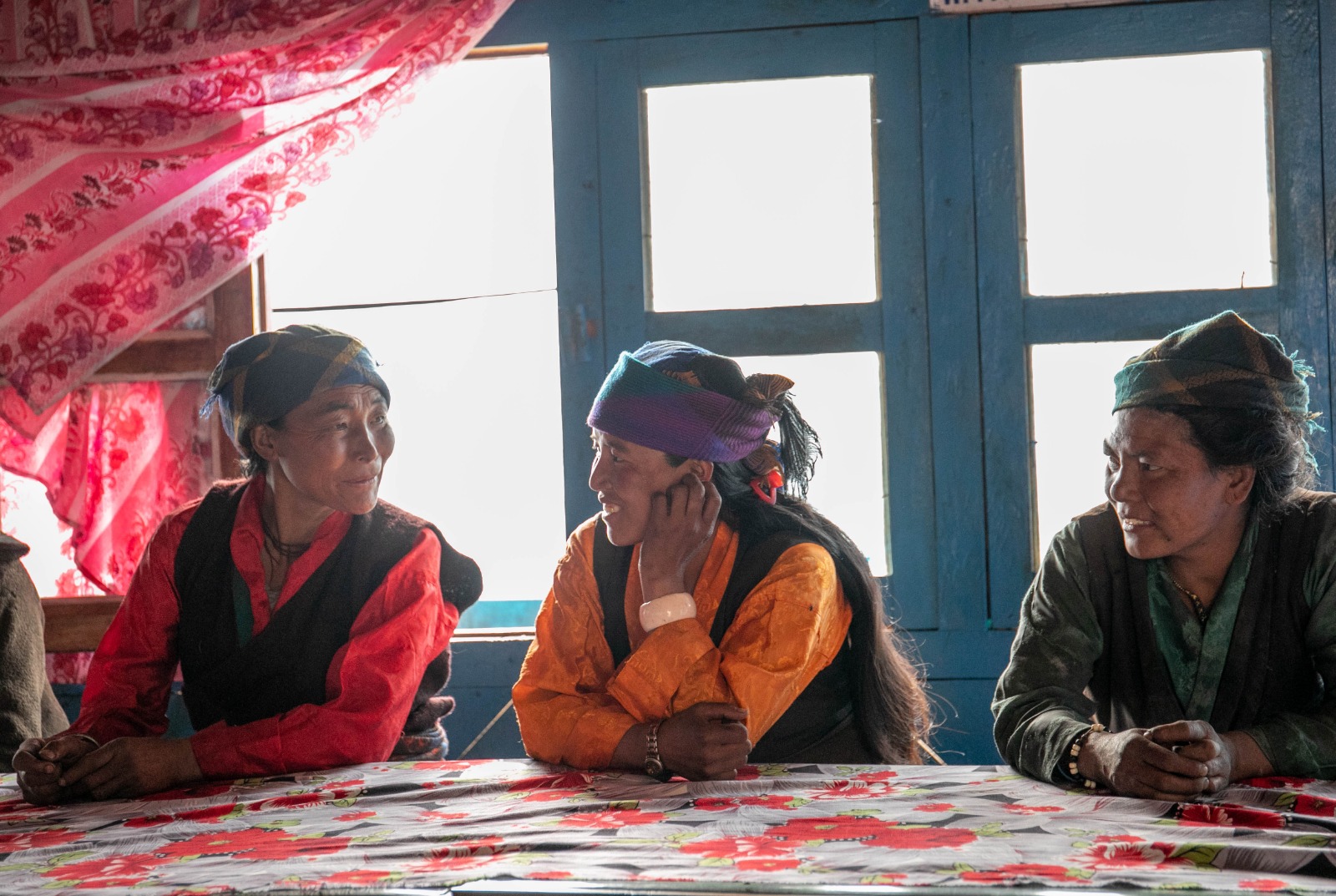
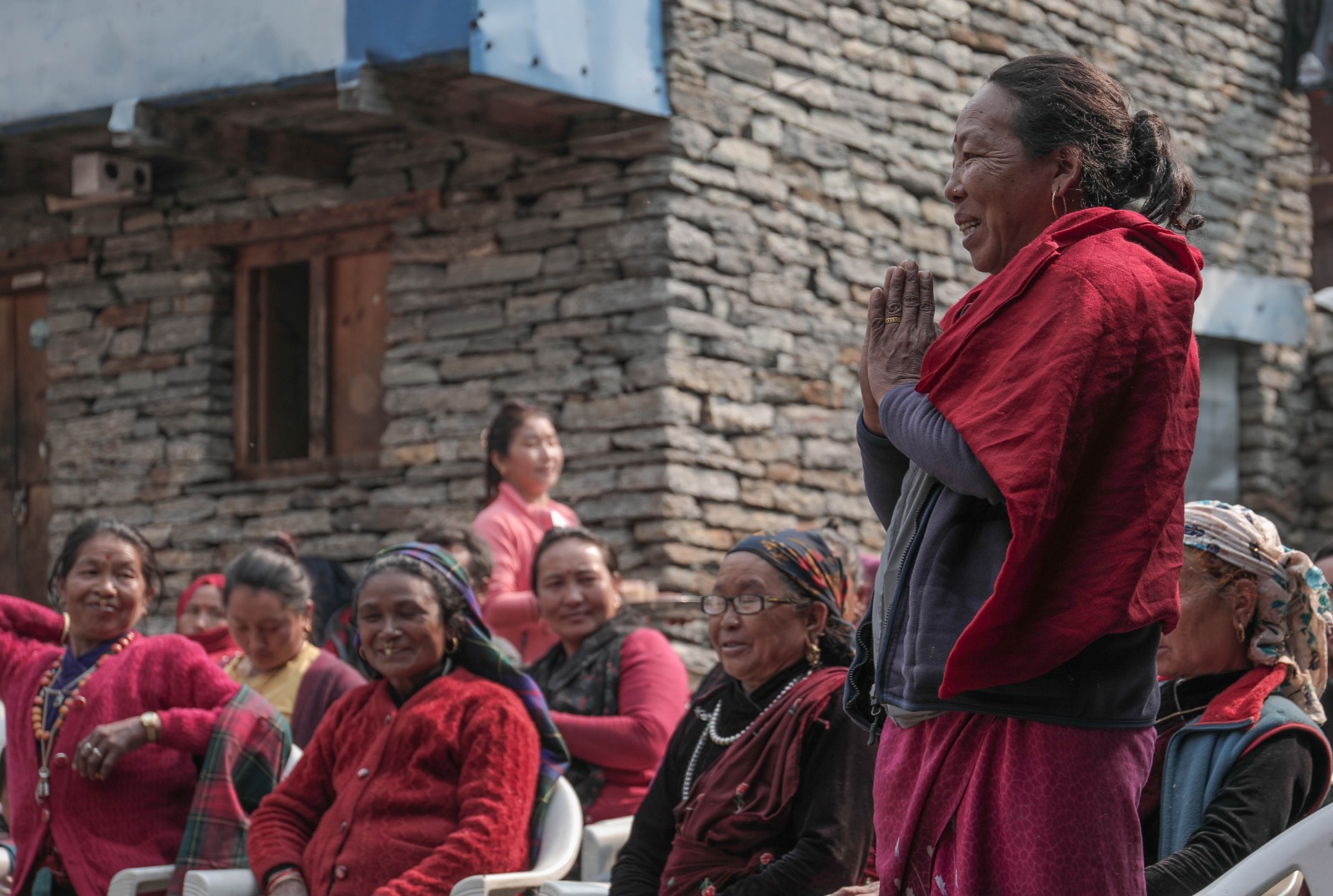
Caption: Interaction with Indigenous women on the importance of the Shyagya customary governance system. Credit: CIPRED
Conclusion
Customary governance systems such as Shyagya and Barghar are not outdated and ancient rule systems, but form an Indigenous-led collective system that plays a vital role in protecting and conserving biodiversity. These case studies show that nature is best preserved when we respect the rights of Indigenous Peoples; their knowledge, traditions and practices. By recognising and empowering Indigenous institutions, Nepal can advance its commitments under the Kunming-Montreal Global Biodiversity Framework (KMGBF) through inclusive, community-driven, and culturally grounded approaches.
These customary institutions represent a resilient and adaptive model of Indigenous self-governance that interlinks cultural continuity, social justice, and ecological stewardship. For Indigenous Peoples, they are not only a political institution, but a way of life that sustains both human and environmental well-being.
To strengthen Indigenous participation in biodiversity governance, the following actions are recommended:
- Co-management and collaboration between conservation authorities and Indigenous leaders
- Legally recognise customary laws / acts and integrate them into provincial and federal legislation
- Shift from “top-down” government control to “bottom-up” and decentralised models that empower and motivate Indigenous Peoples and local communities to manage their own natural resources with their own self-determined sustainable development approach
- Ensure that communities have permanent rights to the ancestral lands that their livelihoods depend on.
References
Chaudhary, N. (2018) ‘Barghar system and social mobilization practices in Tharu community (a case study of Janaki rural municipality of Kailali district)’, Journal of Tikapur Multiple Campus, 4(4), pp. 19–36. https://doi.org/10.3126/jotmc.v4i4.70142
Chaudhary, N. (2021) ‘Barghar System in Transition: Experiences from Dangaura Tharus of Western Nepal’, Scholars’ Journal, 4(1), pp. 164–178. https://doi.org/10.3126/scholars.v4i1.42476
Dawson, N.M., Coolsaet, B., Bhardwaj, A., Booker, F., Brown, D., Lliso, B., et al. (2024) ‘Is it just conservation? A typology of Indigenous peoples’ and local communities’ roles in conserving biodiversity’, One Earth, 7(6), pp. 1007–1021.
Sherpa, P. (2024) ‘Customary Governance and Social Dynamics in Natural Resource Management among Mountain Indigenous Communities in Upper Manang’, Tribhuvan University Journal, 39(2), pp. 113–130.
Sherpa, P.D. (2021) Indigenous Peoples’ Customary Governance for Sustainable Management of Natural Resources and Protection of Biodiversity. CIPRED. Available at: https://cipred.org.np/uploads/pdf/195216067report-on-indigenous-customary-governance-system–Shagya_compressed.pdf