
Kampung Tajau Laut is a Bajau fishing community on the coast of Kudat, Sabah, Malaysia. For the Bajau people of Tajau Laut, the sea, mangroves, rivers and land are part of a single living system that the community is collectively responsible for.
Collective responsibility through customary law (Adat)
What is Adat? Adat is the customary law that Indigenous Peoples and local communities in Malaysia live by: the shared rules and values that govern community life and the use of land, water and other resources. It differs from one community to another, and has long been sustained through practice rather than written legislation. Today, communities are increasingly setting their adat down in their own written protocols, as Tajau Laut has done.
This responsibility is expressed through three adat principles that have guided Bajau community life for generations:
- Pangngalap Sama: to take only what is sufficient and not in excess
- Pangngalap Magsukul: to be grateful for what the sea and land provide and to show that gratitude through how you treat them
- Pangngalap Magsilap: to maintain the balance between people and nature.
Alongside these sits Gotong Royong, the principle that all village members are collectively responsible. This is seen most visibly after each monsoon season, when the community organises communal clean-ups to clear their beaches and coastline of waste and debris washed in by the waves.
Through community consultation, these principles have been developed into an agreed set of governing rules covering marine, land, mangrove and river areas, documented in the Protokol Kampung Penjagaan Alam Laut, Darat, Bakau dan Sungai (the Village Protocol for the Care of Marine, Land, Mangrove and River Resources). The core principles and rules are agreed and being practised, overseen by the Jawatankuasa Penjagaan Alam Kampung (Village Nature Stewardship Committee) with the Village Chief and Bajau adat elders as advisors, and the community is continuing to strengthen and document the full governance framework.
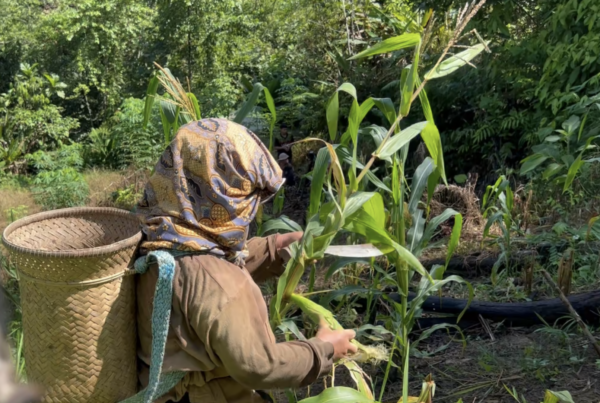
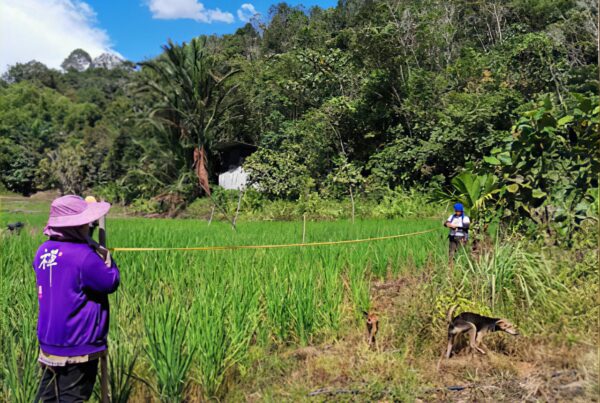
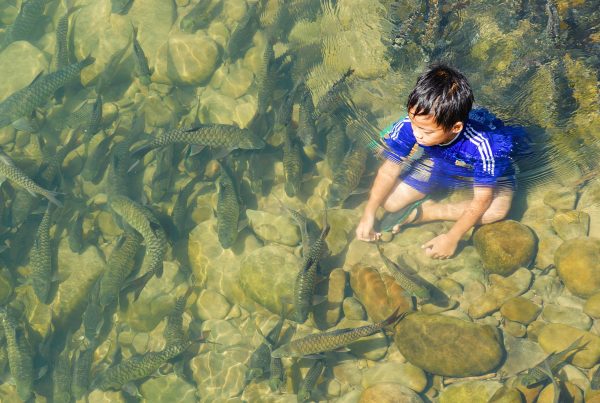
Blast fishing and poison fishing are already illegal under national law, but on-the-ground enforcement along the Sabah coast is limited, and the community takes it upon themselves to ensure these practices do not occur in their waters. Traditional fishing methods, such as bubu (fish traps), pancing (line fishing) and small-mesh nets, are the practised norm. On land, tree felling requires committee approval and farmers are encouraged to use organic fertiliser and nature-friendly farming practices. Rivers, called urat kehidupan or the veins of life, are protected from fishing in upstream areas and pollution is prohibited. Ceremonial gratitude rituals are held at the river after good harvests and large catches. Violations of agreed rules are subject to adat penalties including confiscation of catch or equipment.
Mangroves are called benteng adat, the adat rampart, seen as the village’s protection against storms and waves and as the nursery habitat for the crabs, prawns and fish that small-scale fishers depend on. Mangroves cannot be cut without good reason, and the community replants every year.
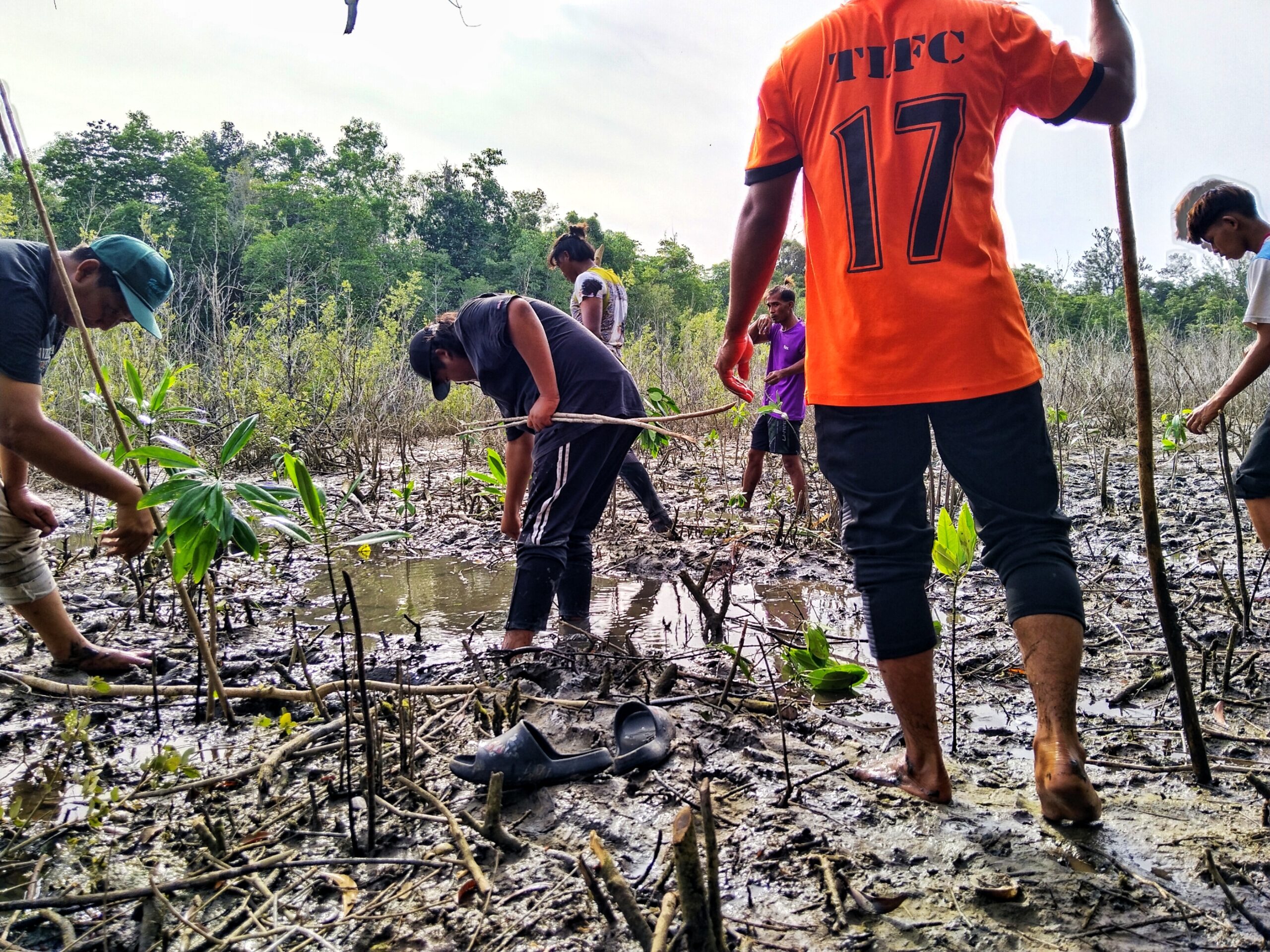
Caption: The Kampung Tajau Laut community works shoulder to shoulder in mangrove restoration activities, replanting saplings along the coastline. This effort not only protects the shore from erosion but also strengthens the ecosystem that serves as a habitat for a variety of wildlife. Credit: Junaidi Awang Bulat
Restoring degraded beaches and coral reefs
Guided by these same principles, the community identified two connected problems affecting their livelihoods. Years of blast fishing had badly degraded the coral reefs around Tajau Laut, reducing fish stocks. Beach erosion linked to climate change was threatening homes and the fishing landing area.
Healthy coral reefs support fish stocks and reduce the wave energy that erodes the shoreline, so restoring them addressed both concerns. Guided by their adat, the community set about restoring what had been damaged.
“We did not wait for anyone. We saw what was happening to our reef and we used what we had. That is how our people do things.”
Lamat bin Alip (Village Chief), Kampung Tajau Laut
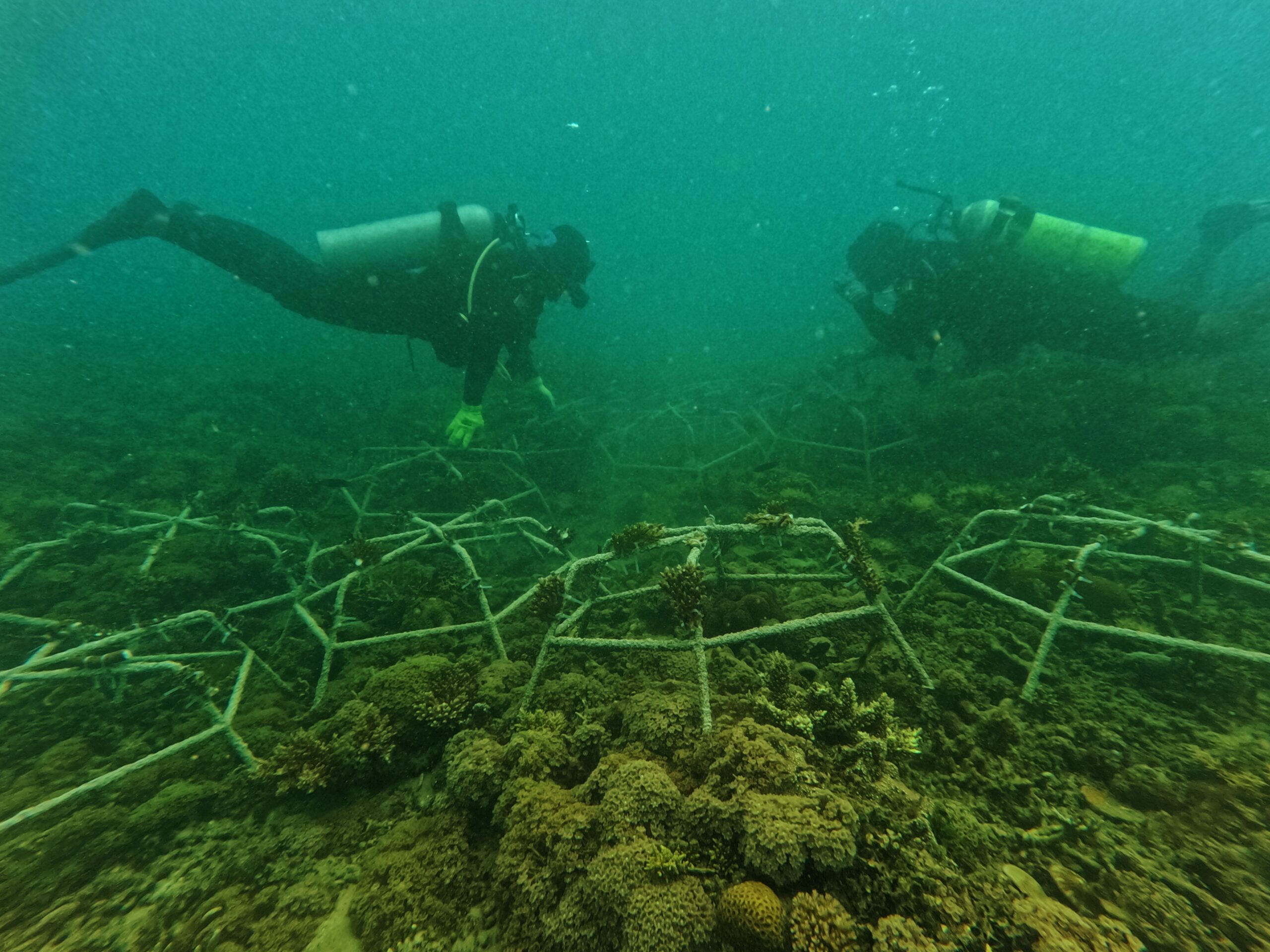
In 2014, community members built their own restoration frames, roughly 20ft by 20ft, and planted coral fragments from Acropora species found locally, using their own funds with no outside support. Through the years that followed, the community continued this work, learning through trial and error what methods suited their reef conditions, while at the same time growing their ecotourism network and building connections with conservation organisations.
Between 2023 and 2025, the community worked with WWF-Malaysia and Sabah Parks to learn and apply the MARRS (Mars Assisted Reef Restoration System) methodology, deploying 300 restoration frames carrying 3,800 coral fragments along Tajau Laut shores with around 200 community members involved.
In May 2025, Sabah Parks organised a mass coral planting event at a designated degraded reef site in Simpang Mengayau, Kudat. The Tajau Laut community prepared the frames and coral fragments and participated in the deployment alongside surrounding communities, universities and tourism operators, planting 12,000 coral fragments across 1,000 reef stars with nearly 500 participants in total. The Malaysia Book of Records recognised it as the largest coral fragment planting ever carried out in the country.
From this work, the community has since surveyed their own coastal and marine area to identify remaining degraded reef zones, mapping an initial priority restoration site of around 40ft by 40ft, with plans to continue mapping the rest of their marine territory as a restoration roadmap. To protect the shoreline in the near term, the community has also constructed small breakwater structures along the coast while the reef system continues to recover.
Working with the Sabah Forestry Department, the community planted around 300 mangrove seedlings across a 100ft by 100ft degraded area near their village, combining the agency’s technical knowledge of mangrove ecology with the community’s own understanding of the forests they have depended on for generations. The long-term aim is to improve stocks of crabs, prawns and fish for small-scale fishers, and to strengthen the natural coastal protection the mangroves provide.
Community-based tourism to support restoration efforts
The community has also been running the Persatuan Penggerak Pelancongan Komuniti Desa Tajau Laut (Tajau Laut Community-based Tourism Association), for more than ten years, established to generate income through boat trips, homestays, food and guided marine experiences.
In 2024, the community developed a coral adoption programme, through which tourists pay to adopt a restoration frame, generating income to finance ongoing maintenance of restoration sites and turning coral restoration into a tourism product alongside diving, snorkelling and mangrove cruising. To date, 145 foreign visitors have participated. From 2021 to 2025, more than 10,000 tourists visited Tajau Laut. In 2025 the village received the Sabah Tourism Board’s Sabah Best Practice in Tourism Award (Community Based Tourism), Silver Winner. Schools from within and outside Sabah now visit for hands-on reef restoration training using MARRS techniques, and other communities come to learn the ecotourism model, making Kampung Tajau Laut one of the pioneer community learning sites for coral restoration in Malaysia.
The visibility built through this work has increased the community’s access to funding and partnerships, including from the UNDP. The community has begun discussions with the Sabah Forestry Department on formal recognition for co-managing the mangrove forests adjacent to the village, and is working with Sabah Parks towards recognition of their stewardship initiatives within the Tun Mustapha Park coastal and marine area. Community monitors track coral survival rates, live coral cover and basic fisheries indicators, sharing data with partners under terms that keep ownership and decision-making with the community.
“We want our children to still be able to fish here. That is why we do all of this. It is not complicated.”
Abd Salleh bin Jamasalleh, Kampung Tajau Laut
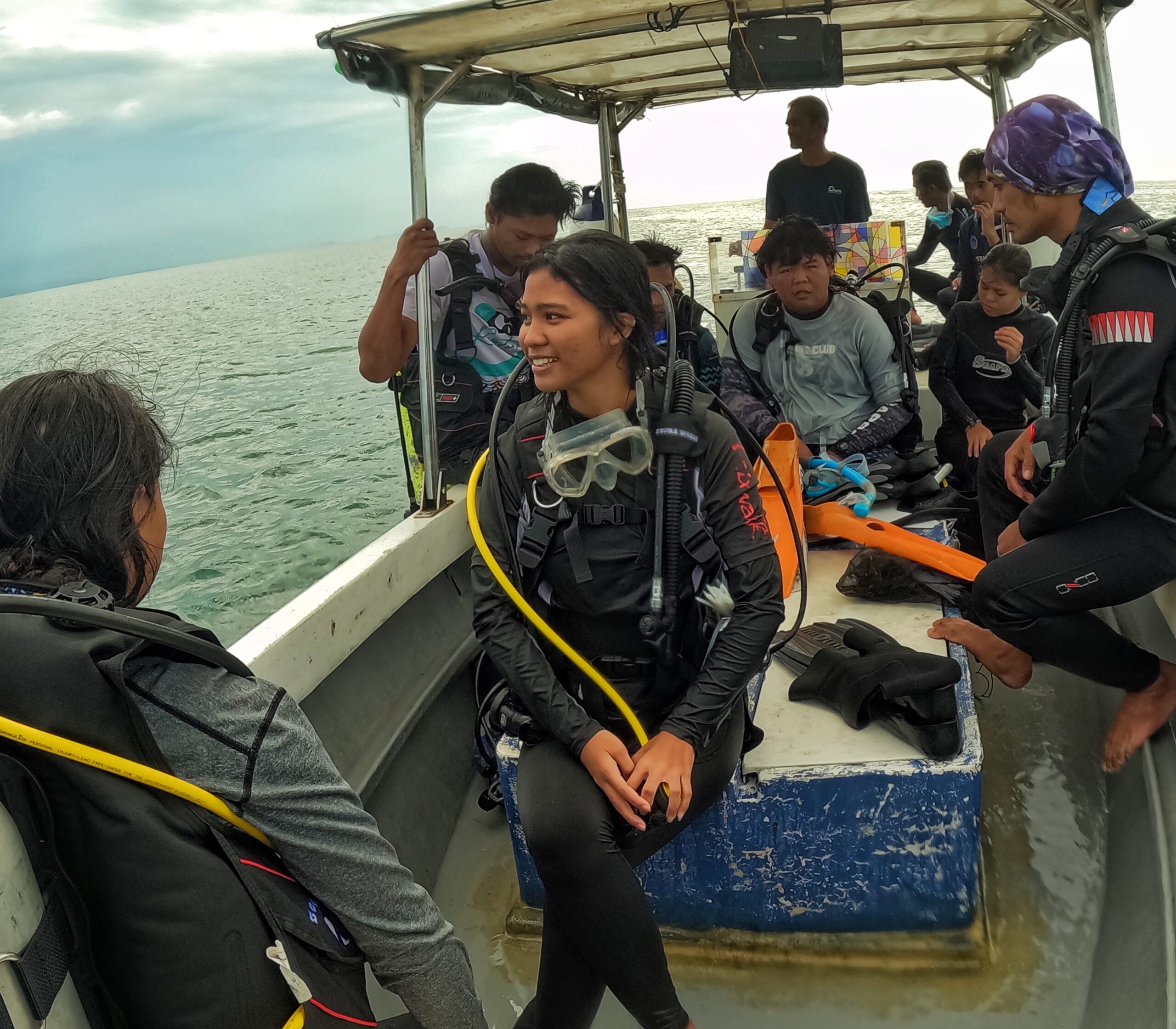
Caption: The Tajau Laut Village Youth Conservation Group remains committed to carrying out its coral management duties in the restoration area. This initiative not only restores the marine ecosystem, but also inspires the younger generation to protect our marine heritage. Credit: Junaidi Awang Bulat