
The coastal belt of Southern Sri Lanka, stretching from Galle through Matara to Hambantota, is home to vibrant small‑scale fishing communities whose cultural and ecological identities are deeply bound to the oceans and coastal ecosystems. South Sri Lanka faces intensifying pressures from overfishing, climate change, tourism expansion, and coastal development, leading to degrading fish stocks, mangrove loss, and declining shoreline resilience.
Despite these challenges, many traditional ecological practices have been refined over generations and continue to offer pathways toward sustainable livelihoods and ecosystem stewardship. This case study highlights how coastal communities in the Southern Province have been reviving and adapting ancestral fishing methods, community protocols, and habitat restoration activities to reinforce marine biodiversity, strengthen food security, and sustain cultural identity.
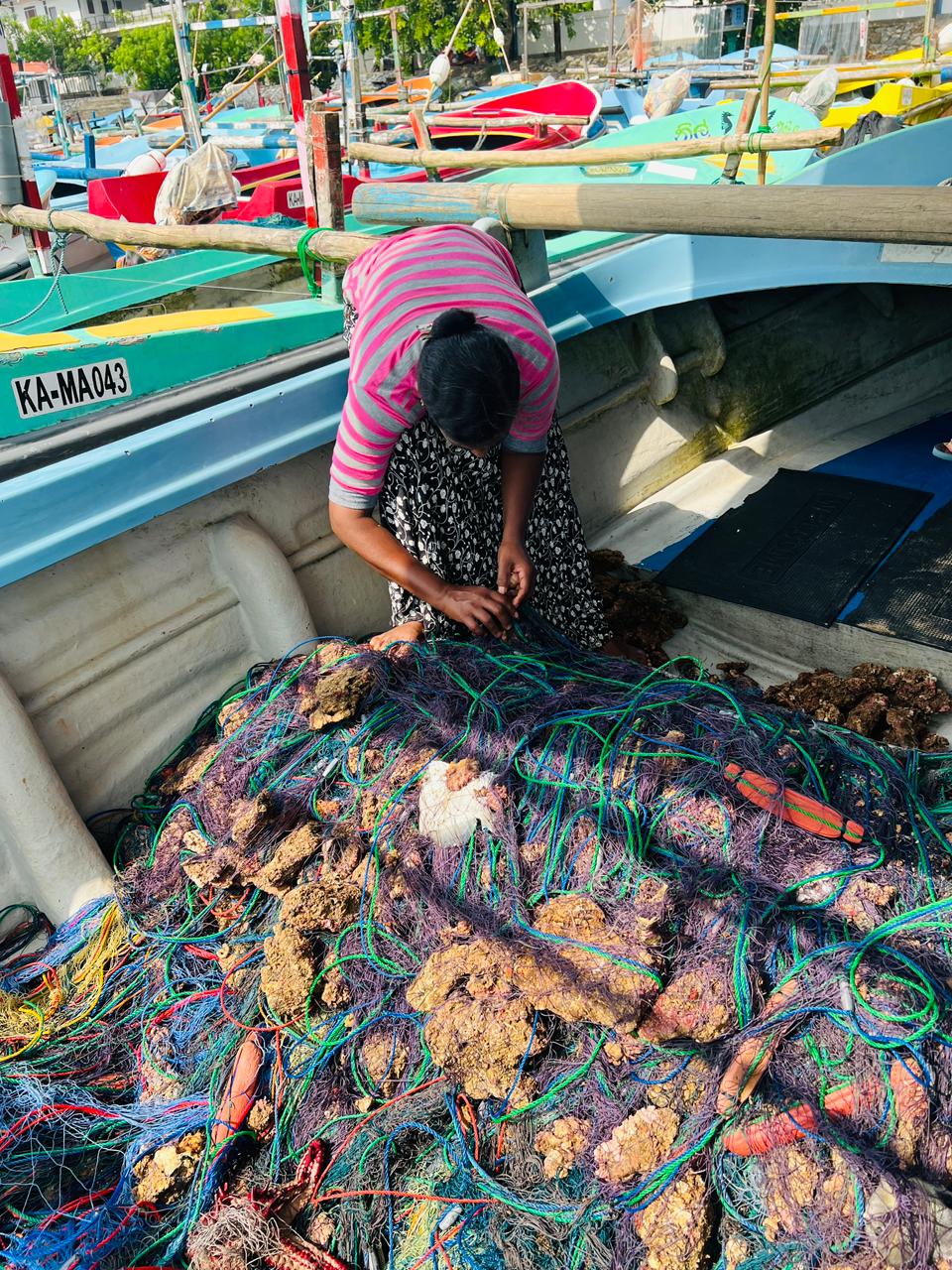
Caption: After harvesting the fish by fishermen, fisherwomen remove the unnecessary catch, including stones, coral parts, starfish etc at Tangalle fishery harbour. Credit: Lochana Amandi
Background
Historically, fishing in Southern Sri Lanka was governed by community norms and gear types designed to minimise ecological impact, including:
Madal nets (beach seines): a traditional shore-operated fishing method that has been used for generations in Sri Lankan coastal communities. While often considered a low-impact small-scale fishery, recent studies have shown that beach seine operations can generate considerable bycatch, including juvenile fish and non-target species, with the magnitude varying according to net size, fishing location, and operational practices (Bandara et al., 2022; Weerasekara et al., 2024).
Karavalas and seer nets: type of gill nets used to target pelagic species like seer fish during seasonal migration patterns. Fishermen traditionally use them only when the target fish move closer to the coastal waters avoiding the unnecessary fishing pressure during other times of the year.
Customary no‑fishing periods: temporal measures that protect fish and crustaceans (especially lobsters) at key life stages such as breeding seasons. For example, lobster fishing is banned during September, October and February in Southern Sri Lanka.
Such practices evolved from deep observation of coastal ecology and served community needs without compromising resource regeneration.
However, from the early 2000s onward and after the civil war, modern mechanised vessels, unregulated fishing gear, and rapid coastal population growth began outcompeting these practices. Combined with increased tourism development and storm frequency associated with climate change, many fish stocks declined, local incomes suffered, and younger generations saw fishing less as a livelihood and more as economic hardship.
Community-led recognition and strengthening of traditional practices
In many coastal villages across the Southern Province, traditional fishing practices never fully disappeared. Instead, they have continued alongside the rapid expansion of mechanised fishing fleets. However, these practices often receive less institutional attention because mechanised fisheries typically produce larger short-term yields and dominate commercial markets.
In recent years, community groups, researchers (from the Ocean University of Sri Lanka), and youth volunteers have begun documenting and highlighting the ecological value of these traditional systems. Through participatory surveys, fisher interviews, and field observations, researchers and community members have documented both the strengths and challenges associated with traditional fishing methods. While beach seine (madal) fisheries generally operate at a smaller scale and may cause less physical habitat disturbance than some mechanised fishing practices, studies have reported notable levels of bycatch, including juvenile and non-target species. These findings highlight the importance of improving gear selectivity and adopting context-specific management measures rather than assuming that traditional fishing methods inherently result in low bycatch (Bandara et al., 2022; Weerasekara et al., 2024).
This recognition has helped shift the conversation from viewing traditional fisheries as outdated practices to understanding them as locally adapted systems of resource stewardship. Many fishers emphasise that these methods are guided not only by technical knowledge but also by social norms, seasonal observations, and community agreements that help maintain long-term resource availability.
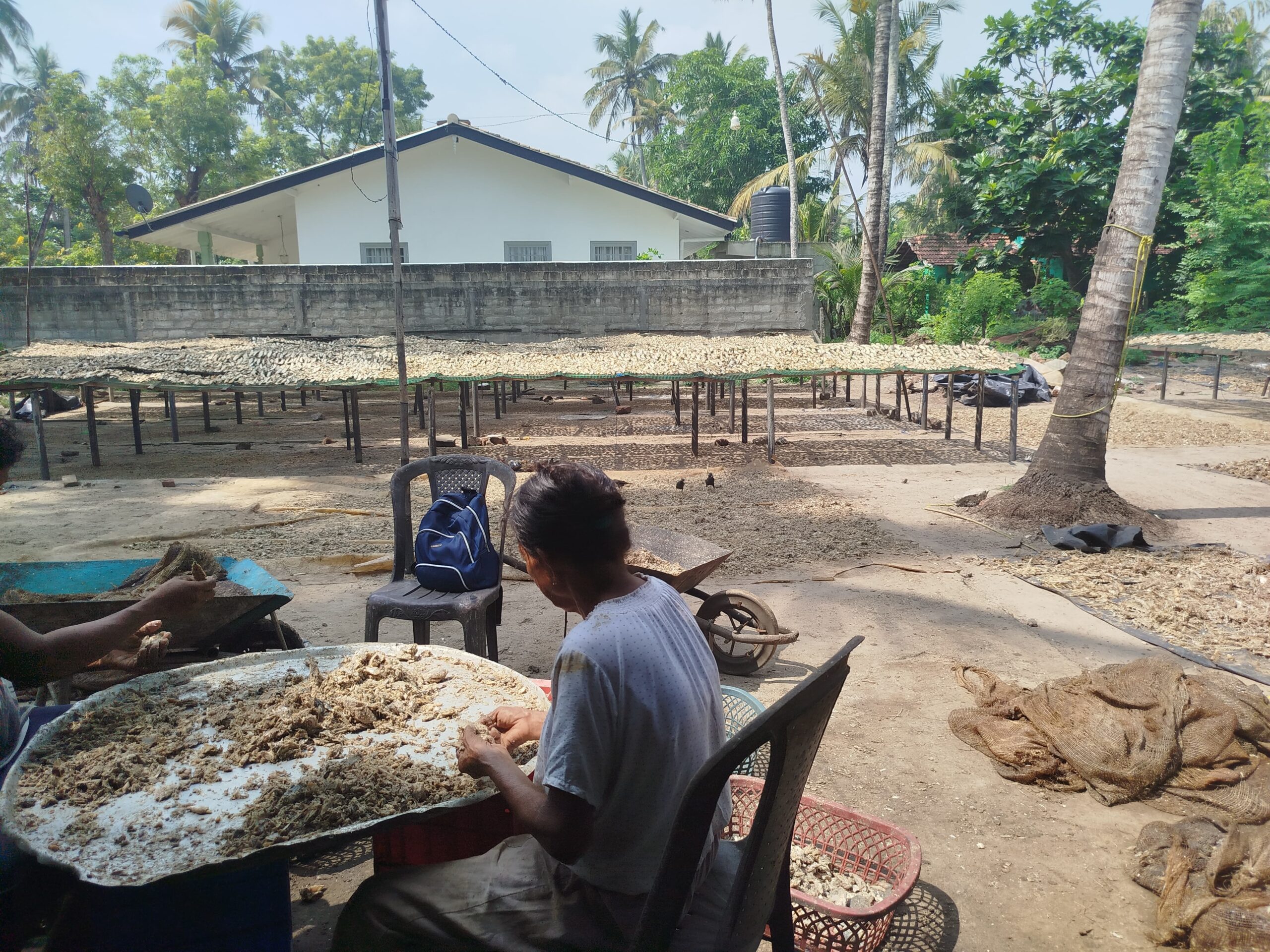
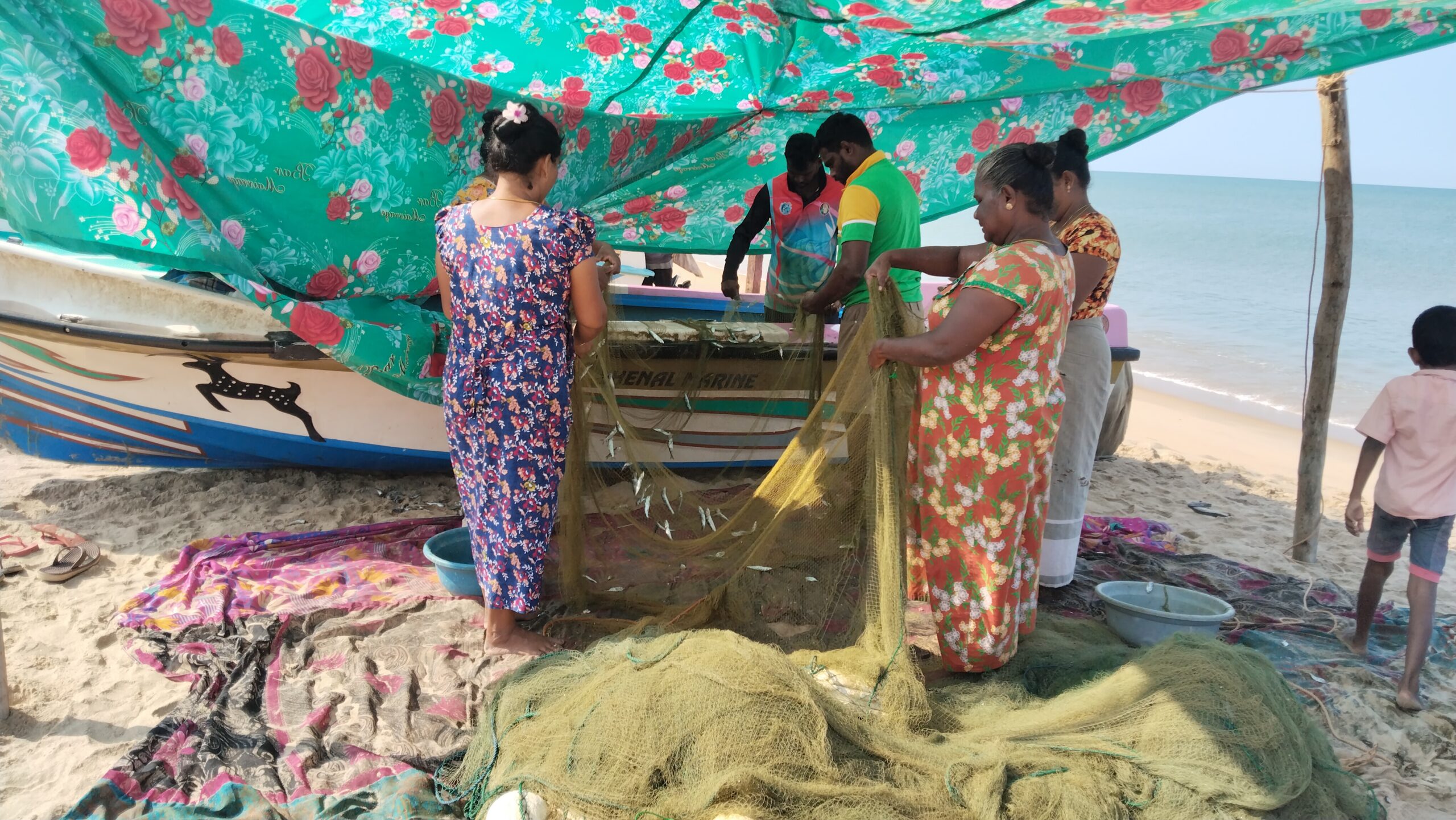
Caption: Fisherwomen work at a dry fish sorting facility owned by the village council at Dickwella, Southern Sri Lanka. Credit: Naduni Probodha
Role of community groups and local initiatives
Across several coastal communities in the Southern Province, fisher cooperatives, women’s groups, and youth networks have started working together to document traditional ecological knowledge and strengthen community awareness of sustainable fishing practices.
Women’s groups have played an important role in coastal ecosystem stewardship, particularly through mangrove protection and small-scale restoration activities in estuarine areas that function as nursery habitats for many fish and crustacean species. At the same time, local youth volunteers and university students have supported participatory monitoring initiatives, documenting fish catches, mapping fishing grounds, and recording community observations about seasonal changes in marine resources.
These initiatives do not aim to replace existing mechanised fisheries but rather to recognise and support practices that have historically balanced livelihoods with ecological sustainability. By combining traditional knowledge with contemporary scientific perspectives, communities are creating opportunities to strengthen coastal resilience while maintaining cultural continuity.
References
Bandara, G. et al. (2022). ‘Bycatch composition and abundance in beach seine (Madal) fisheries in the Western Province of Sri Lanka’. Proceedings of the Faculty of Graduate Studies Research Symposium, University of Sri Jayewardenepura. Available at: https://journals.sjp.ac.lk/index.php/fesympo/article/view/5784
Weerasekara, K.A.W.S. et al. (2024). ‘Assessment of bycatch in beach seine fisheries of Southern Sri Lanka’. Journal of the Marine Biological Association of the United Kingdom. https://doi.org/10.1080/17451000.2024.2399022