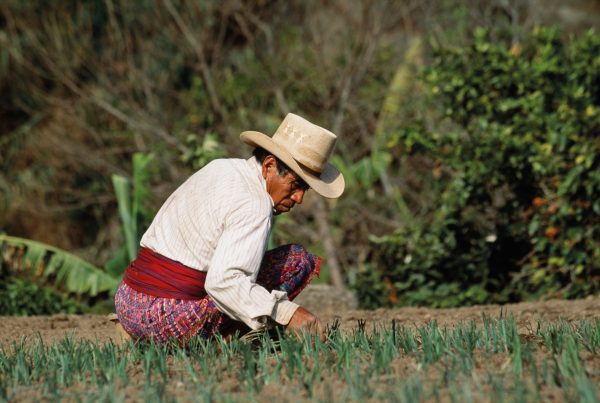

The Kaqchikel Maya people of Guatemala have a culture dating back thousands of years, which is central to their way of life and encompasses various elements, including the management, use and conservation of the territory’s natural and cultural resources, based on their traditional indigenous values, knowledge and practices. Traditional land management reflects, within its systemic framework, the continued relevance of cultural indicators as a benchmark for observing positive or negative changes in the territory, its capacity to generate resources to meet the communities’ needs, and the maintenance of ecological, environmental, social and cultural balance – all of which form the basis for the development and implementation of strategies for adapting to climate change.
This reality underscores the importance of systematising Maya Kaqchikel indicators for adaptation to climate change.
Context
This system has been deteriorating as a result of changes in the social fabric, the impacts of climate change and pressure from national policies. These factors pose threats to the integrity of natural and productive resources, governance and traditional ways of life, which must be addressed by strengthening indigenous knowledge systems through their systematisation and promotion.
It is important to bear in mind that the state of indigenous knowledge systems can be assessed using biocultural indicators, which also serve as strategies for the Kaqchikel Maya communities to adapt to climate change.
Saqb’e Centre of Excellence has been working to gain a deeper understanding of the logic underpinning local ways of life. To this end, it has developed a set of biocultural indicators that highlight the dynamics of the use, management and conservation of natural resources, with a view to mitigating the impacts of climate change.
Activities
Identification of indicators
The indicators identified and practised by the Kaqchikel Maya people of the community of Xepatán, Patzún, Chimaltenango are: sacred values, traditional norms still in force, forms of self-organisation, traditional practices, and the state of their territorial space.
Sacred value
A key indicator identified for adapting to climate change is the sacred value attributed to natural and cultural elements within a territorial space, which is maintained over time. When this value diminishes, it is a serious indicator of degradation and, depending on the extent of this devaluation, the negative changes may be minor, severe or irreversible. This value is measured by the respect the community shows towards these elements or the territorial space, which possess a Nawal (protective energy) that safeguards them – such as seeds, trees, stones, water sources, ravines, caves, hills, wildlife refuges or sources of germplasm for agricultural production. It encompasses the nature of the relationship, the collective behaviour that establishes pathways for use, management and conservation, and it instils a logic of traditional management to enhance traditional resilience.
Traditional rules currently in force
The extent to which traditional norms are still in force is a key indicator of adaptation to climate change. In the case of the community in question, these norms relate to people’s commitment to safeguarding and preserving production models, producing local food to reduce dependence on external sources, conserving native species and preventing invasive species that disrupt the ecological balance of the agricultural landscape.
This includes taking part in information and coordination meetings, holding positions within the organisational structure, and imposing sanctions as appropriate, ranging from cash payments to the community organisation and extra days’ work to the temporary restriction of usage rights. Regulations governing the use of land are applied in accordance with traditional practices; in many cases, place names are used to define the intended use of the areas.
Traditional organisation
Traditional forms of organisation are important for the effective governance of land-use management and adaptation to climate change. When an organisation weakens, this indicates that a key factor in the management of traditional food systems has been compromised; these systems provide healthy, high-quality produce and prevent changes to diets that rely on external inputs.
They focus on a clear and functional structure, clearly defined responsibilities, and suitable profiles for those holding positions; in the case of Xepatán, this takes into account the individual’s calling or gift, as reflected through the Nawal, as set out in the Mayan calendar. Furthermore, they emphasise the value of the elders, their active participation, and their role as wise figures who provide guidance to the younger generation.
Traditional practices
These practices include any activity carried out systematically and traditionally to preserve the agri-food production model. For example, through the use of traditional techniques such as the tikoj, b’oloj, choloj, chenoj, kamul (names in the Kaqchikel Mayan language used by the community), amongst other farming practices.
A key aspect of adapting to climate change is the conservation of native agri-food seeds. Year after year, through traditional farming practices, communities identify the best phenotypes and select them using criteria passed down from their ancestors, bearing in mind that the seed has its own Nawal and possesses a memory for adaptation, having recorded information on climate variability in its genes since ancient times. Through this process, the community seeks to conserve its native seeds as a valuable asset in the face of the impacts of climate change and as a strategy for community resilience.
The signs that farmers observe are important for implementing early-warning measures; for example, the sound of the Pacific Ocean alerts them to the Xokomil, a headwind that is highly damaging to maize and bean crops, or the Salkum, a very violent whirlwind. Consequently, farmers make adjustments to the layout of their furrows and opt for shorter or more robust varieties, exchanging seeds with neighbouring communities. They also use stakes and remove lower leaves from the stems to reduce wind pressure. As a preventative measure, they reinforce the edges of their plots with shrubs such as Tunay Che’ (elderberry), Tz’ite (palo de pito), Parkij (izote) and Q’anaq’ to break the force of the wind. In other cases, they monitor signs from the maize’s pseudorhizomes, which warn of storms, and in response implement measures to minimise losses.
State of the territory
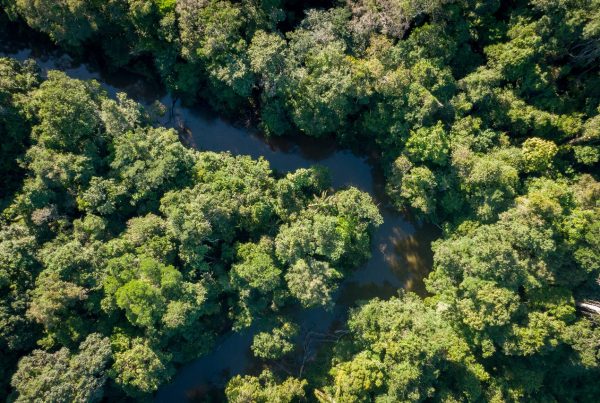
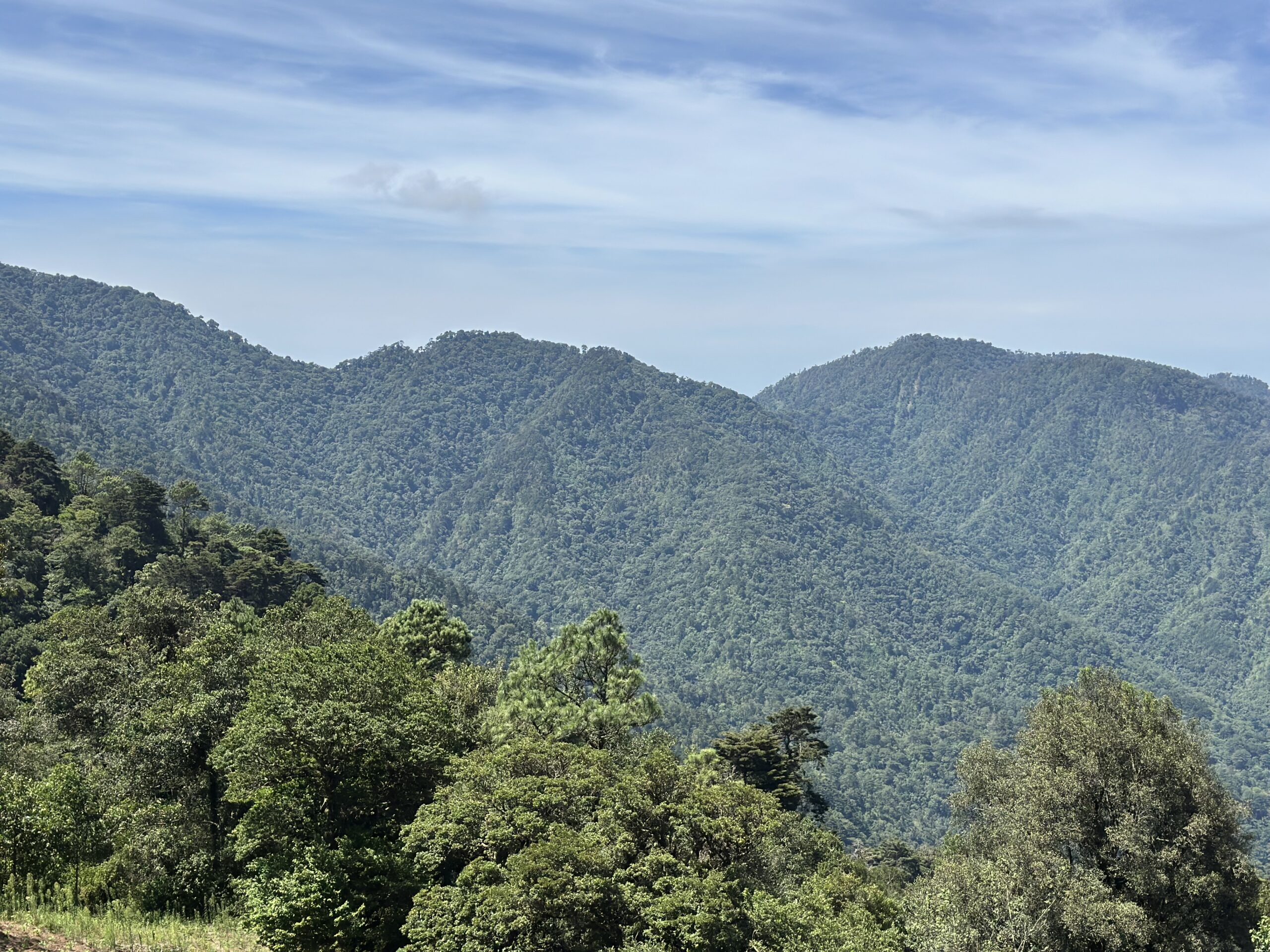
From a biocultural landscape perspective, we examine whether the natural and cultural attributes of key elements – such as trees, water, soil and native agricultural species – are preserved over time, and whether land is used appropriately in accordance with the slope of the terrain to prevent soil loss.
Changes in these areas serve as indicators of improvement, conservation or deterioration of the area and the features within it.
What happens to the information obtained from the indicators
- Traditional monitoring of indigenous agri-food systems, verification of native species and water sources, the application of lunar cycles and signs from Mother Nature, and the impacts they are facing as a result of climate change
- Analysis and transfer of indigenous knowledge systems at a community level, taking into account the impacts of climate change
- Knowledge management, current norms and their application in the lives of Kaqchikel families
- Promoting intercultural production models as measures for adapting to climate change, based on both traditional local systems and modern systems.
What has happened as a result of these activities
- As a result of their evolution over ancient times, native seeds are more resilient to the impacts of climate change (droughts, heavy rainfall, frosts) and are more viable in production systems
- Processes aimed at strengthening intergenerational transmission by consolidating identity and culture, worldview, values, traditional knowledge and practices, with a view to their preservation and continued relevance
- Communication regarding land-use management regulations is being improved to strengthen their enforceability
- The sharing of experiences regarding traditional agri-food production models, which leads to a greater commitment to conserving native species in order to ensure food availability for all generations
- Promoting the ‘Pixa’, a traditional way of gathering lessons learnt for the board regarding best practice.
Nex steps
- Carry out a community-led mapping of the territory or its cultural use in order to strengthen the management of areas traditionally established according to their respective purposes
- To gather detailed information on the current state of the territory in order to ensure that information is available so that the next generation can gradually take on the responsibility of continuing to manage the forest
- To systematise traditional knowledge, drawing on key sources and stakeholders such as the community’s elders
- To facilitate an intergenerational exchange of traditional knowledge and practices using modern technology.
Conclusion
The systematisation and application of the Kaqchikel Maya indicators, based on their knowledge systems and worldviews, enable the community to take steps to conserve their land, safeguard their food security and better manage the effects of climate change.