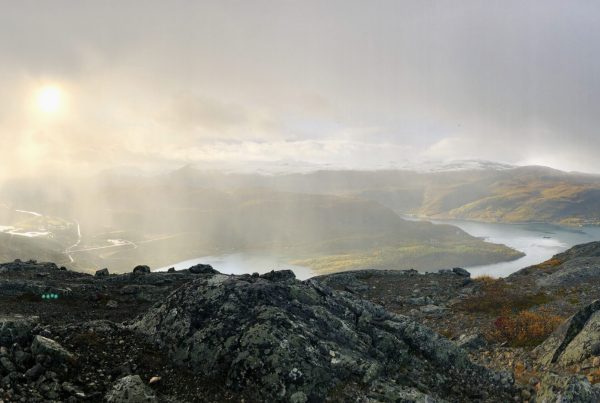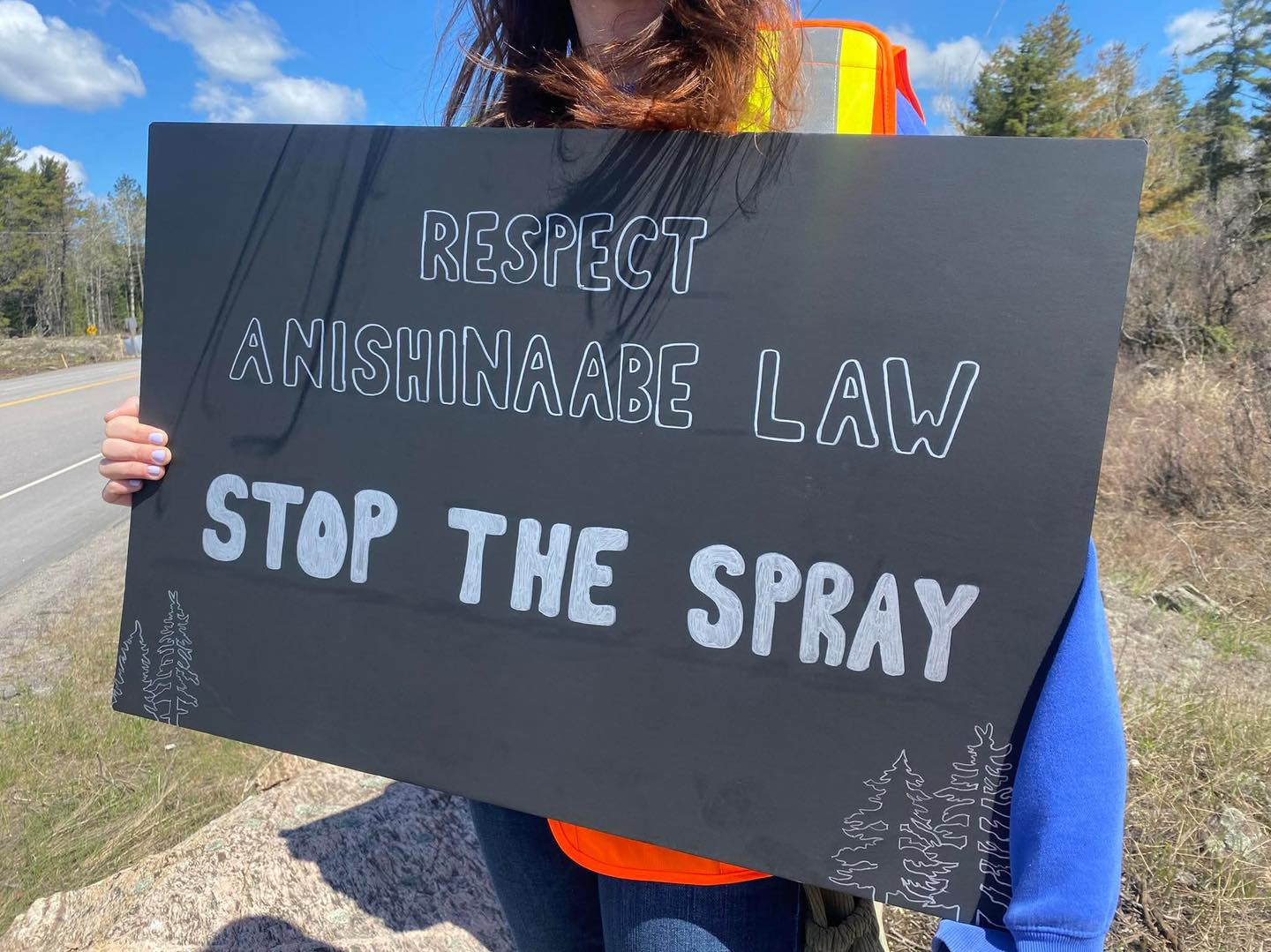

In the Robinson Huron Waawiindamaagewin (Robinson Huron Treaty territory) along the North Shore of Lake Huron in Ontario, Anishinaabek Elders and knowledge holders are raising the alarm about ongoing biodiversity loss linked to aerial herbicide spraying in forests. This case study shares the work of the Traditional Ecological Knowledge (TEK) Elders and highlights a core implementation gap: Indigenous Peoples’ knowledges and governance must be part of biodiversity decision-making.
As the TEK Elders explain:
“The lands are our everything, our kitchen, our pharmacy, our education, our way of life.”
Joe Jones, TEK elder
The Anishinaabek of the Robinson Huron Waawiindamaagewin rely on the lands for medicines, food, clothing, knowledge, language and culture. We understand that the loss of one species affects the entire ecosystem. The loss affects the entire circle of life. Every piece of the lands holds responsibilities to all life. We honour the lands through ceremony for continuing to provide us with life.
Within the Robinson Huron Waawiindamaagewin, Anishinaabek teachings emphasise inherent responsibilities and obligations to protect all life for future generations, with decisions guided by Anishinaabek laws and strengthened through ceremony and community protocols.
The Elders remind us that:
Ngo Dwe Waangizid Anishinabe
(One Anishinaabe Family)
Debenjiged gii’saan anishinaaben akiing giibi dgwon gaadeni mnidoo waadiziwin
(The Creator placed us on this earth along with the gift of spirituality)
Shkode, nibi, aki, noodin, giibi dgosdoonan wii naagdowendmang maanpii shkagmigaang
(Here on Mother Earth, there were gifts given to the Anishinaabe to look after, fire, water, earth and wind)
Debenjiged gii miinaan gechtwaa wendaagog Anishinaaben waa naagdoonjin ninda niizhwaaswi kino maadwinan. Zaagidwin, Debwewin, Mnaadendmowin, Nbwaakaawin, Dbaadendiziwin, Gwekwaadziwin miinwa Aakedhewin
(Creator gave seven sacred gifts to guide them: love, truth, respect, wisdom, honesty and bravery)
Debenjiged kiimiingona dedbinwe wi naagdowendiwin
(Creator gave sovereignty to self-govern)
Ka mnaadendanaa gaabi zhiwebag miinwaa nango megwaa ezhwebag, miinwa geyaabi waa ni zhiwebag
(With respect for past, present, and the future).
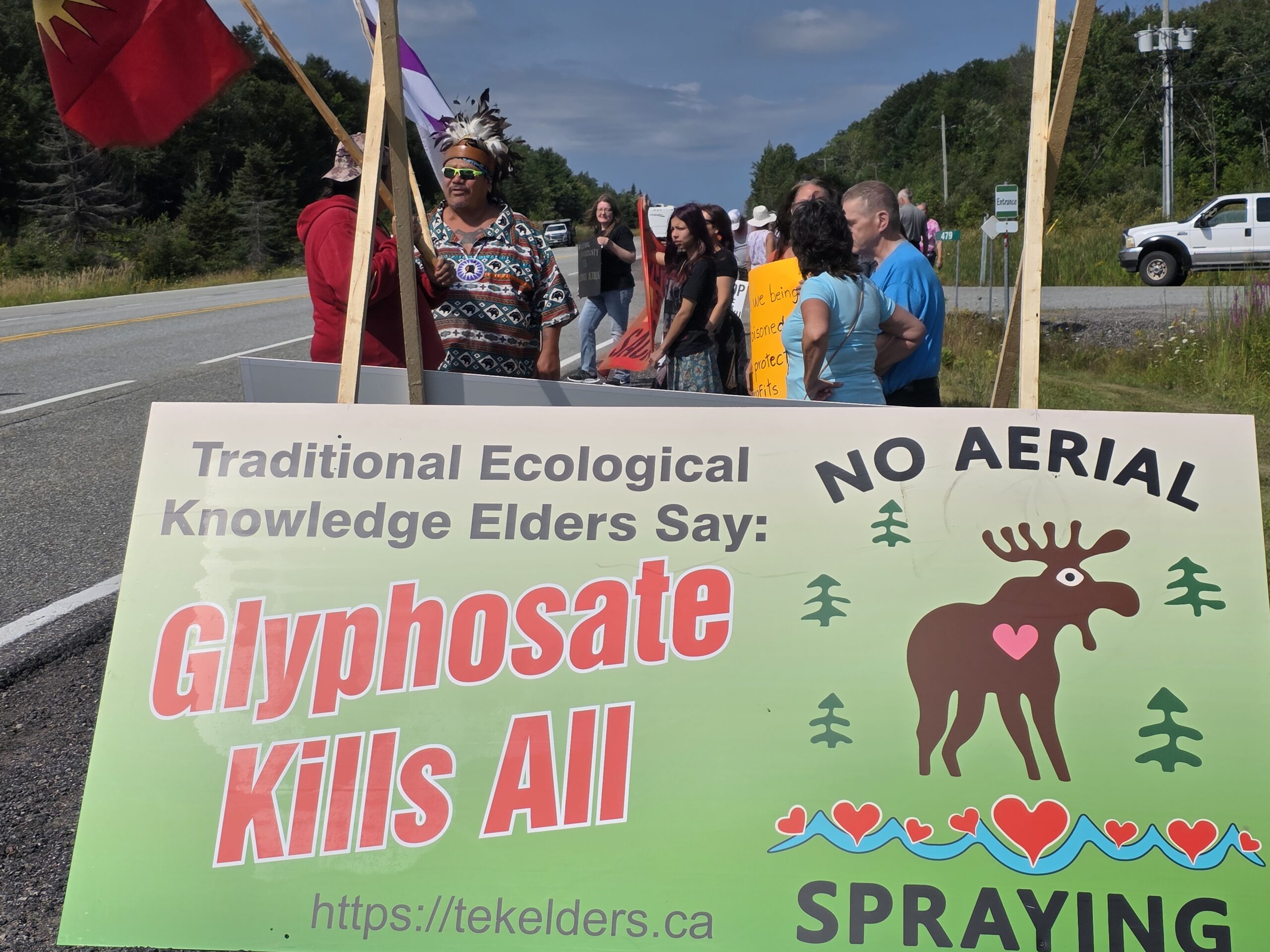
Caption: Sign displayed at a Day of Action on August 15, 2025. Credit: Susan Chiblow
The TEK Elders are from First Nations in the Robinson Huron Waawiindamaagewin. In 2013, the TEK Elders came together to discuss concerns with aerial spraying of glyphosate in the forests. They have witnessed the destruction to the lands by aerial spraying and are demanding a moratorium.
Glyphosate is a chemical used in forestry operations applied through aerial spraying to control re-growth of the natural forest after logging operations. The forestry companies then plant monocultures which significantly reduces biodiversity, as birds, plants, animals, and insects do not return to these areas.
This struggle is also about governance. Across many Indigenous territories, environmental decisions are still shaped by colonial laws and policies, and Indigenous Peoples are too often missing from decision-making tables, or their concerns are not adequately addressed. Indigenous knowledges can also be treated as information to extract rather than a living system rooted in people, community, and more-than-humans, such as the surrounding lands and waters. For TEK Elders, stopping the spray is inseparable from restoring Indigenous-led decision-making about lands, waters, and biodiversity.
The TEK Elders are addressing the moratorium in multiple ways. They have done several Days of Action events to increase awareness for all people about the destruction. The Days of Action produce educational materials on aerial spraying and provide information about the TEK Elders. Flyers with this information are handed out to the general public. Participants in the Days of Action hold various signs with information on them in cities, government buildings, and along major highway corridors.
They have also written numerous letters to governments, drafted a position paper, and gained a supporting resolution from the Robinson Huron Ogimaak (leadership). This resolution demonstrates solidarity in the Robinson Huron Treaty territory. In 2019, the TEK Elders presented a submission to the United Nations Special Rapporteur Baskut Tuncak detailing the human rights implications of the management and disposal of hazardous substances and toxic waste linked to glyphosate. But these activities have not been enough to stop the aerial spraying.
The TEK Elders’ experience shows that communities can mobilise, provide evidence, and pursue multiple policy avenues—and still face barriers when the underlying approval systems continue to authorise harmful practices. Aerial herbicide spraying is therefore both an environmental concern and an environmental justice concern tied to Treaty relationships, human rights, and the ability to practice Anishinaabek ways of life.
The TEK Elders are determined to protect biodiversity loss and continue to meet to plan activities to educate the public about the loss of biodiversity. These activities include hosting more Days of Action to increase awareness and meetings with other organisations to build solidarity. The activities the TEK Elders have taken supports the mission of the Kunming-Montreal Global Biodiversity Framework (KMGBF) to halt and reverse biodiversity loss.
The TEK Elders’ actions align strongly with GBF implementation needs related to reducing pollution risks (including pesticides), supporting sustainable forest practices that maintain biodiversity, and ensuring that Indigenous Peoples are full and equitable participants in decision-making. Several KMGBF targets explicitly reference Indigenous Peoples and local communities (including Targets 1, 3, 5, 9, 21 and 22), and this case study speaks directly to the spirit of those commitments.
The TEK Elders’ knowledge is not part of the decision-making processes in allowing the use of glyphosate.
Based on this experience, the TEK Elders’ work points to key actions for Parties and other actors to ensure Indigenous Peoples are part of decision-making process about biodiversity, including forest management approvals and monitoring, through Indigenous-led governance and meaningful processes. There is a need to support Indigenous-led research and monitoring “driven by them and for them,” with respectful relationships, reciprocity, and community control of knowledge sharing. It is important to resource collaborative work between TEK Elders, governments and scientists to identify and implement alternative methods to aerial spraying of herbicides that maintain biodiversity in forests. It is also crucial to recognise and protect the role of Elders and land defenders who raise concerns about hazardous substances and biodiversity loss, including access to information, accountability mechanisms, and remedies.
Ultimately, the goal of the TEK Elders is to stop the use of glyphosate in the Robinson Huron Waawiindamaagewin. This means executing a moratorium on aerial spraying and applying Anishinaabek knowledge where biodiversity and human health are at risk.
The TEK Elders are willing to work with governments and scientists to find alternative methods to aerial spraying of herbicides to protect biodiversity. There are immense amounts of information and publications already produced on how to collaborate with Indigenous Peoples. For example, the Impact Assessment Agency in Canada co-developed Guidance: Collaboration with Indigenous Peoples in Impact Assessments that lists designing and approaches to collaboration. Nature United developed Working With Indigenous Peoples that can also guide collaboration to develop alternative methods to aerial spraying. This is not something new, it simply requires commitment by governments and scientists.