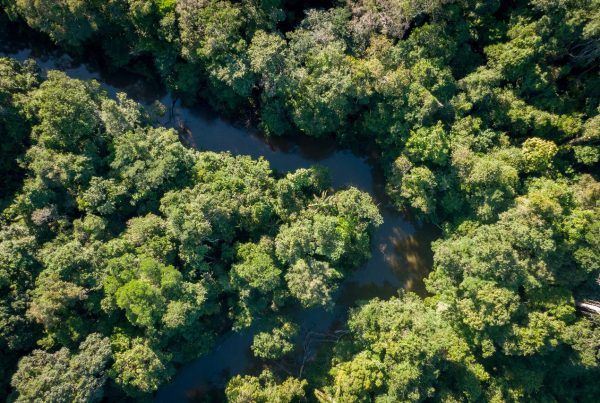


Loky Manambato is a highly diverse landscape in northeastern Madagascar spanning 250,000 hectares, and including high massifs, forested areas and grasslands, and a marine/coastal zone. Bounded by two rivers, the area takes its name from the Loky River in the north and the Manambato River in the south. The main population centre is the commune of Daraina, although local communities are settled in other parts of the area as well.
This case study highlights:
- Loky Manambato as a protected area since 2015.
- The role of its mangrove forests.
- Women’s self-organisation to manage and restore mangroves.
- Multifaceted women’s associations as key governance actors.
- A future vision of sustainably managed mangroves led by women.
- Recommendations from Fanamby for decision-makers.
Loky Manambato – a protected area since 2015
Loky Manambato is classified by the International Union for Conservation of Nature (IUCN) as a category V, Protected Landscape/Seascape. These protected areas are defined as spaces “where the interaction of people and nature over time has produced a distinct character with significant ecological, biological, cultural and scenic value: and where safeguarding the integrity of this interaction is vital to protecting and sustaining the area and its associated nature conservation and other values”.1
Before 2000, the forest blocks of Loky Manambato were intensively exploited. In co-management with the communities, a multi-purpose forest station was established to protect biodiversity. The site was not placed under temporary protection until 20052. Since then, it has been managed by Fanamby, a Malagasy non-profit that supports local communities and the sustainability of biodiversity in Madagascar, and expanded to include all stakeholders in the landscape.
Loky Manambato obtained its creation status as a protected area under decree no. 2015-759 on 28 April 2015.
The mangrove forests of Loky Manambato
The area includes a 15,000-hectare marine zone. This protected harmonious landscape is located in the Vohémar district of Madagascar. It contains 2,000 hectares of mangrove forests along the eastern coast, in the rural commune of Ampisikinana, extending over six villages and 10 hamlets.
The mangroves of Loky Manambato develop in estuaries and coastal areas, where the soft soil is dominated by mangrove trees from the Rhizophoraceae family. Among the most common species are Ceriops tagal and Rhizophora mucronata, which are plants adapted to high water salinity. These species play a crucial role in the productivity of coastal and even pelagic (open sea / oceanic) fisheries in tropical regions. The mangroves provide a vital habitat for many invertebrate species, including shrimp and fish, which spend part of their life cycle there.
Women self-organise to manage the mangroves
Beyond biodiversity, these ecosystems also provide a sustainable income to women in the area.
Before Fanamby was established in 1997, Loky Manambato was managed by the Malagasy state, and the local communities lived there without restrictions and without any specific regulations. The communities living in the riparian zones had unlimited access to natural resources.
The men fished in the sea and were often confronted with difficulties related to the climate, sometimes risking their lives. They went fishing in the evening and returned the next morning with fish, but due to overexploitation and poor management of the mangroves the quality was unsatisfactory and the selling price was very low. Their monthly income did not meet their needs.
Faced with this difficult situation, the fishermen’s wives decided to take an active role, holding on to the hope that things would improve over time. Their involvement is remarkable in the context of traditional Malagasy society, where women are often marginalised and mainly assigned to household chores and tasks perceived as requiring less effort, such as preparing products. The idea of uniting and acting together had already emerged during every public or community meeting.
The fishermen continued fishing, and the women organised to create a unique association in Ampasimadera with the goal of managing natural resources. Thus, the Ampasimadera Women’s Association was created to manage the mangroves, knowing that fishery products such as crabs, shrimp, and fish inhabit the mangroves.
After two years, the association’s members had already seen an improvement in their household income. Consequently, there was growing recognition among the men that the women’s organisation into associations had brought hope for a change in their standard of living, regardless of pre-established gender considerations.
With Fanamby’s arrival, daily activities could no longer be carried out without authorisation or without respecting the management rules. The mangrove forests became protected as the habitat of fishery resources, and supported by law to ensure the survival of fishing populations. However, Fanamby chose a co-management policy to allow the community living in the protected area to participate in decision-making. Hence the creation of the three additional associations, as the co-management system provides more advantages for the local community to access their resources.
This was a difficult situation for the fishermen to understand at first, but with Fanamby’s support, the awareness and support among the fishermen has grown. Currently, 18 fisher associations with 534 members have been established in Loky Manambato, and nine community management sites have been set up and are directly managed by the fishermen.

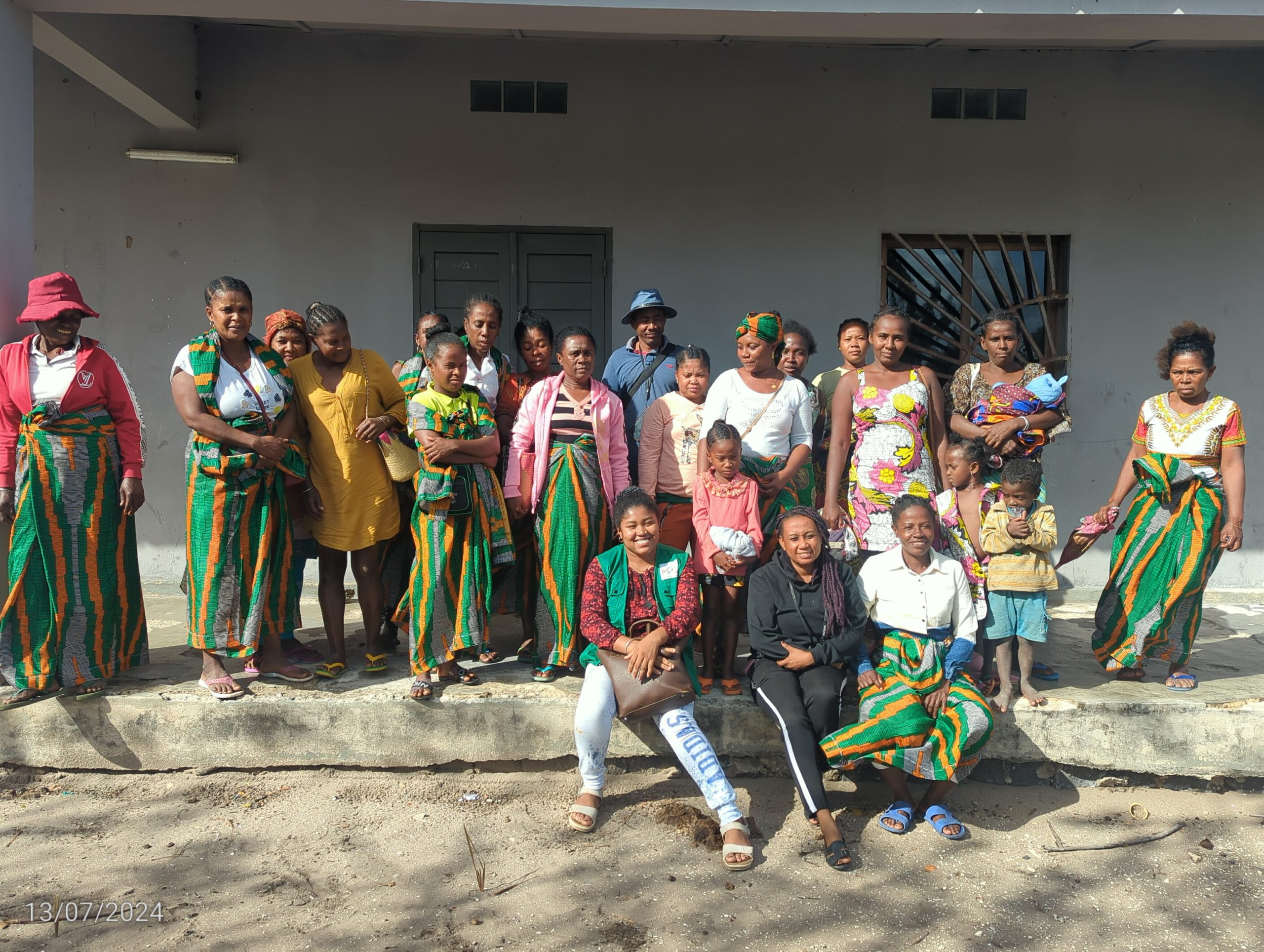
In rural Madagascar, women rarely take leading roles, which makes their involvement in mangrove management particularly significant. In the photo, around twenty women and girls gather as this collective effort continues to grow. Credit: Fanamby.
Author
- Nicolas Salo, Fanamby
Ecosystems
- Marine and coastal
Topics
- Gender
- Conservation and sustainable use
Type
- Short-form
Date
- This case study is included in the report Enabling Pathways for Rights-based Community-led Conservation, published on September 17, 2025, by the Rights and Resources Initiative, the ICCA Consortium, and the Forest Peoples Programme
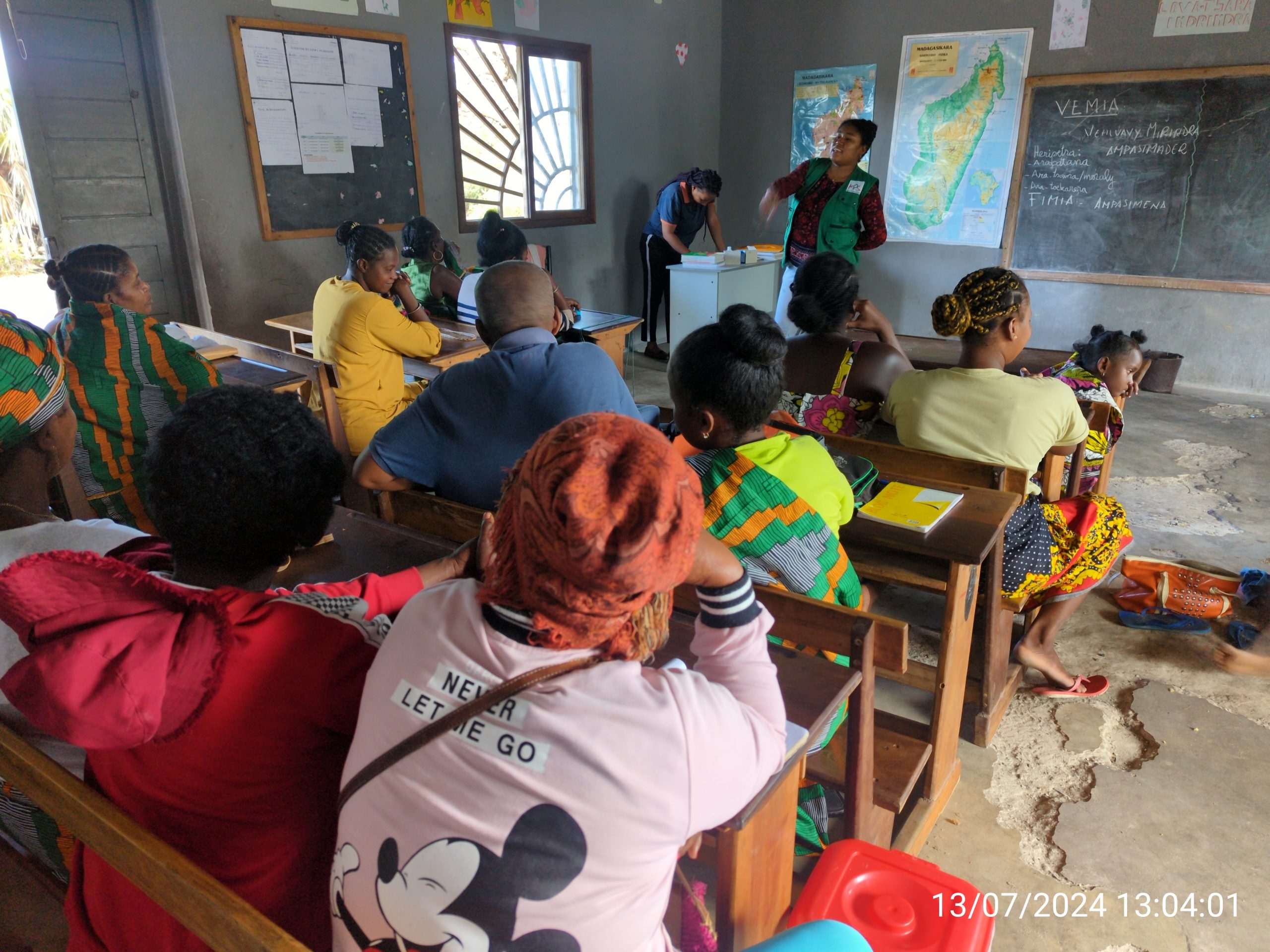
Regular meetings help women become more active in generating and diversifying their income, while also planning the sustainable use of mangrove resources. Credit: Fanamby.
Multifaceted women’s associations
Since 2020, four women’s associations with 114 members have committed to managing mangrove forests in their localities:
- VMH – Women Protectors of Mangroves in the village of Soafagneva, has 24 members from 16 households, with ages ranging from 20 to 60 years. The women manage a 649-hectare mangrove forest. Their main economic activity is fishing for crabs which they sell to collectors at USD1 per kilogram. In the period 2002 to 2023, they have been able to restore 2.92 hectares of mangroves.
- FMTIA – Women Protectors of the Environment of Ambavarano has 51 members from 47 households, with ages ranging from 15 to 50 years. The women manage 351 hectares of mangrove forest. Their main economic activities are crab fishing, octopus fishing, and collecting and drying fish before it is delivered to collectors from the city of Vohémar. To date, the women have restored 1.67 hectares of mangroves.
- VEMIA – Well-Organised Women of Ampasimadera has 27 members from 24 households, with ages ranging from 25 to 65 years. The women manage 53 hectares of mangroves. They cultivate algae, and fish for shrimp, crabs, squid and octopus. They have an advantageous economic situation thanks to the co-management established between the local communities and the managing institution of the Loky Manambato Marine Protected Area. This association has restored 8.61 hectares of mangroves.
- FIMIHA – The Association of United Women for the Development of Ampasimena has 12 members from 12 households, with ages ranging from 22 to 55 years. Their main economic activities are collecting and preparing fishery products, for the market of the city of Antsiranana. The women manage 37 hectares of mangroves and have restored 6.26 hectares.
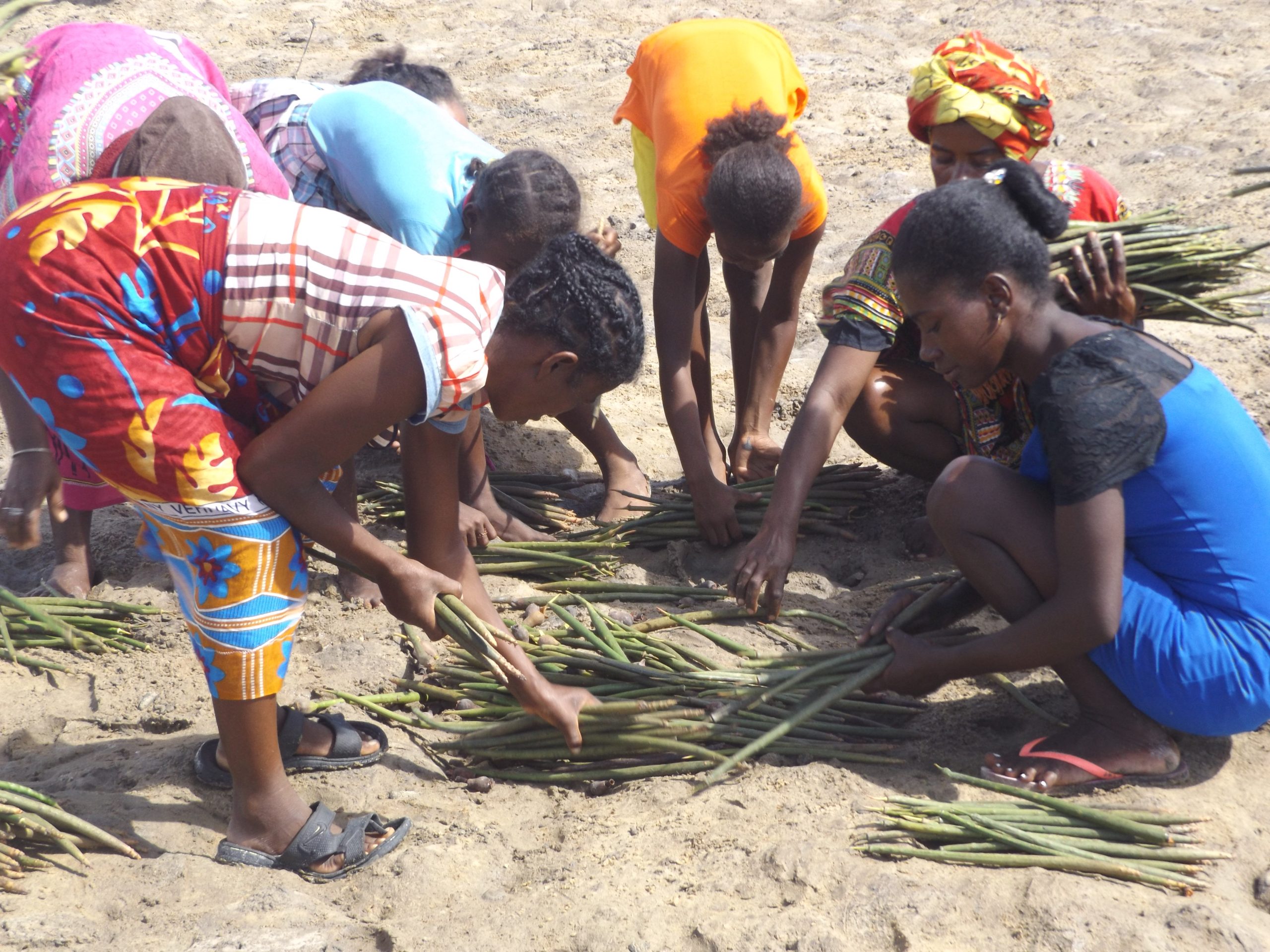
In Loky Manambato, women play a key role in mangrove restoration. In the photo, seedlings are shared among participants before being planted one by one as part of the restoration efforts. Credit: Fanamby.
Aside from fishing and gathering, the four women’s associations in Loky Manambato engage in crafts, weaving local raw vegetable materials to make mats/rugs and soubiques3. One person can produce five mats in a week, with a unit price of USD1.75. A soubique sells for USD0.88.
The monthly income per household for members ranges from USD25 to USD55, which is beneficial relative to the standard of living in the region.
A future where all mangrove forests will be managed sustainably by women’s associations
Fanamby, as the area manager, encourages female engagement by supporting the women’s associations, which together consist of 99 households managing 1,090 hectares of mangrove forests, along with the restoration of 19.46 hectares – a rare practice in the management of protected areas.
Each year, Fanamby runs two training workshops to enhance the associations’ organisational capacities and especially to support their initiatives in the development of their conservation activities in association with craftsmanship and fish product preparation. This is a good practice to share with other villages to ensure that all mangrove forests are preserved and conserved.
During 2023, five visits from institutions managing natural resources were hosted in Loky Manambato.
In the future, all the mangrove forests of Loky Manambato will be managed by women’s associations to ensure more rational and economically sustainable exploitation.
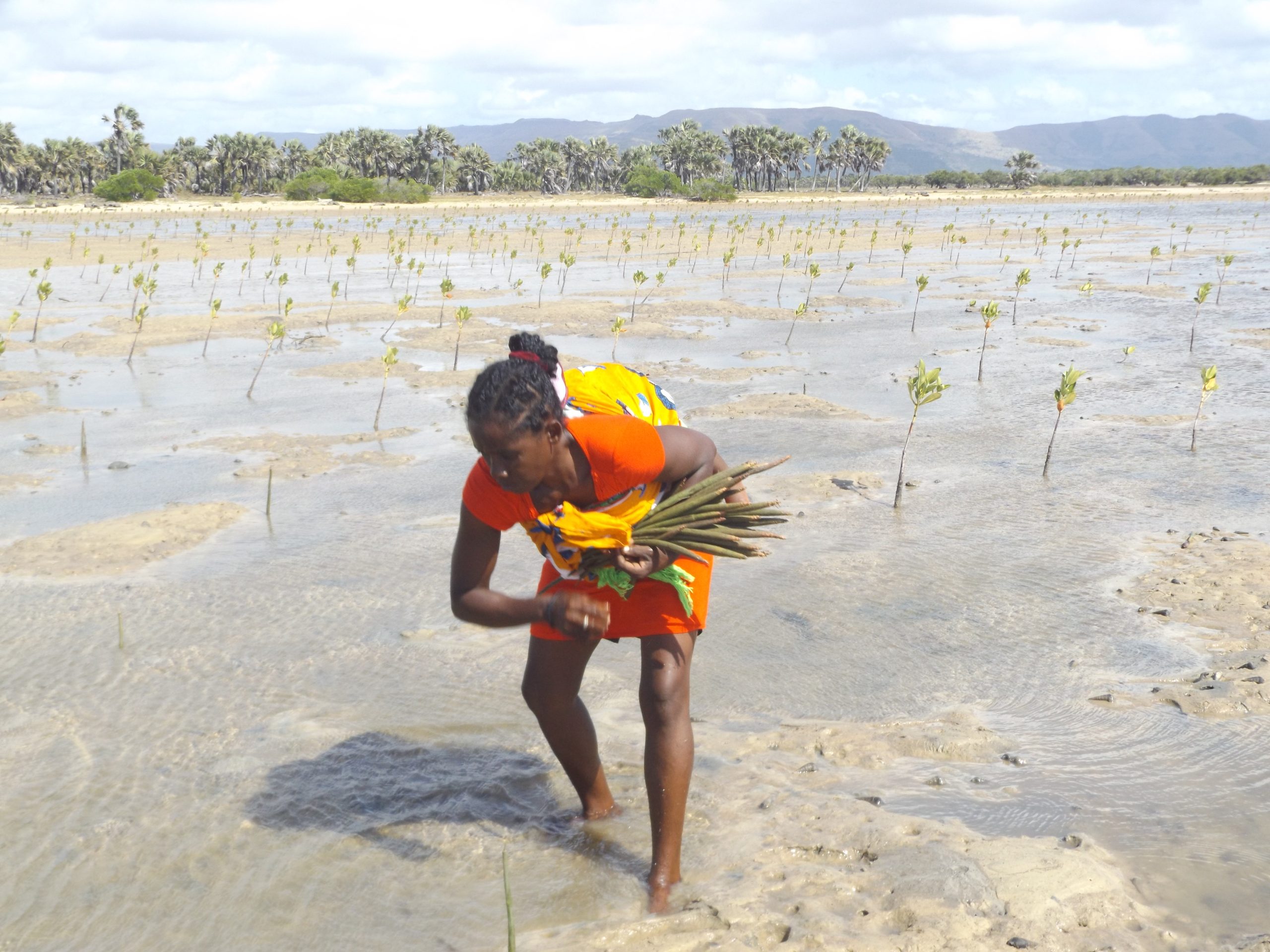
A woman planting mangrove seedlings by hand. Credit: Fanamby.
Recommendations for decision-makers
The mission of Fanamby is to collaborate with local communities to strengthen resilience in biodiversity conservation. Here are the three main recommendations that we suggest:
- Directly finance the adaptations of local communities to the effects of climate change, but also facilitate access to funds by establishing a direct financing mechanism for local communities.
- Develop value chains and economic sectors with facilitated access to markets while ensuring the benefits are shared fairly.
- Strengthen economic resilience through the financial sustainability of existing economic and commercial practices such as ecotourism, responsible fishing, and sustainable agriculture, which would impact the communities’ involvement in biodiversity conservation and natural resources.
Find out more
Film: Bottom-up conservation making a real impact on land and sea in Madagascar.
References
- International Union for Conservation of Nature (IUCN) (2008) Guidelines for applying protected area management categories, (No. 29). IUCN. At: pag-029-en.pdf
- Rakotondravony, H. (2009) Aspects of reptile and amphibian conservation in the Daraina region, Madagascar Conservation & Development, (Vol. 1, No. 1). Available at: https://www.ajol.info/index.php/mcd/article/view/44118
- The soubique is a traditional basket from Madagascar, made primarily from local materials such as palm leaves. It is an important element of daily life for many communities, especially for women, who are generally responsible for its production. Beyond its practical use for storing and transporting agricultural and fishing products, the soubique represents an essential part of Malagasy culture and tradition.