
Kiaʻi Kanaloa is a Native Hawaiian organisation comprised of cultural practitioners from across Hawaiʻi. They acknowledge a genealogical relationship with, and kuleana (inherent responsibility) to, the ocean god Kanaloa, which includes marine mammals such as whales and dolphins. Hawaiians are genealogically connected to these Kanaloa forms; they are our elder relations. Therefore, the kuleana of kiaʻi (guardian, caretaker) is our ancestral duty.
The vision of Kiaʻi Kanaloa is a Hawaiʻi where communities across the paeʻāina (archipelago) are well-equipped with the connection, knowledge, skills, experience, and authority to care for distressed and stranded Kanaloa forms properly, without the threat of criminalisation. Our mission is to fulfill our ancestral duty obligations through caring for and advocating for our poʻe Kanaloa – our ocean people, such as fish people, whale people, dolphin people and coral people; the many forms of Kanaloa. We accomplish our mission by forming relationships with communities to respond to strandings on their behalf until we have collectively built their capacity to respond independently.
Our kūpaʻa (steadfastness) in our ancestral duty of kiaʻi was initially sought and welcomed by the United States federal agency responsible for the protection and management of marine mammals under the Marine Mammal Protection Act.
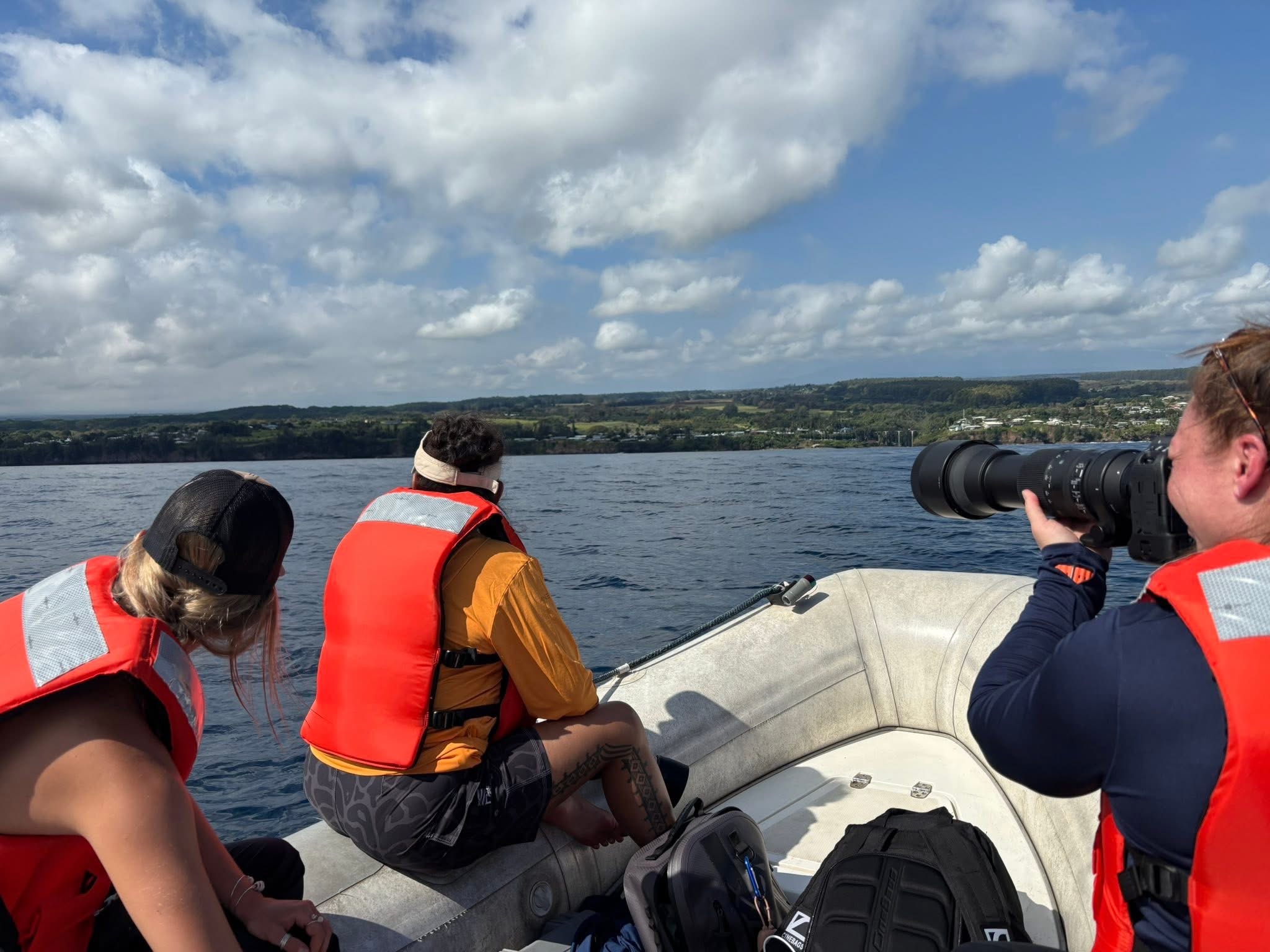
Caption: On the water with Dr. Turner and UH-Hilo students searching for an emaciated humpback whale. Credit: Dr. Jason Turner
2010: building capacity
We were first called to facilitate ceremonies for the opening of the Hawaiʻi Cetacean Rehabilitation Center (HCRF) in Keaukaha, Hilo, Hawaiʻi, which was stewarded by the University of Hawaiʻi at Hilo (UHH), and permitted by the National Oceanic and Atmospheric Administration (NOAA). Our expertise was welcomed in informing the development of marine mammal response protocols that integrated Hawaiian perspectives and practices with the protocols developed in the continental United States. The Hilo Marine Mammal Response Network (HMMRN) was a volunteer response of UHH students and community members, led by Dr. Jason Turner of UHH’s Marine Science Department. Through this collaborative effort, working relationships that quickly became personal relationships were formed between me, fellow practitioner Kealoha Pisciotta, and the HMMRN.
A key element of this relationship with HMMRN was the director’s positionality. Dr. Turner recognised that he was not from Hawaiʻi, and although he had a wealth of knowledge about marine mammal anatomy and physiology, and had much experience in marine mammal response, he had zero knowledge of Kanaloanuiākea (the vast expanse of the ocean and the various ocean forms of Kanaloa within it). Nor did he know how marine mammal work needed to adapt to Hawaiian knowledge, traditions, practices, and protocols. This openness to learning and doing things the right way was an essential catalyst for developing a relationship with Kanaloanuiākea and benefitting from the insight that such a relationship upwells.
2011: first and final patients
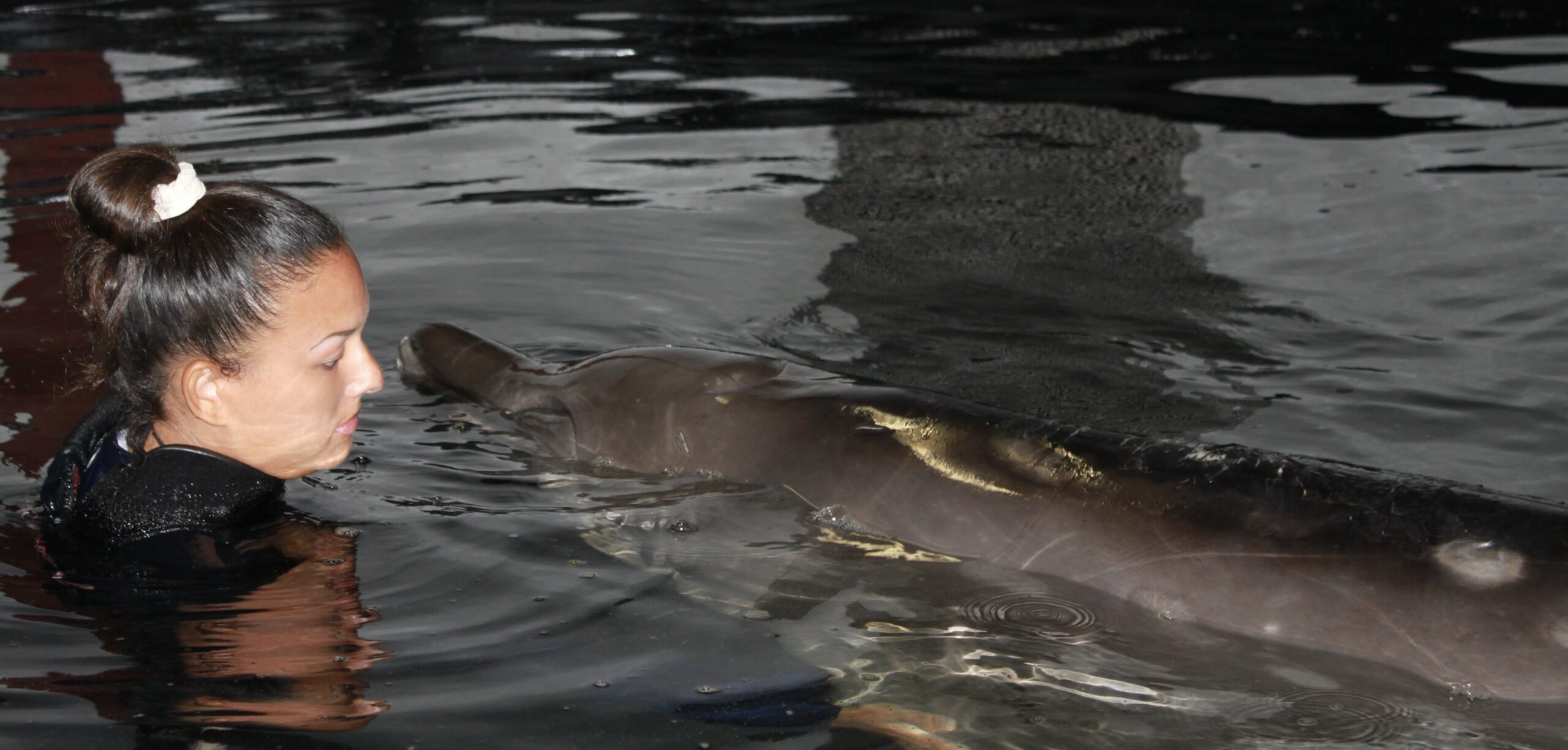
The merged protocols were field-tested less than a week after their approval by NOAA, when HMMRN responded to a stranded striped dolphin, our first patient named Waikini. Within HMMRN and HCRF, Kiaʻi Kanaloa had established relationships, understandings, and processes grounded in kuanaʻike Hawaiʻi (native Hawaiian perspective), all of which worked well when it was just our centric group.
The second patient at the facility, Kāmaui, a rare Blainville’s beaked whale, proved to be a true test of this revolutionary integrated-protocol approach over his two-week rehabilitation period.
Kāmaui stranded on Maui, but because he was an extremely rare whale species, he was considered a high commodity and flown from Maui to HCRF on Hawaiʻi Island against the wishes of Maui practitioners who cared for him when he initially stranded. Settler-colonial hierarchies and agency bureaucracy greatly shifted priorities and strained relationships beyond our core group. Tension began when the agency decided to relocate Kāmaui, and it increased over the two weeks as our merged rehabilitation protocols worked too well for NOAA representatives’ comfort. When Kāmaui passed away, we put forth specific protocols that needed to be followed during his necropsy. These ensured that Kāmaui was treated with respect and dignity before, during, and after the necropsy. They were not followed. We documented Kāmauiʻs mistreatment in a formal letter to NOAA, which included the steps needed to rectify the desecration that occurred during his necropsy and in the deceptive return of Kāmaui’s partial remains to Maui.
2012–2018: fallout and blacklisting
Our letter sparked a backlash from NOAA. Instead of working toward a resolution, NOAA made clear to our state and local partners that they were not to contact or work with Kiaʻi Kanaloa for any marine mammal responses. The federal government asserted its dominance over state and local-level entities.
2014: a call from community
Although NOAA blacklisted us in the marine mammal response circles, our communities still looked to us for stranding support. Kealoha and I were called in by community members to aid a melon-headed whale that had stranded in the harbour. We, along with other Hawaiian cultural practitioners and community members, rendered aid and ceremony to this whale, which we named Wānanalua (double prophecy). Over eight hours, Kiaʻi Kanaloa took the lead in caring for Wānanalua in the water while our community practitioners communicated their wishes for Wānanalua’s care to NOAA. Euthanisation was not to be conducted, but a necropsy could be negotiated. In the wee hours of the following morning, Wānanalua made her transition into death among chants, prayers, and songs, followed by her burial at sea.
Throughout this one-and-a-half-day vigil, we knew that Wānanalua would have a great impact, as she was prophesied by both elders and in a dream. She would show us the potential that we would need to manifest for every Kanaloa, no matter where they strand. She would also equip us to stand in the resolve of our ancestral duty.
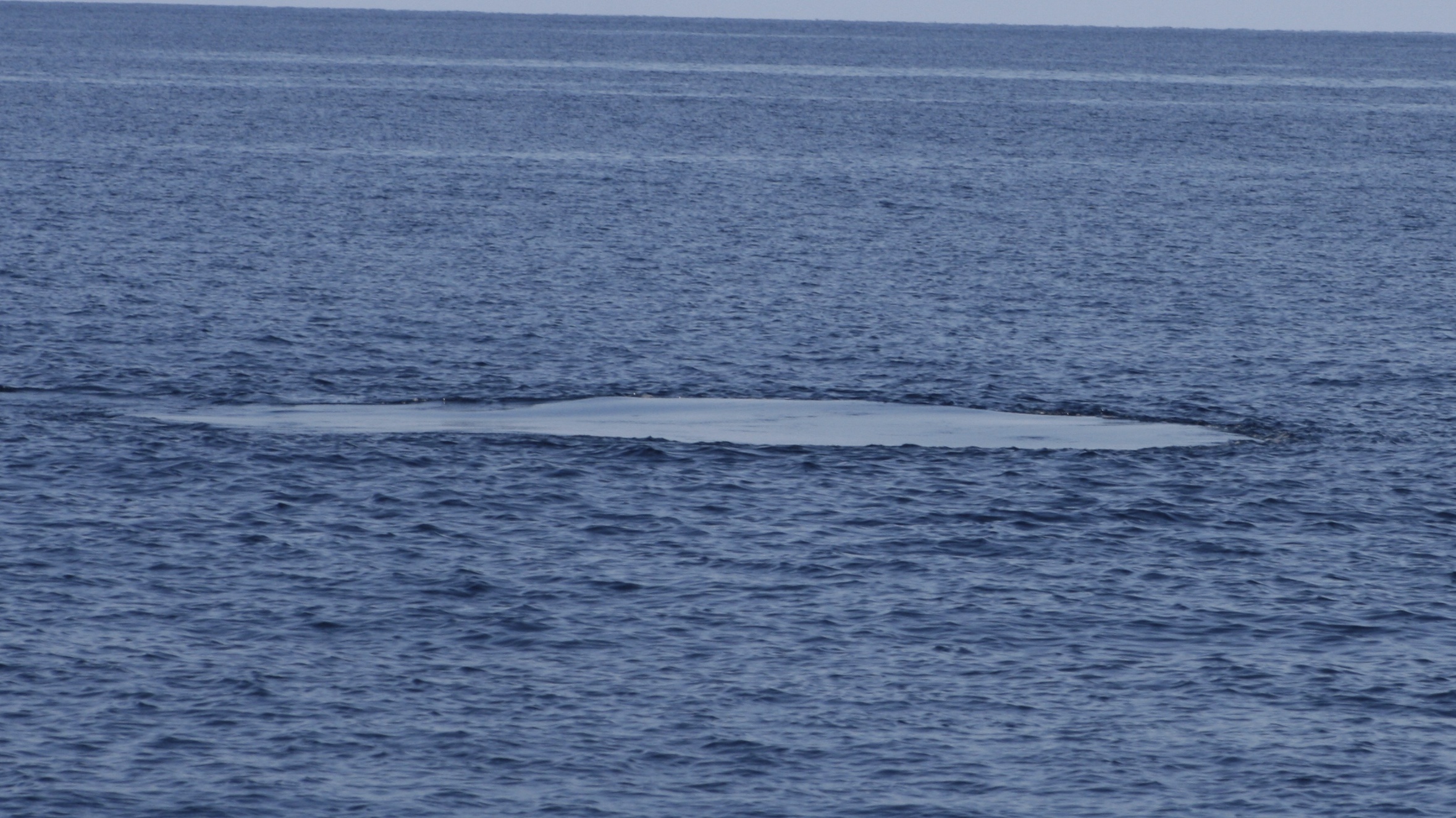
Caption: A kapua’i akua o Kanaloa (footprint of Kanaloa). Credit: Kia’i Kanaloa
2015 –2018: criminalisation
In 2015, Kealoha & I were charged by NOAA with violating the Marine Mammal Protection Act in the at-sea burial of Wānanalua. Although the Marine Mammal Protection Act includes some exemptions for native Alaskans, there are no exemptions for native Hawaiian cultural practices. However, the Hawaiʻi State Constitution provides for the protection of traditional and customary rights. NOAA mistakenly thought they could intimidate us into renouncing our ancestral duty in exchange for dropped charges. We do not compromise the integrity of our relationship to Kanaloanuiākea, our fellow practitioners, or our communities. So off to battle we went, spending the next three years and tens of thousands of dollars fighting this charge. In 2017, we were found guilty and appealed. In 2018, NOAA suddenly dropped the charges.
2017–2023: growing Kiaʻi Kanaloa
Our support of communities in responding to Kanaloa strandings expanded beyond Hawaiʻi Island. Kiaʻi Kanaloa supported multiple individual and mass strandings on Maui and Kauaʻi. The need to formalise Kiaʻi Kanaloa as a statewide network became clearer as more practitioners and communities stepped into their rightful kuleana of kiaʻi, striving to be better prepared for future strandings. In following the kapuaʻi akua o Kanaloa (footprints of Kanaloa), Kiaʻi Kanaloa held our first statewide gathering in 2017, focusing on building our collective capacity toward our vision.
2024–present: access, authority and autonomy
In January of 2024, NOAA asked us to step into the role of leading all marine mammal strandings on Hawaiʻi Island. This role would give us authority to lead all responses, determine how responses were handled, whether necropsy or euthanasia would be allowed, and determine the final disposition of our Kanaloa. As you can imagine, we were sceptical. We went back to our kānāwai (cultural edict) and asked ourselves, “Do our thoughts, decisions, and actions place the Kanaloa in the center or the kanaka (man)?” Although we had no trust in NOAA, we had trust in the kapuaʻi that our Kanaloa just revealed to us. If taking on this role meant that no Kanaloa would be euthanised, and that we could significantly change marine mammal response policies and practices in Hawaiʻi, we had to say yes.
In July of 2024, that new role was put to the test when a small palaoa (toothed whale) stranded along a shoreline on Hawaiʻi Island. The call came from the community, and Kiaʻi Kanaloa coordinated with our state partner, the Department of Land & Natural Resources (DLNR), to support the community in responding. However, the palaoa (named Holokaihumua) quickly passed in a shallow bay. The community determined the course of action for this Kanaloa: no necropsy and burial at sea. This response served as a training opportunity for both DLNR staff and community members in mounting a culturally grounded, inclusive response from beginning to end. Another glimpse into the desired state we are working to manifest and sustain.
He ala hahai: a path that can be followed
The key kapuaʻi (steps) below have led us to take our rightful place as guardians and caretakers of our Kanaloa. Many aboriginal peoples have similar relationships with dolphins and whales, and although the socio-political contexts may differ, these kapuaʻi that have been successful for us may lend a similar pathway for others.
Kānāwai
Being kūpaʻa (unwavering) in asserting our ancestral duty as kiaʻi means we hold ourselves to one overarching kānāwai (cultural edict) that governs our every move. If we can say that our thoughts, decisions, and actions place the Kanaloa in the centre (and not the kanaka-man), then we are balanced.
Strong core group
This kind of sacred work cannot be done alone; it is a drop-everything-for-however-long kind of calling. You need a solid core group of highly trained practitioners who can serve our Kanaloa in that capacity and who work to build knowledge and skills within the larger group.
Allies
We have been strategic in identifying and building reciprocal relationships with important allies from within our Hawaiian practitioner community in academic and governmental spaces.
Empowering our communities
In working toward our vision, we find ways to include our communities in active responses and to develop train-the-trainer type learning opportunities to build capacity at the community level and further expand the reach of Kiaʻi Kanaloa.
In the first four months of 2026, Kiaʻi Kanaloa responded to 13 marine mammal events, which is triple what we see in a typical year. Combined with the many strandings we see across the world, we should all be concerned. Our Kanaloa, our marine mammal relations, are sending us the message that they are in trouble because our ocean systems are in trouble. How shall we respond? Let us work in small and large ways to advocate for necessary shifts in worldview, to catalyse policy change, and to have the courage and readiness to take our rightful places as kiaʻi of our elder ocean environment and all its forms. Ola Kanaloa! Life to the ocean realm!