

As the Network of Indigenous Women for the Defence of the Sea (RDM), comprising women from 11 territories and five indigenous seafaring peoples in Chile – the Diaguita, Chango, Mapuche Lafkenche–Williche, Kawésqar and Yagán – we have been promoting a community-led biocultural monitoring process since 2024. This initiative stems from the deep connection our peoples have with the sea and the ecosystems that sustain our cultures, but also from a context of growing pressure on coastal territories and threats to the rights of indigenous peoples.
When we talk about community-based biocultural monitoring, we are referring to a form of participation that addresses local needs for information on the state of the territory, its species, common resources, trades and practices. It has become a practical tool for governance, enabling communities to sustain territorial processes, defend their coastal areas, safeguard biodiversity and play an active role in decisions that affect their territories.
From this perspective, for us, monitoring is not merely about measuring or recording. It is a way of observing and understanding what is happening in the territories through the lens of our own knowledge and ways of living. In this process, biocultural monitoring strengthens traditional knowledge as the foundation of Indigenous science and our own knowledge systems, promoting intergenerational participation and broadening our understanding of the territory beyond traditional approaches. We combine ancestral knowledge with technical tools as a means of defending the sea, protecting community life and safeguarding practices that sustain our relationship with the environment.
This collective account brings together the reflections of women from the Network who are involved in biocultural monitoring activities across various regions of Chile, from the Atacama Desert to the far south: Caleta Chañaral de Aceituno, Punta de Lobos, Trewako and Lago Budi, San Juan de la Costa, Walaywé, Chaitén, Wapintu Quinchao, Quellón, Yagán Usi and Kawésqar Waes.
The question that underpins this study is simple, yet profound: what has community-led biocultural monitoring meant for us and for our territories?
Local knowledge and monitoring
This approach is based, first and foremost, on the traditional knowledge of indigenous peoples, which shapes the way in which we observe, understand and care for our territories.
For us, as Indigenous peoples, we have always been observers of our territories, attentive to their changes and transformations. Our knowledge goes beyond the measurement of nature. Monitoring is a practice of caring for life, which stems from our memory and the deep connection we have with the territories, the seas and the beings that inhabit them.
This process draws on knowledge passed down from generation to generation, which forms an essential part of our identity as communities. During the monitoring process, this knowledge is combined with technical tools to strengthen our collective capacity to understand and protect the territory. As one of the coordinators puts it:
“This form of citizen science involves caring for life through experience, strengthening a sense of place, and ensuring that this knowledge is kept alive for future generations.”
Coordinator, Chaitén Region, March 2026
These actions reaffirm the value of community knowledge, which guides our care practices and our collective decisions. This involves understanding the territory as a living space, woven from history, memory, spirituality and relationships that we must safeguard. As those from the territory point out:
“It is essential for building a regional dialogue based on collaboration, in which indigenous knowledge is recognised and valued as an essential language for understanding nature and sustaining caring practices.”
Instructor, Quellón Territory, March 2026
To ensure that these processes are respectful, it is essential to take into account the timelines and protocols specific to each community, whilst ensuring that any external intervention is in tune with local realities. For example, seeking permission and reaching agreements before proceeding:
“We always have to ask for permission first; we have to explain several times why we need that permission, and it would also be disrespectful if they didn’t give us the go-ahead.”
Instructor, Budi Territory, March 2026
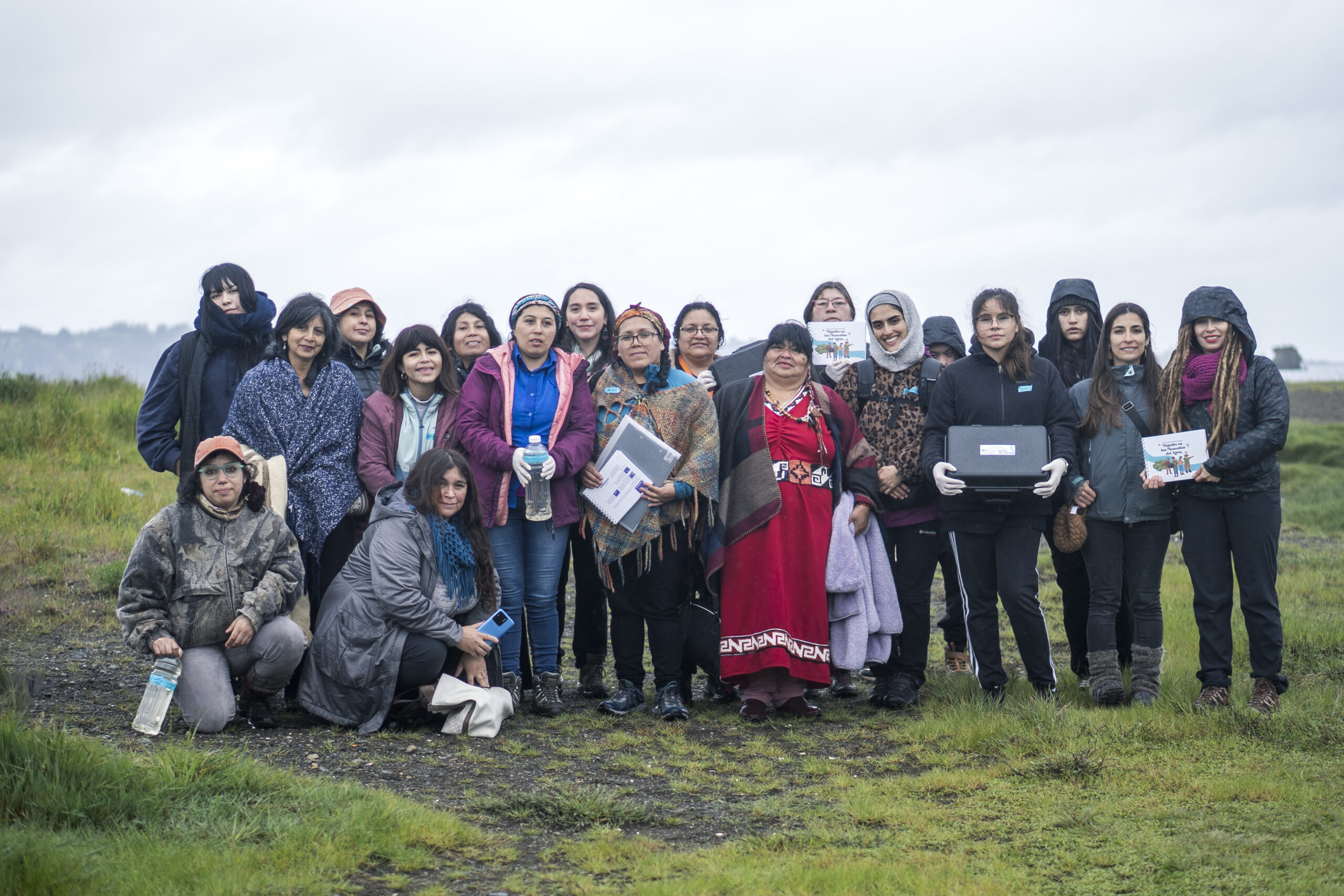
Image: Mujeres originarias en formación para el monitoreo físico químico de agua dulce en el programa de monitoreo biocultural comunitario Indigenous women carrying out a participatory mapping exercise for community biocultural monitoring. Credit: Red de Mujeres Originarias por la Defensa del Mar / Graciela Escorza P.
Monitoring through our relationship with nature
This knowledge is not confined to the conceptual realm, but is put into practice in day-to-day monitoring activities across the territories.
This knowledge is not confined to the conceptual realm; rather, monitoring activities take place on the ground, in direct contact with the waters, the sea, the forests and the spaces that sustain community life. They have enabled us to reconnect with the land, to highlight the value of our knowledge and to strengthen our role as caretakers through an active relationship with nature. This knowledge is expressed in the day-to-day practice of monitoring within these territories.
Learning about community science methodologies and using technical tools (GPS, freshwater monitoring kit and multi-parameter sensor) has been an inspiring experience. It has enabled us to discover new ways of observing and understanding the local area, reaffirming our commitment to its care and protection.
On this journey, safeguarding our territories also means caring for the life that inhabits and expresses itself within them. Our foraging and fishing grounds, our spiritual sites and marine biodiversity are all part of community life and our traditions.
Across the territories, the women’s group leaders have assessed water quality in areas where medicinal plants essential to community health grow. The condition of these water sources directly affects the vitality of the plants and the ability to sustain traditional medicines and crafts. This shows us that changes in the environment are not merely environmental; they have a direct impact on our autonomy and care practices.
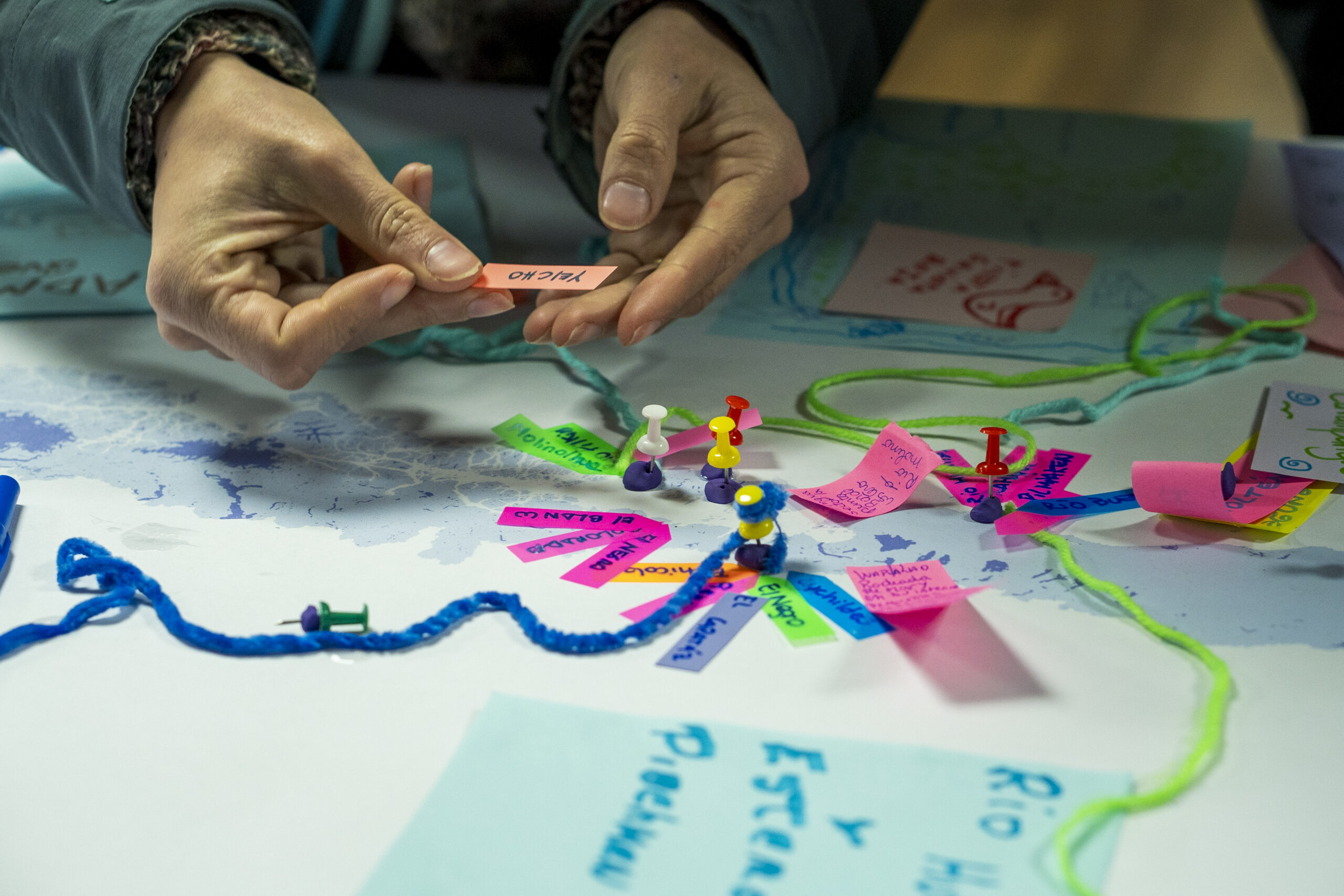
Thus, the use of simple and accessible methodologies such as community mapping – which brings together practices, memories, biodiversity and threats – has made it possible to confirm the good condition of water sources, thereby reinforcing the importance of protecting them. In some cases, monitoring has arisen from specific concerns, such as the quality of water for everyday use:
“[…] we decided to test our own water – the water we use every day, which isn’t chlorinated and about which we sometimes had doubts regarding its purity. The results showed that it was in good condition, which was very important to us.”
Community leader, Wapintu Quinchao region, March 2026
What is changing in our regions
Based on these experiences on the ground, monitoring is transforming the way communities organise themselves and relate to their territories. Community-led biocultural monitoring has profound significance at both a personal and collective level, particularly for women in isolated, rural and island territories.
We have learnt that, for these processes to be truly relevant, it is essential that the worldview of each indigenous people be fully recognised and respected, and that the community be actively involved at every stage:
“This implies not merely an informative role, but a binding one, in which our opinions, knowledge and practices are regarded as a central pillar of the process.”
Coordinator, Chango Territory, March 2026
Through these experiences, bonds are strengthened and links between local people and organisations are revitalised. Monitoring ceases to be merely a technical exercise and becomes a catalyst for connection: with our local area, with its rhythms, and amongst ourselves, reaffirming that care is a collective responsibility.
Monitoring for decision-making and defence purposes
These processes also have specific effects on decision-making and the defence of territories.
Biocultural monitoring provides information that helps us understand changes, protect key ecosystems such as water systems, and anticipate risks.
This is how it becomes a key tool for territorial defence:
“It is essential for building a regional dialogue based on collaboration, in which indigenous knowledge is recognised and valued as an essential language for understanding nature and sustaining caring practices.”
Instructor, Quellón Territory, March 2026
It also helps to strengthen community autonomy:
“…contributes to the community’s autonomy, as we ourselves are the ones who generate and safeguard the information.”
Fieldwork, Yagán Usi Territory, March 2026
Taken together, these experiences show that monitoring not only provides information, but also strengthens communities’ capacity to manage their territories based on their own decisions. Communities contribute concrete solutions for biodiversity conservation drawn from their own knowledge systems.
This process has also been assessed from a personal perspective:
“It fills me with joy because I have a tool at my disposal that we can use to work for the good of the people.”
Monitora, Kawésqar Territory, March 2026
Based on these reflections, we have created a word cloud that captures what this process has meant to us, showing how monitoring arises from the coming together of different forms of knowledge, always rooted in our territories and ways of life.
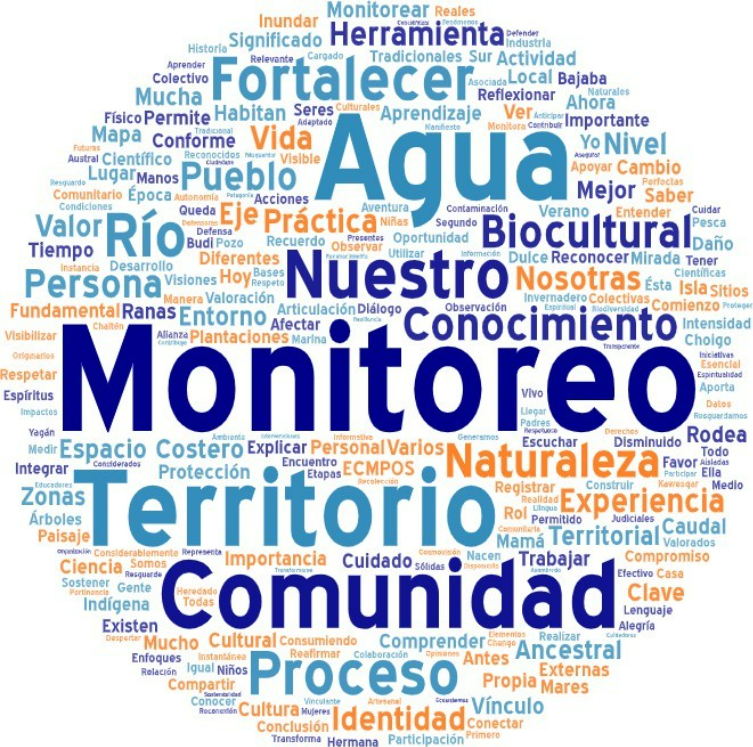
Image: Nube de palabras que recoge lo que ha significado este proceso para nosotras. Credit: Red de Mujeres Originarias por la Defensa del Mar
In light of this situation, we have strengthened collective tools for the care and management of our territories, including initiatives such as the Indigenous Peoples’ Coastal Marine Areas (ECMPO), which have enabled us to make progress in safeguarding our practices and developing sustainable management approaches.
Biocultural monitoring is a way of exercising our rights, preserving our memory and defending the sea through our knowledge, practices and ways of life. Because defending the sea means defending life, and in that defence we remain steadfast, united and in resistance.
Acknowledgements
This article has been produced thanks to the collaboration of all the women from indigenous peoples who are members of the Network of Indigenous Women for the Defence of the Sea. We would particularly like to highlight the contributions of our comrades from the Chango People: Yasna Marin Álvarez from the Caleta Chañaral de Aceituno Territory; from the Mapuche People: Pamela Mayorga Caro from the Chaitén Territory, Mirta and Verónica from the Walaywé Territory, Raquel Mansilla from the Wapintu Quinchao Territory and Carla Soto Ampuero from the Quellón Territory; Juana Olga Blanco from the Trewako Territory and Isolina Huerapil Chehuín from the Budi Territory; from the Yagán People, Natalia Valderas Chiguay from the Yagán Usi Territory; and from the Kawésqar People, Cecilia Caro and Haydee Águila from the Kawésqar Waes Territory. Their wisdom and commitment have been fundamental to this collective reflection.
Each of these communities embodies the strength of its people, the memory of its female ancestors and a deep commitment to defending the sea and life itself. Their words and experiences underpin this collective reflection, which is not merely written down, but lived, nurtured and passed on to future generations.