
Nanri Island, located in Fujian Province, China, has undergone rapid socio-ecological transformation since the late 2010s. The island first developed onshore wind infrastructure, followed by offshore wind farms and, more recently, a pilot floating wind–aquaculture platform. Offshore wind development accelerated in the late 2010s and became operational in the early 2020s. At the same time, the island experienced broader development, including port expansion, road construction, strengthened environmental management, and rapid tourism growth, with wind turbines becoming a defining visual feature of the island.
Historically, local livelihoods were closely tied to marine ecosystems, combining artisanal fishing and aquaculture across nearshore, intertidal, and offshore zones. Local ecological knowledge guided the seasonal use of fishing grounds, species selection, and aquaculture practices. Since the introduction of offshore wind and concurrent development, both ecological conditions and livelihood systems have shifted in ways that vary across locations and user groups.
Observed changes in biodiversity and marine ecosystems
Community observations point to various ecological trends across several marine zones. In intertidal and nearshore coastal areas, multiple interviewees reported declines in shellfish, seagrass, and, particularly, mantis shrimp, along with reductions in organism size and economic value. These changes were described as gradual and cumulative over time.
A key concern repeatedly raised by aquaculture households is the deterioration of ocean conditions, particularly rising water temperatures. Fishers and farmers reported that 5-10 years ago, abalone could be cultivated locally year-round. At present, summer water temperatures are too high for abalone survival, requiring farmers to transport stock seasonally to cooler northern waters along the Shandong coast and return them in winter. This practice, known as the “south-north relay”, has significantly increased production costs and has led to an expanded perception among local actors that marine environmental conditions are becoming more unstable.
In contrast to these declines, areas around offshore wind turbines were consistently reported to have higher fish abundance. Fishers reported increased populations of species such as Epinephelus akaara (red spotted grouper), Tachysurus fulvidraco (yellow catfish), and Acanthopagrus schlegelii (black seabream) near turbine structures. Additional species, including Larimichthys polyactis (redlip croaker) and Plectropomus leopardus (leopard coral grouper), the latter typically associated with warmer waters, were reported to appear more frequently in recent years. While some interviewees associated these changes with long-term climatic shifts, the concentration of fish around turbine structures was widely recognised as a spatially specific phenomenon.
Physical changes in marine conditions were also noted. Fishers described weaker currents and calmer wave conditions in areas surrounding turbines, although no significant changes were observed in sediment movement or water clarity. These localised hydrodynamic changes may contribute to altered ecological patterns, though their long-term impacts remain uncertain.
Community observations described here exist alongside, rather than within, formal monitoring systems. Government-led monitoring on Nanri Island includes provincial buoy and raft-based observation stations, municipally funded mariculture environmental monitoring, and an underwater real-time observation system in the national marine-ranch demonstration zone. Fishers’ observations of higher fish abundance around artificial reefs have been cited in official accounts of the marine-ranch programme, but there is no formal mechanism through which local ecological knowledge is integrated into monitoring design or environmental decision-making.
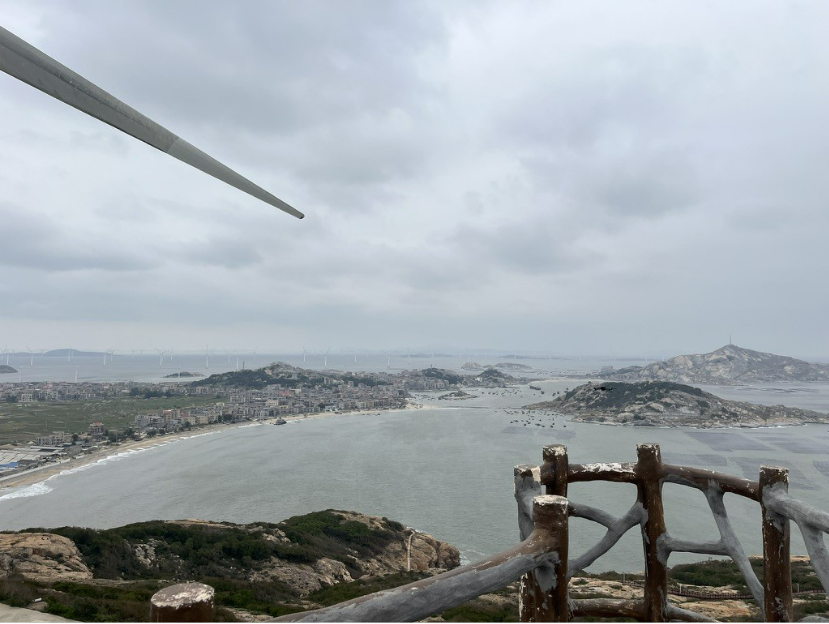
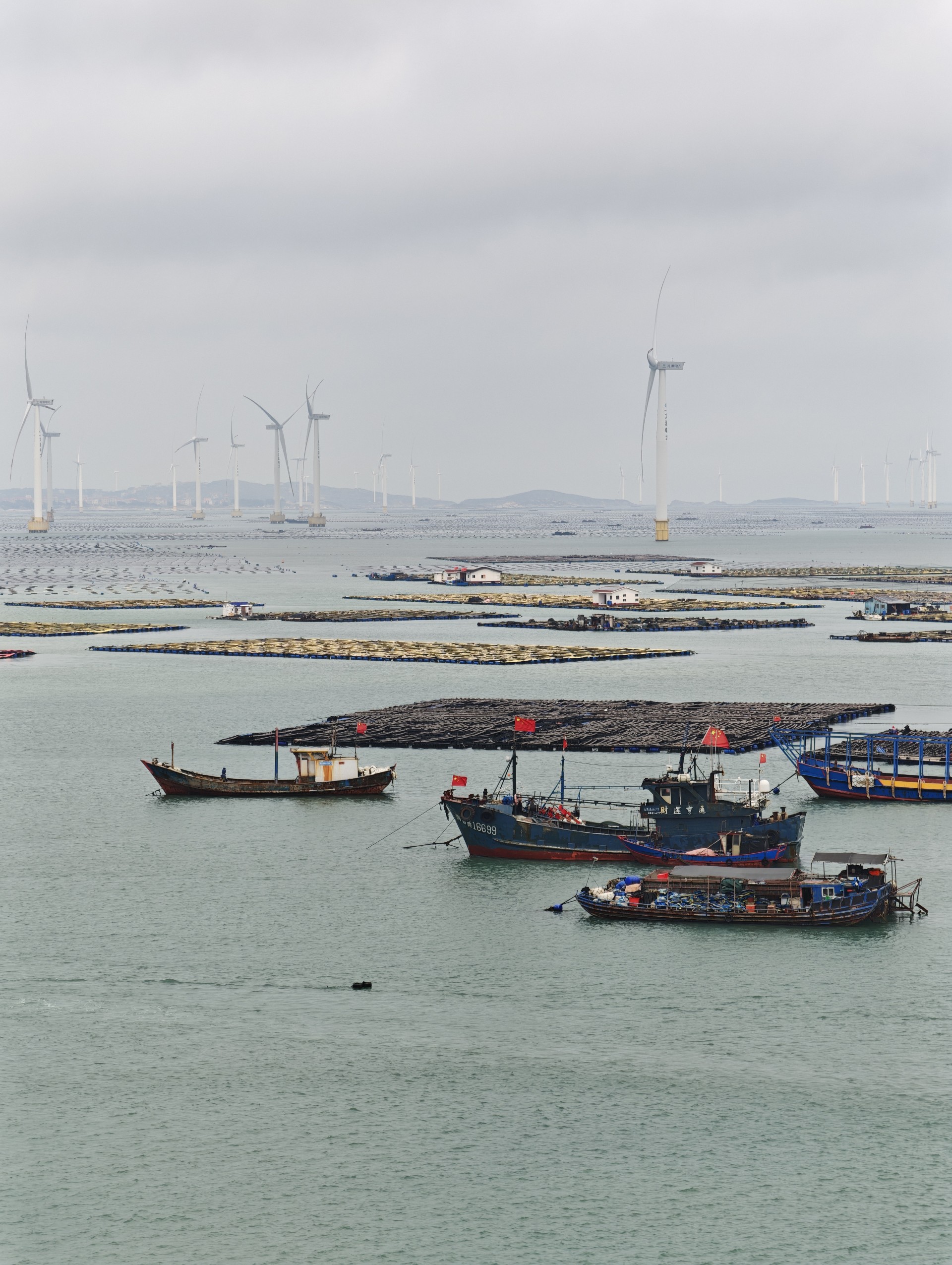
Caption: Scenery from a hill with a mix of aquaculture, village, offshore win, on shore wind and ocean. Credit: Seona Park
Spatial reconfiguration of marine use
Offshore wind development has significantly changed the spatial organisation of marine activities. Areas between the coast and the wind farm are no longer used for net fishing, as turbine structures interfere with fishing gear and restrict access. Within the wind farm area, dense aquaculture installations further reduce available space.
As a result, many fishers who previously operated in nearshore waters now travel further offshore, beyond the wind farm zone. This typically adds 10–20 minutes to each trip and alters daily routines. While these changes have not substantially increased fuel costs, they have contributed to longer working hours and lower efficiency.
Importantly, impacts vary across fishing methods. Net fishers are more constrained by turbine infrastructure, while pole-and-line fishers are able to operate near turbine areas and benefit from higher fish abundance. This uneven accessibility highlights how ecological changes interact with livelihood practices to produce differentiated outcomes within the community.
Changes in livelihood practices and production systems
Livelihood systems on Nanri Island have developed alongside ecological and spatial transformations. During wind farm construction, aquaculture activities were temporarily removed and compensated. After construction, aquaculture was reintroduced, often relocated closer to wind farm areas.
At the same time, aquaculture has become more regulated and technologically supported. Previously, marine space was used informally, but licensing systems have been introduced, and the government has supported the sector through measures such as the free replacement of aquaculture cages, from mainly bamboo into plastic. Aquaculture is now promoted under a “marine ranch” or “blue granary” framework, focusing on high-value species such as abalone and Gracilariopsis lemaneiformis (red seaweed).
These institutional changes have coincided with strengthened environmental management. Interviewees noted progress in both aquaculture regulation and municipal waste management, reflecting increased governance attention to marine environmental quality. These measures are perceived as reducing certain local pressures, even as more ecological challenges persist. However, households have been included in these institutional changes primarily as programme participants rather than as co-designers. Cage replacement, licensing, technical extension, and the “marine pastoral complex” cooperative model have reached the great majority of aquaculture households, and some platforms pool households from multiple villages under joint operating arrangements. However, the available evidence does not indicate formal mechanisms – public consultations, community representatives on decision-making bodies, or co-management arrangements – through which community members have shaped the design of these programmes. Their influence on institutional change appears to be exercised mainly through uptake, adaptation, and informal feedback to local officials and extension staff.
At the same time, artisanal fishing has declined. Fishers reported multiple pressures, including longer travel distances, smaller catch sizes, seasonal fishing bans, and declining market value. Those depending exclusively on artisanal fishing are more affected, while many households now maintain mixed livelihoods combining aquaculture, tourism, and service-related activities.
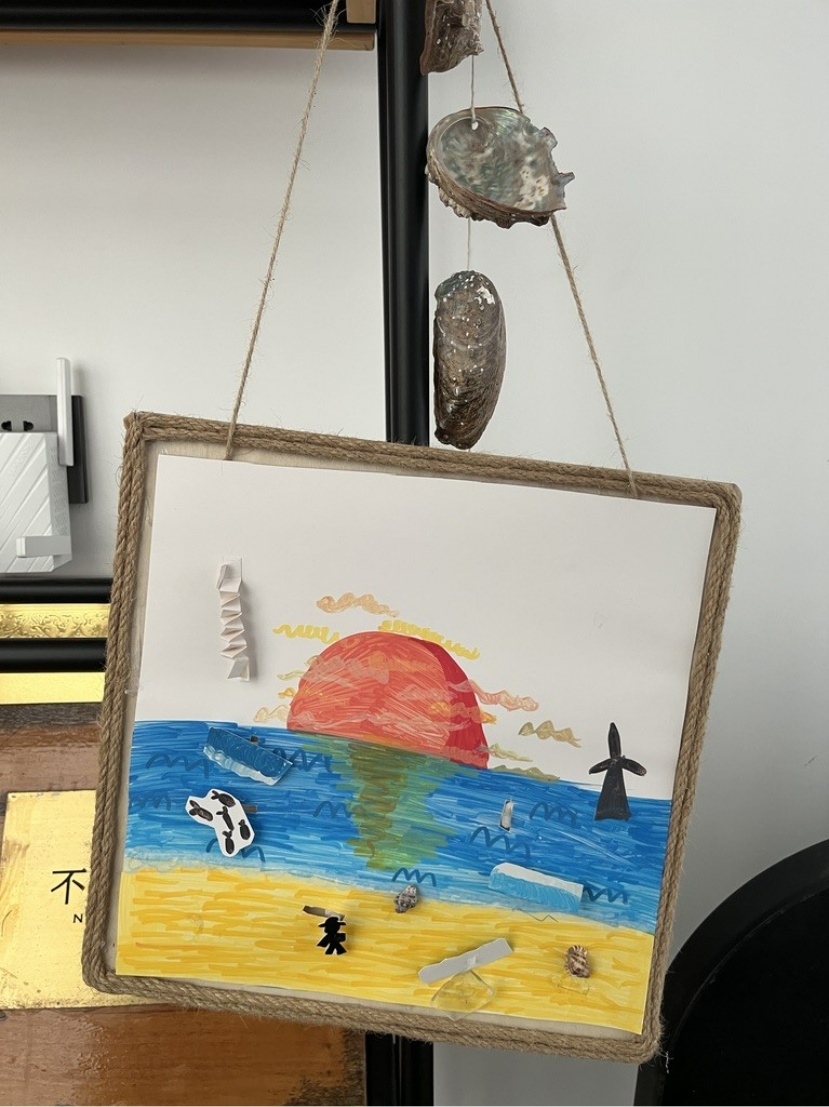
Caption: A child’s art piece in the Nanri Island Library. Credit: Seona Park
Distinguishing wind farm effects from broader development
Community accounts suggest that observed changes result from the interaction of multiple processes rather than a single cause.
Wind farms have introduced both ecological and governance effects. Turbine areas are under strict monitoring systems, limiting access and reducing activities such as seabed extraction and bottom trawling. At the same time, turbine structures appear to create localised ecological conditions that support fish aggregation.
However, broader island development has also played a major role. Tourism has expanded rapidly, with wind turbines becoming a central attraction. As one interviewee noted, “The tourists come here and they demand to see the big wind turbine. It’s the wind farm island!” Infrastructure development, including roads and port facilities, has also boosted accessibility and economic activity.
At the same time, environmental governance has been strengthened, particularly in aquaculture management and waste treatment. Local fishing communities are included in this strengthened environmental governance mainly through regulatory channels – sea-area licensing, product traceability and safety testing, mandated cage-and-float replacement, and zonal restrictions inside the national marine-ranch and around wind turbines – and through technical extension by township and district fisheries agencies. Their participation is therefore best characterised as structured compliance combined with informal feedback to local officials, rather than formal co-management or participatory decision-making. This pattern is consistent with the broader observation that rich local ecological knowledge on Nanri Island has not yet been systematically integrated into formal assessment and planning processes.
Changing relationships between the community and the sea
Beyond material changes, the relationship between the community and the marine environment is also shifting. For older fishers, the sea remains primarily a space of livelihood and necessity. As one interviewee reflected: “I don’t think the ocean was scenery for me, to me it is all survival… when survival depends on it, everything changes.”
In contrast, the younger generation – most of whom are leaving the island – engage less directly with marine livelihoods. Tourism and development play a part in the change in how the marine environment is perceived, from a space of production to one that also holds both aesthetic and economic value.
Conclusions and broader relevance
The Nanri Island case illustrates how offshore wind development, when embedded within broader coastal transformation, produces complex and uneven socio-ecological outcomes. Local ecological knowledge provides in-depth insights into biodiversity change, including species-specific trends, spatial redistribution of marine life, and localised environmental conditions that are not always captured in formal assessments.
An important finding is the coexistence of ecological decline and localised ecological concentration. While nearshore systems show signs of degradation and climate-related stress, turbine areas appear to support increased fish abundance. However, access constraints and differences in fishing practices determine who benefits from these changes.
At the same time, the case stresses the importance of distinguishing between multiple drivers. Offshore wind development, climate-related environmental change, tourism expansion, and strengthened governance all contribute to the documented outcomes. Recognising this complexity is key to understanding biodiversity changes in multi-use marine environments.
Integrating community knowledge into planning and assessment processes can support increasingly adaptive and context-sensitive approaches to offshore wind development, ensuring that ecological sustainability and local livelihoods are addressed together.