
Throughout history, the traditional knowledge of Indigenous Peoples and local communities has been extracted and exploited by third parties without the communities deriving any benefit from it. The situation in the Agua Blanca Commune, on the Ecuadorian coast, is different, and this is why it helps us to understand what a Community Protocol can and cannot do.
The community had already been working for a long time on the conservation of biodiversity within their territory and the preservation of their ancestral knowledge as an ancient Indigenous People of the Manteña culture. They had compiled an inventory of the biodiversity resources within their territory – as it is a very rich area of great interest for taxonomic studies and research into medicinal plants – as well as a directory of traditional knowledge holders, that is, those who preserve and pass on traditional knowledge. They carried out this work in collaboration with two Ecuadorian NGOs (ACJ Ecuador and Ayuda en Acción) and with the support of two national universities, the State University of Cuenca and the Eloy Alfaro Secular University of Manabí (ULEAM), but without having a Community Protocol in mind, nor within the framework of the Nagoya Protocol.
Nor have researchers or companies gone there to take medicinal plants or knowledge without permission. It is a community that is very much in control of the management and conservation of the biodiversity within its territory and the traditional knowledge it possesses, and it is very difficult for anyone to enter the community and carry out research without prior consultation and consent.
How the protocol came to Agua Blanca
It all began following Ecuador’s ratification of the Nagoya Protocol (2017), which commits states to supporting communities in drawing up their own protocols. In Latin America, few countries have drawn up this type of protocol: Mexico, Ecuador, Panama, Brazil and, to a certain extent, Colombia. In Ecuador, the process began with GIZ (the German government’s international cooperation agency), which worked on protocols relating to bio-enterprises (the Palo Santo Community Protocol, in the province of Loja 1. Subsequently, the country joined the UNDP and GEF Global Access and Participation (ABS) Project, and the Ministry of the Environment took the lead in drawing up a Methodological Guide for the development of community protocolstwo and five agreements with five different indigenous communities in the country.
One of these protocols was developed in collaboration with the Agua Blanca3 local authority, and it was not defined overnight: selection criteria were drawn up to define it. This community is an ancestral community dating back millennia on the Ecuadorian coast, descended from the Manteño people, who have maintained their traditions, their culture, their connection to biodiversity and, above all, their traditional knowledge. The territory of the Agua Blanca commune lies within Machalilla National Park, a vast dry forest on the Ecuadorian coast, where several communities have been harnessing biodiversity for bio-entrepreneurship, particularly in the field of archaeology, and two national universities have also shown an interest in studying the commune’s wildlife. The people are already very empowered: they are highly active and well-organised, with a fairly strong and solid organisational structure, and deeply connected to their ancient culture.
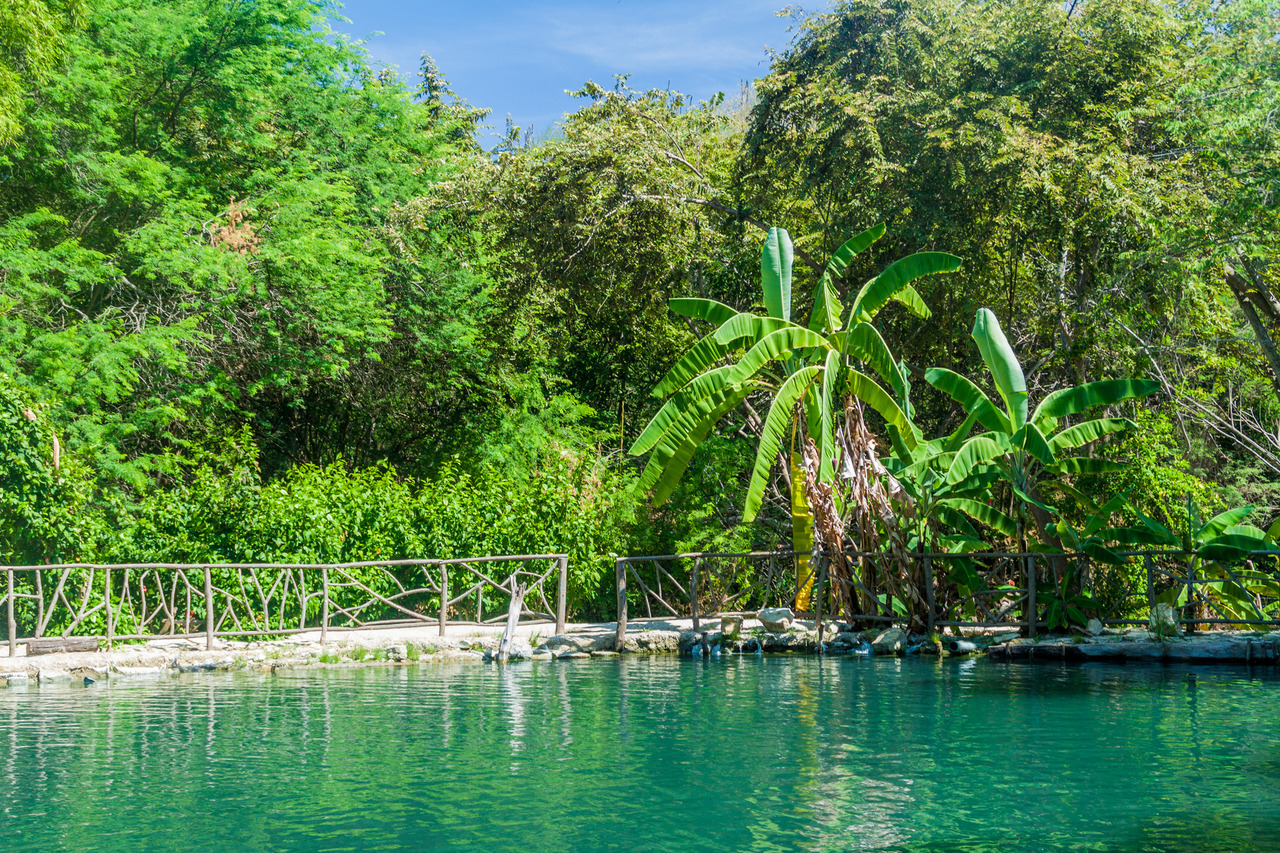
They also have a long history in community-based tourism, a field in which they are pioneers in the country. They receive visitors year-round, every day of the year, mainly from Ecuador but also from abroad, drawn by the archaeology, the natural sulphurous lake, the biodiversity, birdwatching and the region’s distinctive cuisine. In the field of traditional knowledge and community-based tourism, they possess a wealth of information and enjoy an excellent reputation nationwide: they are a leading example (https://www.comunidadaguablanca.net/). For this reason, the Ministry of the Environment asked them to assess the possibility of working with them on a Community Protocol.
What changed with the Protocol
The Protocol did not invent anything that was not already there. We would say that it is a better-structured, better-organised version, based on processes, procedures and methodologies appropriate to the Nagoya Protocol, since, despite everything they had been doing, the people of the Agua Blanca community were not familiar with the Nagoya Protocol. Learning about it provided a means of better safeguarding biodiversity within their territory and their traditional knowledge, and showed them how they could give their Free, Prior and Informed Consent and ensure their rights to fair and equitable sharing of the benefits arising from access to their traditional knowledge.
The inventory has been published and is protected by copyright. It may be consulted, provided that permission is sought from the community. And this is where the Protocol comes into play: whenever an external party – such as a researcher or a national or international university – takes an interest in the genetic resources of the medicinal plants listed in that inventory and seeks to access and use the traditional knowledge associated with them.
How it works
In the community’s organisational structure, the traditional authority is the president. Any visitor approaches him first and informs him of the purpose and aim of their visit. The community then convenes. The first meeting is held by the Community Governing Council, comprising the president, the vice-president, the secretary and the respective committees on territory, the environment and ancestral knowledge. They assess the third party’s interest in accessing biodiversity and traditional knowledge, and once they have reviewed the proposal, they submit it for consideration by the assembly, which meets ordinarily at the end of each month and on an extraordinary basis when issues so require.
At the assembly, to begin with, it is simply a matter of providing information: very general information about the third stakeholder. The assembly then asks them to draw up a plan for accessing traditional knowledge relating to biodiversity. That plan must set out the purpose and objective – why they want it, what they intend to do, how they will use it, for which products, and how they will safeguard the community’s rights. Once the plan has been drawn up, it must be returned to the assembly. It is not approved immediately: the assembly appoints a technical evaluation committee, which studies the plan over the course of one or two months and submits a report. Based on that report, the assembly reviews the matter again, discusses it and takes the necessary decisions regarding whether to grant permission through free, prior and informed consent, and how access to traditional knowledge may be granted, whilst guaranteeing their rights, safeguards and fair and equitable sharing of benefits.
The knowledge-holders play a decisive role in all this, but they do not decide alone. The association of knowledge-holders is not autonomous from the community: it is hierarchically subordinate to a higher structure, namely the assembly. In Ecuador, traditional knowledge is collective; it is not the property of any one person, whether a male or female traditional knowledge holder. Its collective nature is legally recognised by the Organic Code on the Social Economy of Knowledge, Creativity and Innovation (COESCCI, Chapter VI). As it is collective, it is the assembly that must decide. Only once the assembly has made its decision may the interested party contact the traditional knowledge holders and draw up the research plan with them; furthermore, all the information that has been catalogued and collected must subsequently be reported back to the assembly itself. Everything originates from the assembly and returns to the community’s assembly.
Why have there been no reported cases of unauthorised access?
To date, no researcher or company has gone through the procedure for commercial purposes, and this is not unique to the Agua Blanca commune. Even in Latin America – not just in Ecuador – there are very few specific cases of access to genetic resources and traditional knowledge. This is a global problem, because there are critical issues that remain unresolved under the Nagoya Protocol, such as transboundary matters relating to genetic resources and traditional knowledge (Article 10).
In Ecuador, there is also a constitutional issue. Article 408 stipulates that, not only for genetic resources but for natural resources in general, the State shall receive a share of no less than 50 per cent of the profits from their exploitation, and that genetic resources are strategic resources of the State. The result is that no pharmaceutical, cosmetics or food bioprospecting company – of the traditional sort – is going to sit down and agree with the State to share profits on a 50–50 basis. Globally, such arrangements rarely exceed 1 per cent or 5 per cent. Consequently, companies go to countries where these rigid legal frameworks do not exist.
What is the purpose of the protocol in the meantime?
Whilst it is true that, at present, the protocols are not being applied to the actual access to genetic resources and associated traditional knowledge, they are being used to promote greater empowerment in the management, stewardship and conservation of biodiversity and traditional knowledge.
What does exist, however, are botanical studies carried out by universities, which do not necessarily involve access to traditional knowledge for commercial purposes. This has always been the case – even before the Nagoya Protocol – through Ministerial Agreements that set out the requirements for research permits for scientific purposes. Universities along the coast regularly send students to the community to carry out studies on botany, taxonomy, culture and traditional knowledge, for educational and scientific purposes, and in a way, the Community Protocol serves as a guide for them. If, however, a request were ever to be made for commercial purposes, the Protocol would be the document, the instrument governing the decision-making process.
None of this began with the Protocol. As it is situated within a National Park, the community has played a leading role in the development of management plans, and has agreed with the Park authorities that the local council should be responsible for the management and stewardship of biodiversity within its territory. For this reason, the Ministry has granted it the authority to oversee biodiversity and its traditional knowledge, whilst ensuring that this is done in a coordinated manner and with the Ministry (now the Ministry of the Environment and Energy) being kept informed.
Further protocols are on the way
The initiative is being rolled out further. In the province of Manabí itself, another community-led protocol is to be implemented, in coordination with the Ministry of the Environment and Energy and the National Intellectual Property Service (SENADI). This time, it will take place outside the national park, on the territory of another ancestral community: the Salango Community of the Montubio People, which submitted a proposal to the Secretariat of the Convention on Biological Diversity in Montreal as part of a global call for Indigenous Peoples to submit proposals for community protocols; the Salango Community was one of those selected to receive funding. It is the only one in Ecuador.