

Nepal is the ancestral home to many Indigenous Peoples, speaking over 123 Indigenous languages and making up 35 percent (Census 2021) of the total population. In Nepal, the territories of Indigenous Peoples and local communities include sacred sites, lands, pastoral and wetland areas, historical, tangible and intangible cultural sites, archaeological sites, religious forests, human remains sites with biocultural significance, all traditionally managed by Indigenous Peoples or local communities through their traditional and customary practices.
These Indigenous lands and territories are central to the conservation and customary sustainable use of biodiversity, and to the customary laws, systems, and biocultural protocols, cultural knowledge, innovations, Indigenous science, animism practices, ritual, spiritual cosmologies, reciprocity, and trusts of the peoples who have inhabited them from ancient times.
Context
Indigenous Peoples have stewarded all types of productive systems: forests, grasslands, wetlands, agroecosystems, agroforestry, sacred sites, tangible and intangible cultural heritage sites and archaeological areas. Kirat sacred oral narratives known as mundhum, ancestral ecology, ritual, local sovereignty, sacred sites, untouched forests, culturally significant lakes, mountains, pastures, wild bees, wild species, flora and fauna in lands, waters, river basins and river banks are deeply rooted in Indigenous knowledge systems, nature and culture, customary practices and biocultural protocols.
However, Indigenous Peoples’ knowledge, innovations, practices and Indigenous science are frequently overlooked or undervalued in formal conservation, education and development planning. The roles, rights, and contributions of Indigenous Peoples, including women, youth and persons with disabilities, in the customary sustainable use, conservation, and biocultural restoration of biodiversity, including forests, wetlands, sacred sites, cultural sacred landscapes and rangelands, remain poorly recognised.
Nepal’s updated National Biodiversity Strategy and Action Plan (NBSAP) includes National Target 24, which prioritises recognising, respecting, and protecting Indigenous and traditional territories to conserve biodiversity, based on traditional knowledge, innovations, and practices of Indigenous Peoples, with Free, Prior and Informed Consent (FPIC). This reflects the global commitment in the Kunming-Montreal Global Biodiversity Framework (Target 3) to acknowledge Indigenous and traditional territories as a third pathway for biodiversity conservation, alongside state-protected areas. However, the legal and institutional frameworks needed to implement this recognition on the ground are still being developed.
A case study: ritual mapping in the Salpa region by the Kirat peoples
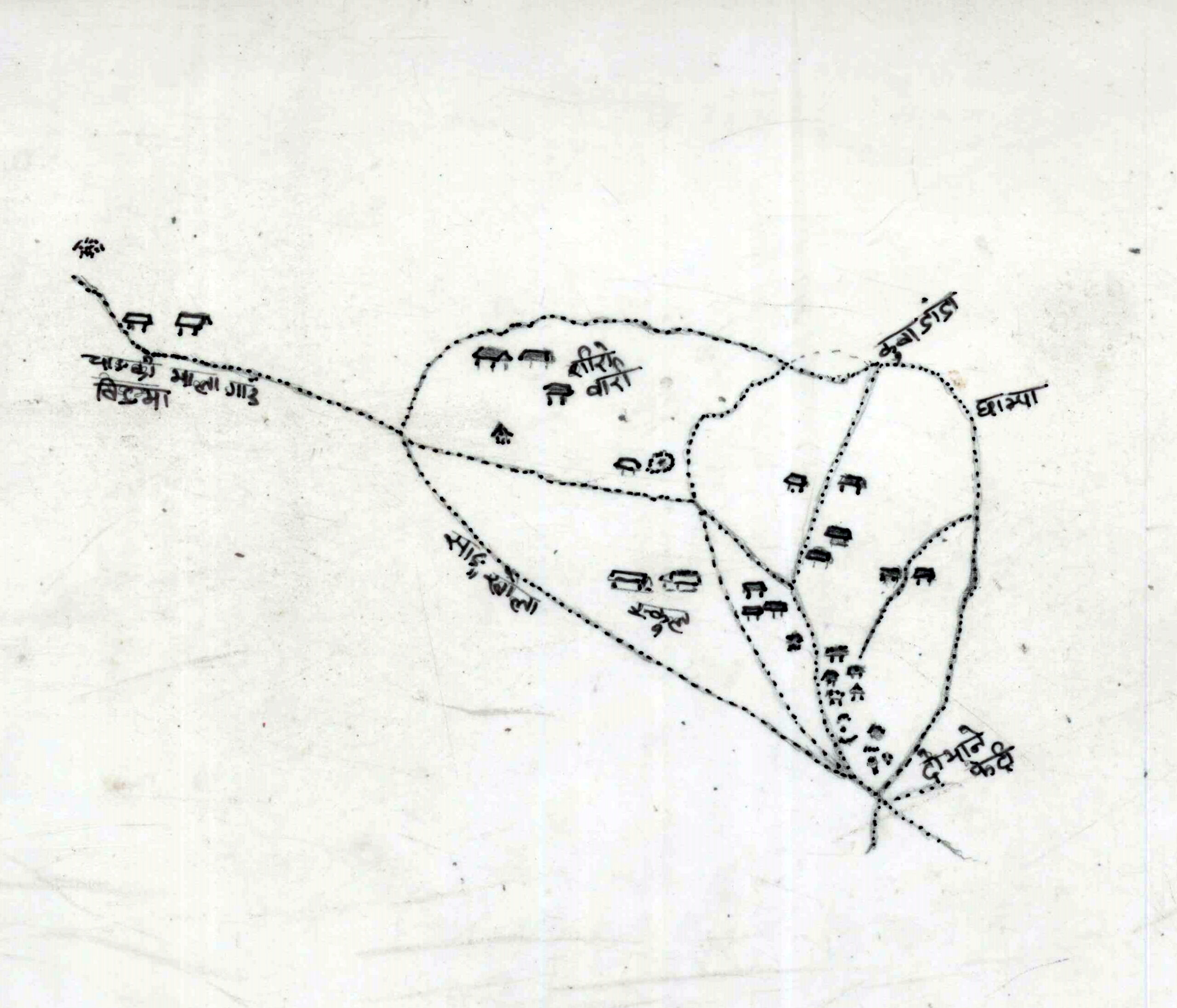
For millennia, the Kirat peoples of eastern Nepal have been preserving and maintaining Indigenous science, traditional knowledge, innovations, and practices in their Indigenous lands, waters, and traditional territories. They have unique traditional biodiversity knowledge systems and reciprocal symbiotic relations with nature and culture. This knowledge system provides the basis for a distinctive practice of ritual mapping, through which communities identify and document their territories, sacred sites, and biodiversity through animistic views, in religious language, in conversation with ancestral spirits, tracing their mobilities in their historical territories.
The Kirat peoples have maintained their oral histories and territorial knowledge through the mundhum, their body of sacred oral narratives. The Kirat era dates to around 600 BC, when 32 Kirat kings ruled for 1,000 years. Today, the Kirat Year 5078 is celebrated through festivals including Yaletung, Chandi Purnima, Ubhauli and Udhauli, worshipping nature and marking seasonal movements of fauna, fireflies, bird migration south to north, moving edible frogs, crabs, cicada singing, and relationships with the natural world. Of 32 distinct Kirat Indigenous dialects, 27 are still practised in oral ritual traditions. The Kirat Indigenous language carries identities, tangible and intangible animistic culture, ritual traditions, sacred and secret knowledge, religious and spiritual systems, folklore, biocultural practices, belief systems and reciprocities, all associated with lands, waters, territories and resources (Rai, K.K., 2018).
In Kirat animist belief systems, ritual specialists such as Nuwagire (religious priests), pujari (ritual officiants), dhami-jhakri (spirit mediums), phedangba and nachhong (Kirat ritual chanters) engage in chanting, beating drums, striking brass dishes and holding a chindo (traditional gourd bottle) with millet liquor, ginger and local fowl eggs. They also have dialogues in dreams with ancestral spirits, who tell them about the areas, borders and demarcation of lands, waters, forests, crops, flora and fauna, wild and domesticated foods, pastures, bamboos, and water sources belonging to particular communities or families. The soul or spirit also provides messages to the main person in a family about how to manage and protect their territories and resources, including biodiversity of biocultural importance. Ritual mapping in this way is part of a collective and community participatory process.
In the Salpa region of eastern Nepal, Kirat Indigenous Peoples including the Sampang, Nachiring, Bantawa, Yamphu, Khaling, Mewahang, Chamling and Kulung have ritual mapping practices in accordance with their own ritual languages. These involve the allocation of sacred sites, deities, religious forests, untouched forests, water sources and essential sites for worship and votive offerings, calling on ancestral spirits who move or travel through these particular areas or sites to provide ritual help for individuals, families, children, wealth, good weather for crops and for wellbeing. One Nuwagire priest mentioned that he has conversations with spirits in dreams, in which the spirits tell him that he needs to bring their relatives to visit Salpa Pokhari, a sacred lake, at particular times of year, in August and in April. At these gatherings the priest speaks with the spirits and explains the reason for the occasion, after which the spirits move or travel through the lands and territories (Rai, K.K., 2005).
Traditional oral ritual stories guide Kirat peoples in the Salpa sacred territories, with lands mapping waters, biological resources, customary uses, conservation of wild, sacred, religious, herbal, economically valuable and ritually important species, flora, fauna and native microorganisms, and biocultural significance. The oral ritual mapping process involves deep engagement with Indigenous knowing about areas, lands, pastoral lands, forests, fallow lands, sacred sites, cropping areas and territories where spirits travel, or are hidden. It can also involve sending dream messages to heads of families or ritual persons, bringing together local resource users, cultural and religious leaders such as Nuwagire, dhami-jhakri, pastoralists, women and elders.
Because these practices exist in oral form, they are emotional, sentimental, cosmological, spiritual, intangible and animistic, and lacking formal recognition they are at risk of being lost. These ritual mapping practices of lands, territories and resources are also being explored in ongoing MPhil research at Kathmandu University. Nepal’s NBSAP National Target 24 is active in seeking to strengthen, develop, promote, revitalise, document, integrate and institutionalise such practices, with principles to obtain Free, Prior and Informed Consent.
What this means for biodiversity conservation
Ritual mapping and community-led monitoring of this kind directly support several targets of the Kunming-Montreal Global Biodiversity Framework, including Target 3 on Indigenous and traditional territories as a third pathway, Target 2 on biocultural and customary restoration, Target 21 on knowledge management, and Nepal’s National Target 24 on the recognition and protection of Indigenous and traditional territories in conjunction with the knowledge systems of Indigenous Peoples.
These practices also address a significant gap in biodiversity monitoring. Formal state monitoring systems do not reach into most Indigenous and traditional territories, and community-level observation is rarely recognised as valid data. Community-led approaches, grounded in traditional knowledge, can fill this gap while strengthening Indigenous governance and cultural continuity.
Next steps
By 2030, the aim is to recognise, map, monitor and institutionalise Indigenous and traditional territories for biodiversity in Nepal, integrating traditional knowledge, innovations and practices of Indigenous Peoples with Free, Prior and Informed Consent. Organisations including ITT-Nepal, NEFIN, the Youth Federation of Indigenous Nationalities, the Federation of Indigenous Kirat Associations, the Nepal Indigenous Women Federation, National Indigenous Women Forum and the Nepal Indigenous Forum for Biodiversity are working to review guidelines, develop inventories, and monitor the plan of action of the NBSAP to achieve national targets.
As a direct outcome of Indigenous Peoples’ engagement in the NBSAP revision process, Kathmandu University has incorporated Indigenous knowledge systems, lands, territories and resources, biodiversity conservation, biocultural protocols and customary systems into its Master Study Programme, starting in 2026.
References
Nepal Census Data (2021). Population and Housing Census. National Statistics Office, Thapathali, Kathmandu. Government of Nepal.
Rai, K.K. (2005). Culture, religious and spiritual values for conservation. WWF Nepal. Available at: https://www.wwfnepal.org/?170422/Salpa-Pokhari-Booklet
Rai, K.K. (2018). Indigenous peoples and local communities, safeguarding life of Earth: 25 years of achievements on biodiversity conservation in Nepal. Ministry of Forests and Environment, Singha Durbar, Kathmandu, p.189.