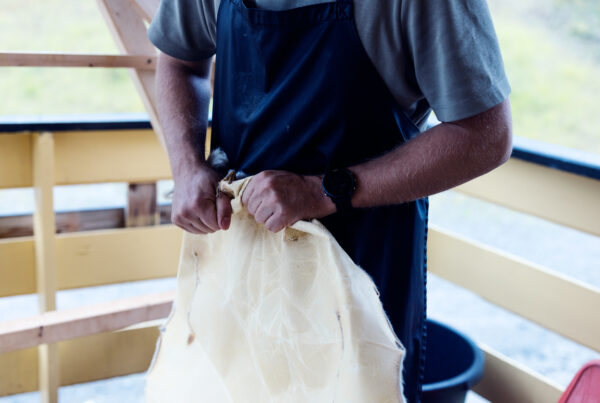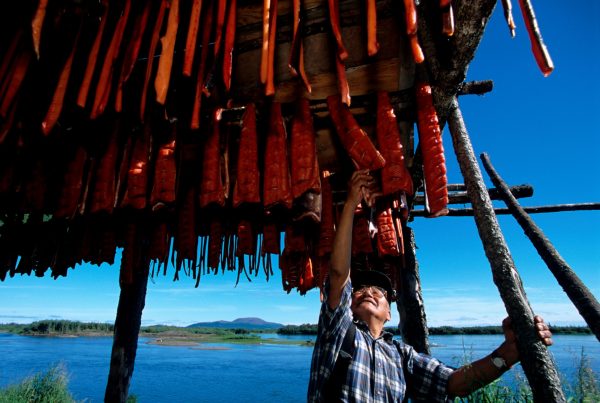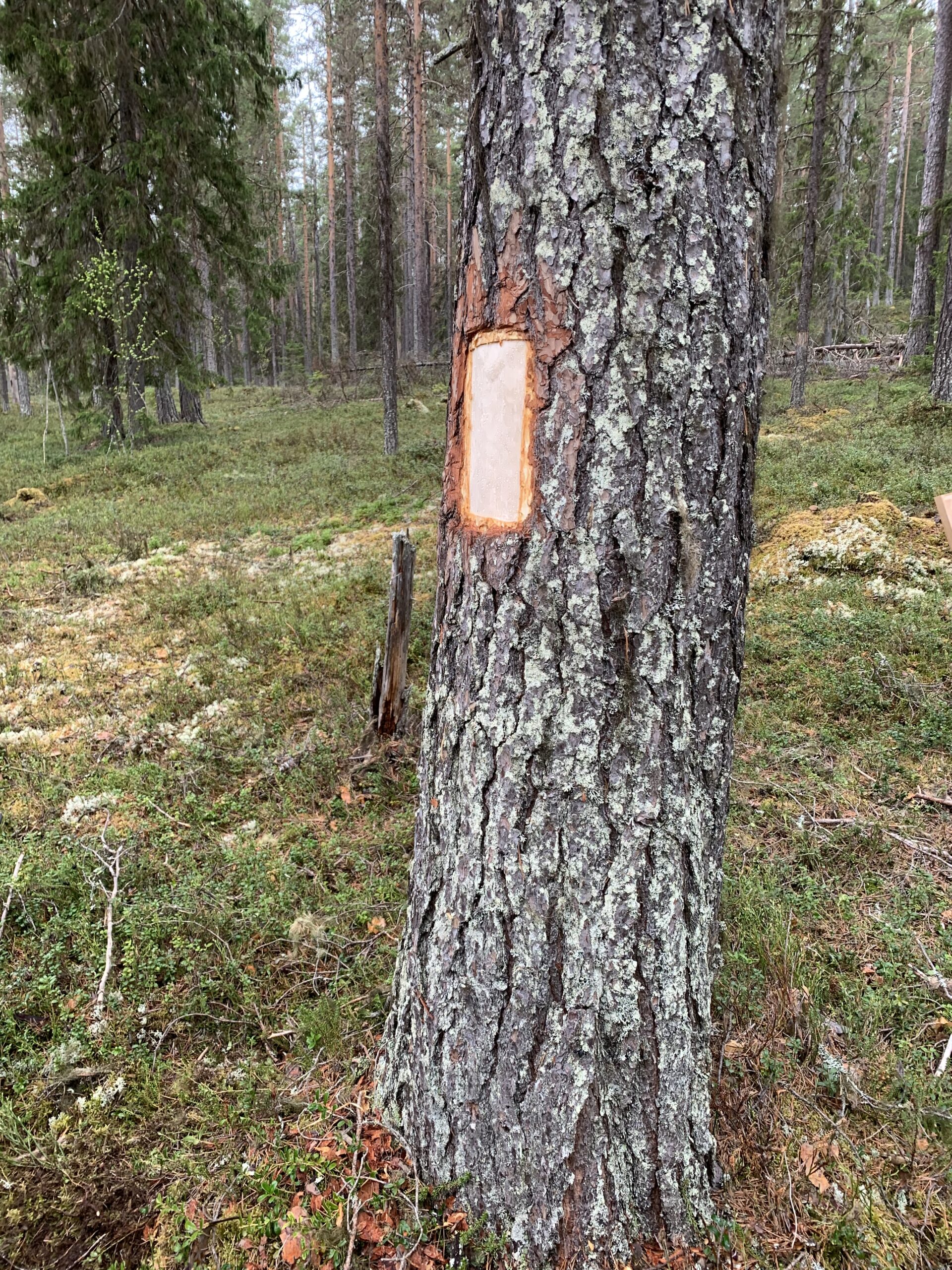

A workshop on harvesting and using pine inner bark offered participants the opportunity to learn about a traditional Sámi food resource and the knowledge associated with it.
Sámi are the Indigenous people of Northern Fennoscandia and the Kola Peninsula of Russia – an area referred to as Sápmi. Their society and ways of life have traditionally been based on the concept of a circular economy. A nomadic or semi-nomadic way of life that uses and reuses the resources at hand is one of the basic pillars of life for the community.
In the face of societal change and transformation, the traditional knowledge and cultural practices of the Sámi food system are at risk of disappearing, especially regarding plant based food (1).
In response to the decline in Sámi traditional knowledge transfer, the Máhtut project was created, based on the understanding that Sámi people are experts in circular economies and subsistence practices. The aim was to strengthen and enhance Sámi knowledge and skills, as well as to raise awareness of the wider significance of these practices in the era of the green transition.
The project invited Indigenous traditional knowledge holders to participate in activities and training modules showcasing traditional skills and knowledge related to Sámi circular economy and subsistence practices.
Pine bark harvesting and use
This case study focuses on the history and practice of bark harvesting through a workshop organised in collaboration with the Forest and Saami Museum Gammplatsen in Lycksele, in Sweden. Led by Mikael Jakobsson, a Forest Sámi knowledge holder from Máláge/Malå and former antiquarian specialising in Sámi heritage at the Forestry and Saami Museum, the workshop explored pine inner bark, its historical and contemporary uses, and the traditions and ecological knowledge connected to its harvest and preparation.
Dried pine bark has historically been utilised as a combustible material, in meat preservation through smoking, as a raw material in various forms of Sámi handicraft traditions, and as a nutritional resource. Its primary role was as a food resource, consumed fresh, roasted, or dried and ground into flour that could be added to soups and dairy-based foods. Pine inner bark was also used to wrap and preserve sinews, served as a packaging material for other products, and was traded between different Sámi groups. These uses were embedded in broader cultural practices that emphasised respect for living trees and the sustainable harvesting of forest resources (2).
While some scholars describe pine inner bark as a staple food, others argue that it functioned primarily as a nutritious dietary supplement. In this interpretation, its importance lay in providing carbohydrates, vitamins, and minerals that complemented a diet otherwise dominated by animal protein, particularly during the winter months (3).
According to Jakobsson, for the Sámi, pine inner bark was not primarily a famine food but an important seasonal resource. Harvested in late spring or early summer, it was incorporated into foods such as reindeer meat soups. By contrast, settler communities more often relied on inner bark as a famine food, harvesting it in autumn during years of poor harvests and food scarcity.
Although its dietary significance was greatest during the winter months, the Sámi harvested pine inner bark strategically in spring, when its flavour and quality were at their best (Table 1). Later in the season, increasing concentrations of terpenes (natural aromatic chemical compounds found in plants) could give the bark a bitter and less palatable taste.
Pine inner bark can also be dried or smoked in a lávvu (traditional Sámi dwelling) or fried in a pan until the flakes turn golden. The dried or smoked flakes can then be added to dishes. In addition, the flavour varies considerably among individual trees. According to Jakobsson, factors such as growing conditions, sunlight exposure, water availability, and the surrounding vegetation all influence the taste of the bark.
Table: nutrient content of pine inner bark harvested in spring and autumn
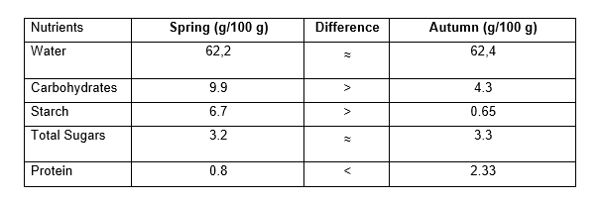
Source: data from Rautio et al 2013 (4).
The workshop also included practical elements on inner bark harvesting, such as how to gather bark with traditional tools and methods.
Jakobsson described pine inner bark harvesting as a process involving three crucial steps. First, the harvester selects an appropriate tree. Trees with vigorous growth generally provide the best bark. Before harvesting begins, the tree is traditionally asked for permission. The harvester then carefully scrapes away the outer bark with a sharp knife before slowly removing the inner bark using a specialised tool. This tool is shown in Photo 1.
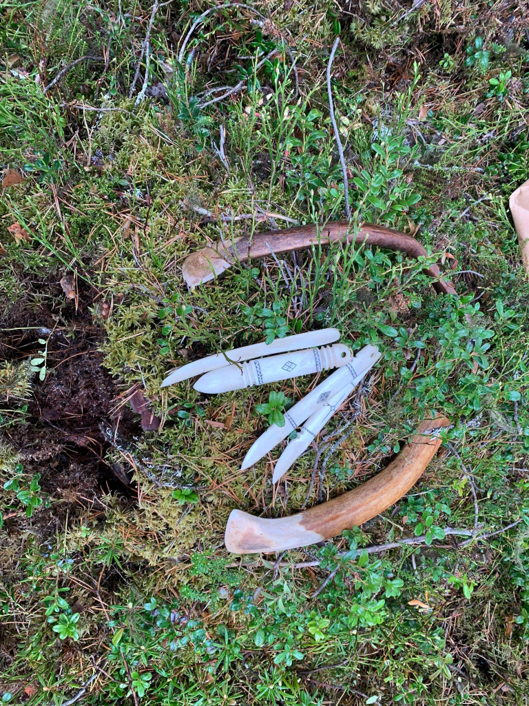
Caption: Tools for removing inner bark. Credit: Marja Labba
Obstacles to future pine bark harvesting
The harvesting of pine inner bark was once a well-established and widespread practice that persisted until the industrialisation and modernisation of forestry in the mid-nineteenth century. Although customary access to natural resources has deep historical roots in Sweden, the contemporary right of public access, known as allemansrätten, is more limited in scope (5). Today, allemansrätten permits the collection of wild berries, mushrooms, and certain herbaceous plants, but it does not grant the right to harvest bark or other materials from living trees. Consequently, a practice that was once integrated into local food systems and land-use traditions now falls outside the scope of the Swedish right of public access.
As opportunities to practice bark harvesting declined, Indigenous knowledge associated with the tradition was increasingly lost, as it was no longer passed on to younger generations. Legal restrictions contributed to this disruption of intergenerational knowledge transmission, as did the growing perception of pine bark as “poor man’s food,” which further reduced its social status and use. Today, bark-harvested pine trees have become increasingly rare due to deforestation and changing forest management practices, further limiting opportunities to learn from the past and engage with this cultural tradition.
Future applications
The workshop demonstrated that pine inner bark harvesting is not merely a historical practice but a body of knowledge with potential contemporary relevance. Reflecting on the workshop, it became evident that the revitalisation of this tradition depends not only on the transmission of practical skills but also on continued access to forest environments where such practices can be carried out.
From this perspective, one possible future management strategy would be to harvest pine inner bark in spring from trees scheduled for logging later in the same year. Provided that harvesting follows traditional methods and is restricted to relatively small sections of the trunk, the likelihood of reducing timber quality before felling in the subsequent autumn or winter is likely to be low.
The workshop also prompted broader reflections on access to forest resources. In nature reserves, limited traditional harvesting of pine inner bark by Sámi individuals with historical and cultural ties to the area could be considered as a means of supporting the continuation and revitalisation of traditional knowledge and practices.
Concluding reflections
In the context of climate change and the green transition, forests are increasingly viewed as a key renewable resource for climate mitigation and the bioeconomy. Efforts to enhance food security in Arctic Sweden have largely centred on increasing agricultural production, a development that may contribute to the continued marginalisation of Sámi land-use practices and traditional cultural landscapes. At the same time, the expansion of wind energy infrastructure, solar energy developments, and mining for both common and critical minerals required for the green transition is intensifying competition over land. While these initiatives may reduce dependence on fossil fuels, they can also increase pressure on forest environments.
The loss of old pine forests does not only erase archaeological and historical evidence of bark harvesting. It also reduces opportunities to continue practicing and transmitting traditional knowledge. For Sámi communities, maintaining access to these landscapes is therefore essential, not only for preserving memories of past practices but also for ensuring that knowledge of pine inner bark harvesting remains a living tradition that can be learned, adapted, and passed on to future generations. The loss is therefore not only ecological but also cultural, affecting the transmission of knowledge, skills, and relationships with the land.
At the same time, preserving and revitalising knowledge of pine inner bark harvesting has relevance beyond Sámi society. Knowledge of how to sustainably use wild food resources from forests can contribute to more diverse and resilient food systems, particularly in northern regions. Strengthening such knowledge can increase the capacity of society as a whole to make use of locally available resources, thereby contributing to greater food self-sufficiency and resilience in times of uncertainty.
References
(1) Nilsson, L.M. (2022). ‘Sámi food culture – Traditional practices and contemporary challenges’. In Valkonen, S., Aikio, Á., Alakorva, S. and Magga, S.-M. (eds.), The Sámi World. 1st edn. London and New York: Routledge, pp. 165–180. https://doi.org/10.4324/9781003025511-12
(2) Zackrisson, O., Östlund, L., Korhonen, O. et al. (2000). ‘The ancient use of Pinus sylvestris L. (Scots pine) inner bark by Sami people in northern Sweden, related to cultural and ecological factors’. Vegetation History and Archaeobotany, 9, pp. 99–109. https://doi.org/10.1007/BF01300060
(3) Rautio, A.M., Josefsson, T. and Östlund, L. (2014). ‘Sami resource utilization and site selection: Historical harvesting of inner bark in northern Sweden’. Human Ecology, 42(1), pp. 137–146. https://doi.org/10.1007/s10745-013-9624-6
(4) Rautio, A.M., Norstedt, G. and Östlund, L. (2013). ‘Nutritional content of Scots pine inner bark in northern Fennoscandia’. Economic Botany, 67(4), pp. 363–377. https://doi.org/10.1007/s12231-013-9254-3
(5) Sténs, A. and Sandström, C. (2014). ‘Allemansrätten in Sweden: A resistant custom’. Landscapes, 15(2), pp. 106–118. https://doi.org/10.1179/1466203514Z.00000000029
Acknowledgment
We would like to thank Mikael Jakobsson for sharing his knowledge and experience of traditional Sámi pine inner bark harvesting and for leading the workshop on which this article is based.
MÁHTUT – Sámi knowledge and practices in the era of the green transition is a three-year project funded by the Interreg Aurora Sápmi programme for the period of 1 September 2023 to 30 August 2026. The main EU-partner of the project is the University of Lapland (The Faculty of Social Sciences, in particular Sámi Studies, and the Faculty of Law). The project’s main partner in Norway is the Arctic University Museum of Norway of the UiT The Arctic University of Norway in Tromsø. The other partners are the Sámi Education Institute and Várdduo – Centre for Sámi Research at the Umeå University in Sweden.
This workshop was organized by Várdduo.