

“Birgejupmi” is a North Sámi word that roughly translates to “ways to manage.” It embodies the principle of only taking what you need, not exploiting nature’s resources, and ensuring the ability to harvest again in the future. It connects to the Sámi way of understanding wellbeing, self-sufficiency and community.
The Sea Sámi regions have been severely impacted by forced assimilation policies, which led many Sea Sámi to lose language, culture and their way of practicing birgejupmi.
Seals have always been a vital resource along the coast and in the fjords of Northern Norway, reflected in the landscape, culture, and traditions of seal hunting and craftsmanship. Sea Sámi communities are now revitalising the knowledge of seal hunting and craftsmanship, duodji. Reconnecting with Sámi knowledge promotes responsible use of natural resources and is birgejupmi in practice.
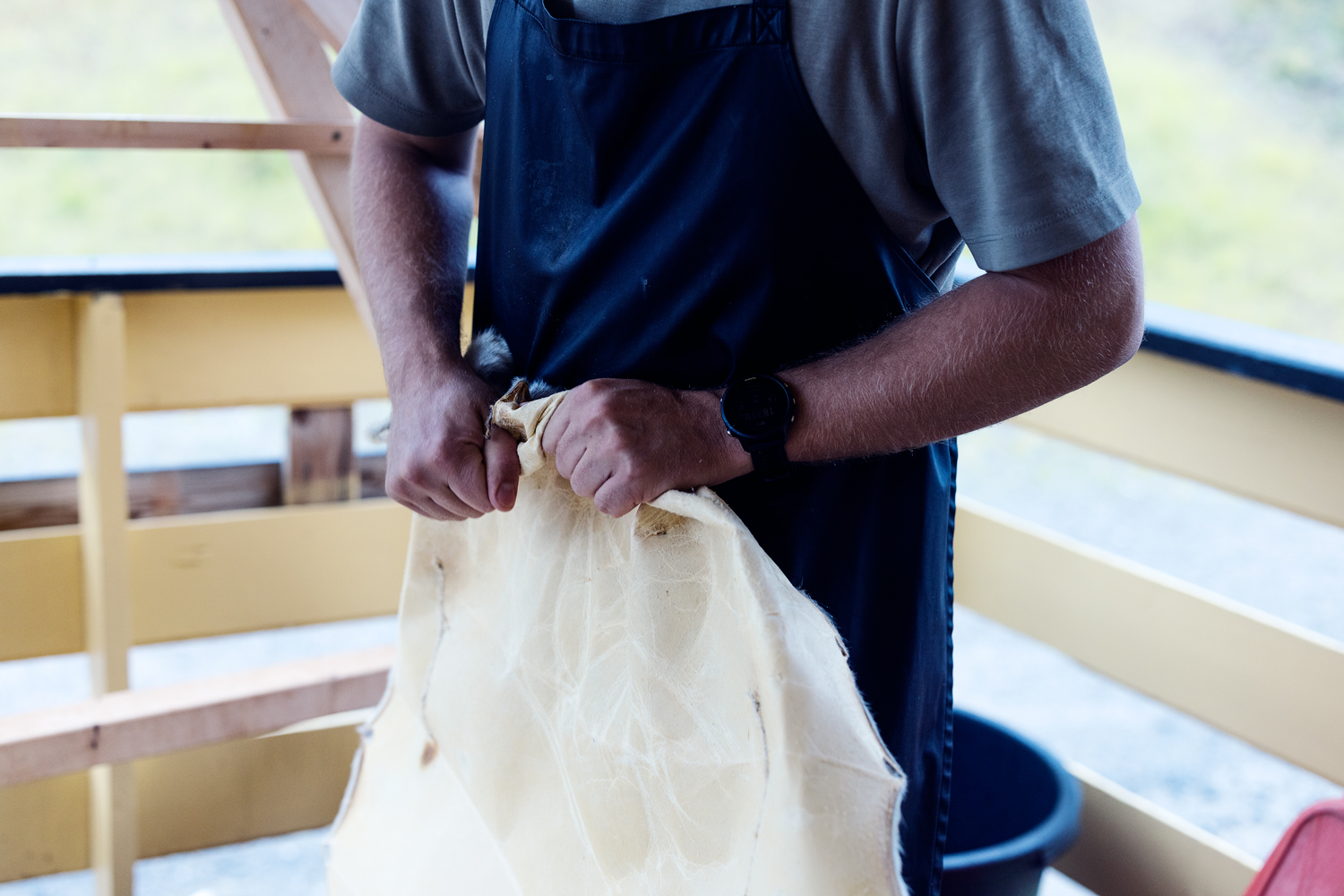
The Birgejupmi Project aims to strengthen community engagement, Indigenous Peoples’ knowledge and environmental decision-making in Arctic coastal regions in Sápmi and Kalaallit Nunaat (Greenland). Through the Birgejupmi project, Indigenous Knowledge holders have arranged courses on traditional seal hunting and craftsmanship. In one of the hands-on courses, Sámi participants could learn about seal hunting, tanning and sewing, while exploring their Sea Sámi heritage.
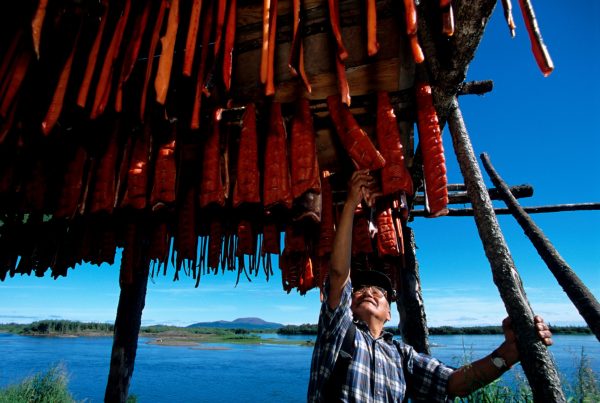
Two Inuit Knowledge holders from Kalaallit Nunaat participated in the course, and taught Sámi participants about seal slaughtering, sealskin preparations and sewing, as well as meat preparation and cooking. The course was a way of learning about seals as a vital cultural and ecological resource. Moreover, the Inuit instructors shared knowledge of traditional methods of drying and stretching sealskin, techniques still used in Canada and Alaska. This is an example of how knowledge sharing between Arctic Indigenous Peoples can be done in a meaningful and resourceful way.
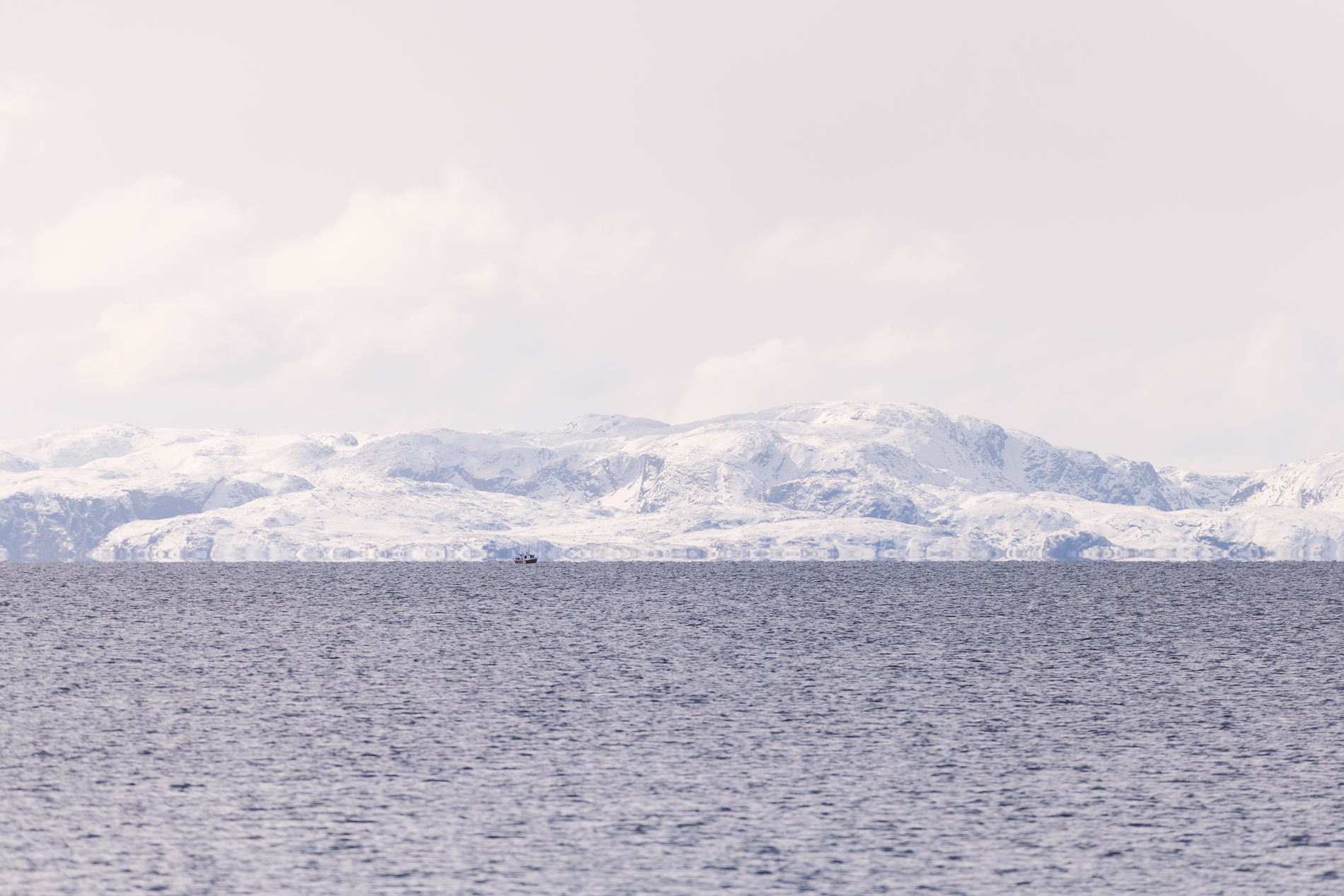
Over the past 40–50 years, Sea Sámi self-management of resources has been restricted by Norwegian authorities, leading to ecological imbalances in the ecosystems. In Porsáŋgguvuotna/the Porsanger fjord (Northern Norway), locals have noticed that there are too many seals and that seal health is deteriorating. Inuit knowledge holders were shocked when they saw the seals from Porsanger. The seals only had about 2cm-thick blubber, whereas in Greenland, the same seals have blubber nearly 10cm thick. The seals get thin when they can’t find enough food. The overpopulation of seals, combined with other factors, has caused ecological disruptions, including the disappearance of fish from the seabed.
The case study of Sea Sámi seal hunting underscores the importance of safeguarding Indigenous Peoples’ knowledge and their resource management. It connects to healthy ecosystems and sustainable stewardship of its resources. Moreover, it is a best practice example of how collaboration between different Arctic Indigenous Peoples can elevate revitalisation efforts of Indigenous knowledge and practices.
This research is supported by the European Union’s Horizon Europe Research and Innovation Programme under Grant Agreement No. 101182041 (BIRGEJUPMI: bridging knowledge systems for inclusive, resilient and prosperous Arctic coastal futures).