
The state of Oaxaca, in southeastern Mexico, is a global biodiversity hotspot with high endemism across cloud forests, pine‑oak forests, and tropical dry forests. It hosts endangered species such as margay (Leopardus wiedii), eastern spotted skunk (Spilogale putorius), Mexican bay leaf (Litsea glauscescens), and Hickel fir (Abies hickelii), as well as recently discovered species like the subterranean snake Yakacoatl tlalli, five new Echeveria plants, and amphibians including Thorius pinicola.
These ecosystems face threats from climate change, altered fire regimes, illegal logging by external actors, poaching, agricultural expansion, and outmigration. With 76% of the state under communal ownership by Indigenous and peasant communities, integrating traditional knowledge through participatory management is key for effective conservation. Within the framework of Other Effective Area-based Conservation Measures (OECMs), biocultural conservation can be a vital strategy for Oaxacan communities and their forests. By integrating local stewardship with ecological understanding, this approach actively safeguards wildlife habitats while sustaining Oaxaca’s unique biodiversity.
The Integrator of Indigenous and Campesino Communities of Oaxaca (ICICO), a civil society organisation governed by sixteen Indigenous communities in the state of Oaxaca, supports a biocultural conservation approach across more than 69,000 hectares of communally managed lands encompassing diverse ecosystems, livelihoods, and cultures. ICICO supports Indigenous communities through technical assistance and capacity building in sustainable forestry and forest-based carbon offsetting, while facilitating participatory land use and financial planning to guide collective decision-making.
These efforts have led to the designation of community-conserved areas, the development of sustainable management plans, and active reforestation using native species; these activities have yielded important results for the communities due to the increase in water capture and the creation of ideal conditions for fauna to return to the once impacted areas. Revenue generated from timber and carbon projects is reinvested in conservation and most of these investments are decided in the General Assembly of each community, where every active member decides the future and conservation efforts of the communally owned and managed forests. These strategies have created employment opportunities, particularly for women and youth, while supporting community-led enterprises such as ecotourism, sawmills, and water bottling, helping address local development needs.
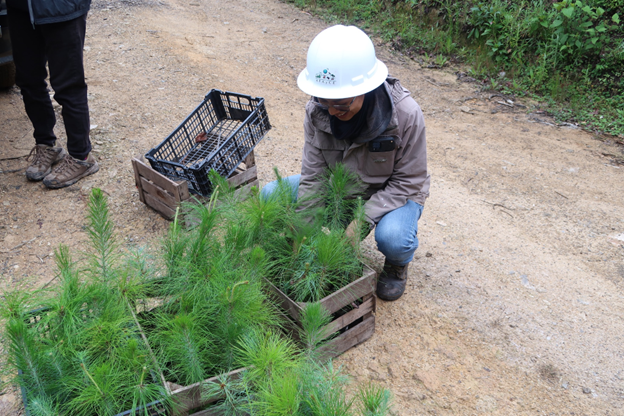
Caption: Preparation of seedlings for reforestation activities in La Trinidad Ixtlán. Credit: La Trinidad Ixtlán, ICICO AC, Nicholas School of the Environment at Duke University
Crucially, these initiatives have helped support communities’ own visions for social and ecological resilience. Co-developing conservation initiatives with communities allows them to address their key concerns using their traditional ecological knowledge. Vulnerabilities such as increased drought and wildfire risk, lack of local employment opportunities and infrastructure deficiencies, have been collectively managed, while also strengthening local governance practices based on assemblies and community service.
Building on a 20-year partnership between ICICO and Duke University, the Researching Oaxaca’s Socio-Ecological Systems (ROSES) research group was formed in 2022, bringing together interdisciplinary researchers from Duke University, North Carolina State University, the University of British Columbia, the University of Québec and Seattle University to co-design studies aligned with Indigenous values and community conservation goals. These studies were born from the communities’ need to better understand the positive and negative impacts of their management and conservation activities in their territories, and to generate evidence of such impacts so that they can be taken into consideration by the larger group of community members who make decisions and steer community development. Their work has focused, at this first stage, on community and forest dynamics, climate risk, and forestry.
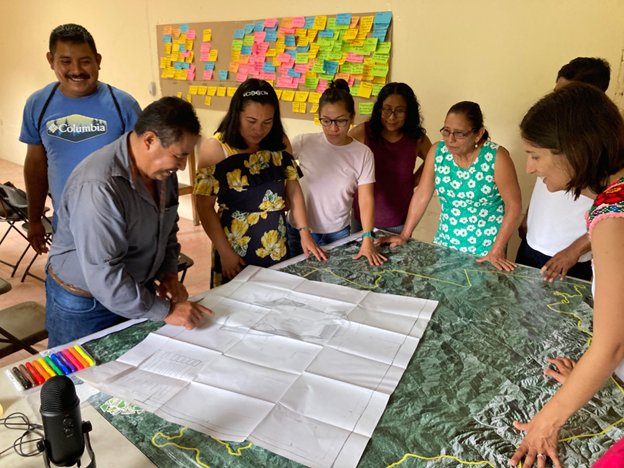
Caption: Conserving the territory is not an easy job, Participatory Planning Workshop to create past and future land use scenarios in San Juan Lachao. Credit: Andrea Alatorre Troncoso, San Juan Lachao
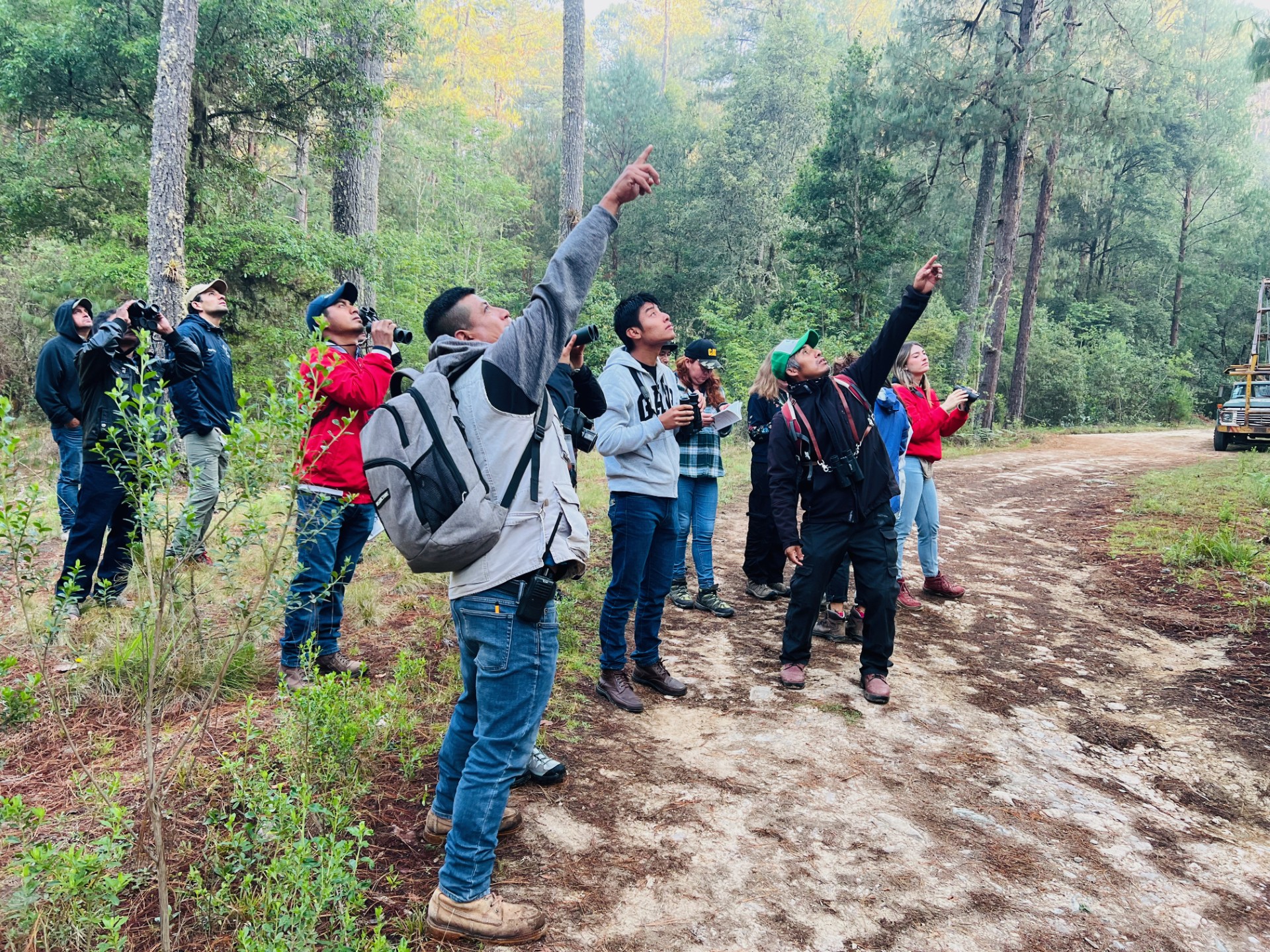
In 2024 and 2025, two neighbouring ICICO communities in the Sierra Norte region, San Miguel Abejones and Santa María Jaltianguis, launched a biocultural corridor project supported by participatory workshops and surveys implemented by the ROSES group. Community members have been actively involved in project design, implementation, data processing, and analysis, including wildlife monitoring.
“We were amazed when we found out that species we thought were extinct are still present in our territory.”
Lizeet Perez Martínez, Santa María Jaltianguis, Local Biodiversity Monitoring Initiative
“All the activities we perform on the land have an impact on biodiversity, from growing coffee to harvesting the forest. We were unaware that harvesting both coffee and timber can scare away Tapirs and Jaguars from our land.”
Job Jerónimo Bautista, San Pedro Teotlaxco, Comisariado de Bienes Comunales
These ICICO communities are also advancing diverse conservation initiatives. For example, the people of Santa María Jaltianguis conduct orchid conservation and tree diversity research, including a community-managed botanical garden and studies to inform sustainable forest management, in partnership with the ROSES group. These collaborative efforts support Indigenous leadership and participatory management, thereby enhancing biodiversity conservation, forest resilience, and community well-being across the territories.