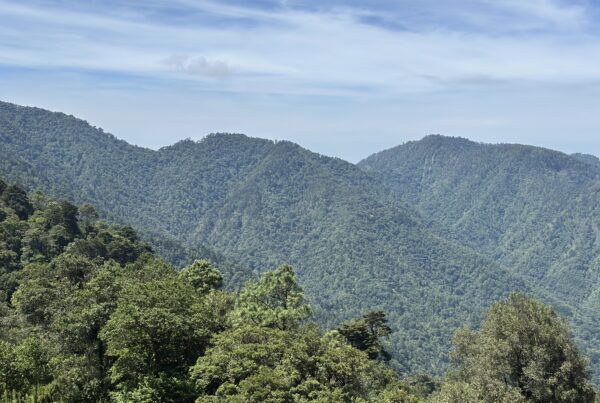

The village of Socoroma is located in the Putre commune, in the province of Parinacota, in the Arica and Parinacota Region, in northern Chile. Situated in the foothills of the Andes at an elevation of approximately 3,000 meters above sea level, it is characterized by agricultural terraces and high-Andean ecosystems.
It is part of the ancestral territory of the Aymara people. It is characterized by its cultural richness, its traditional terrace farming systems, and its connection to local biodiversity. It is a key territory for biocultural conservation.
Summary
Potato production in Andean communities forms an integrated system that brings together biodiversity, culture and social organisation. Based on ancestral knowledge, it takes place on agricultural terraces that help conserve soil and water, whilst the diversity of native potato varieties ensures food sovereignty and climate resilience. Seed selection and conservation, traditionally carried out by communities – particularly by women – are key to preserving genetic diversity. These practices are accompanied by spiritual dimensions, such as the ritual of the Pachallampe, and collective work systems such as ayni, minka, and yanapa, which strengthen social cohesion. Taken together, this system not only ensures agricultural production but also serves as a strategy for biocultural conservation and adaptation to environmental challenges, in line with the objectives of the Global Biodiversity Framework.
Territorial and productive rationale
Agriculture, particularly potato cultivation, is one of the main economic and cultural activities of the Aymara community in Socoroma. This practice takes place on agricultural terraces and steps, ancient techniques that enable efficient water management, soil conservation and adaptation to steep slopes. It is not merely a productive activity, but a comprehensive agroecological system that brings together knowledge of the climate, community organisation and spirituality.
Native potatoes, as a staple crop, are a pillar of Andean food sovereignty and the region’s biodiversity. Their production ensures food autonomy, preserves native varieties adapted to high-altitude conditions, and strengthens resilience to climate change. In this context, the conservation of traditional seeds represents a political and cultural act in the face of agricultural homogenization. This tuber symbolizes life and history.
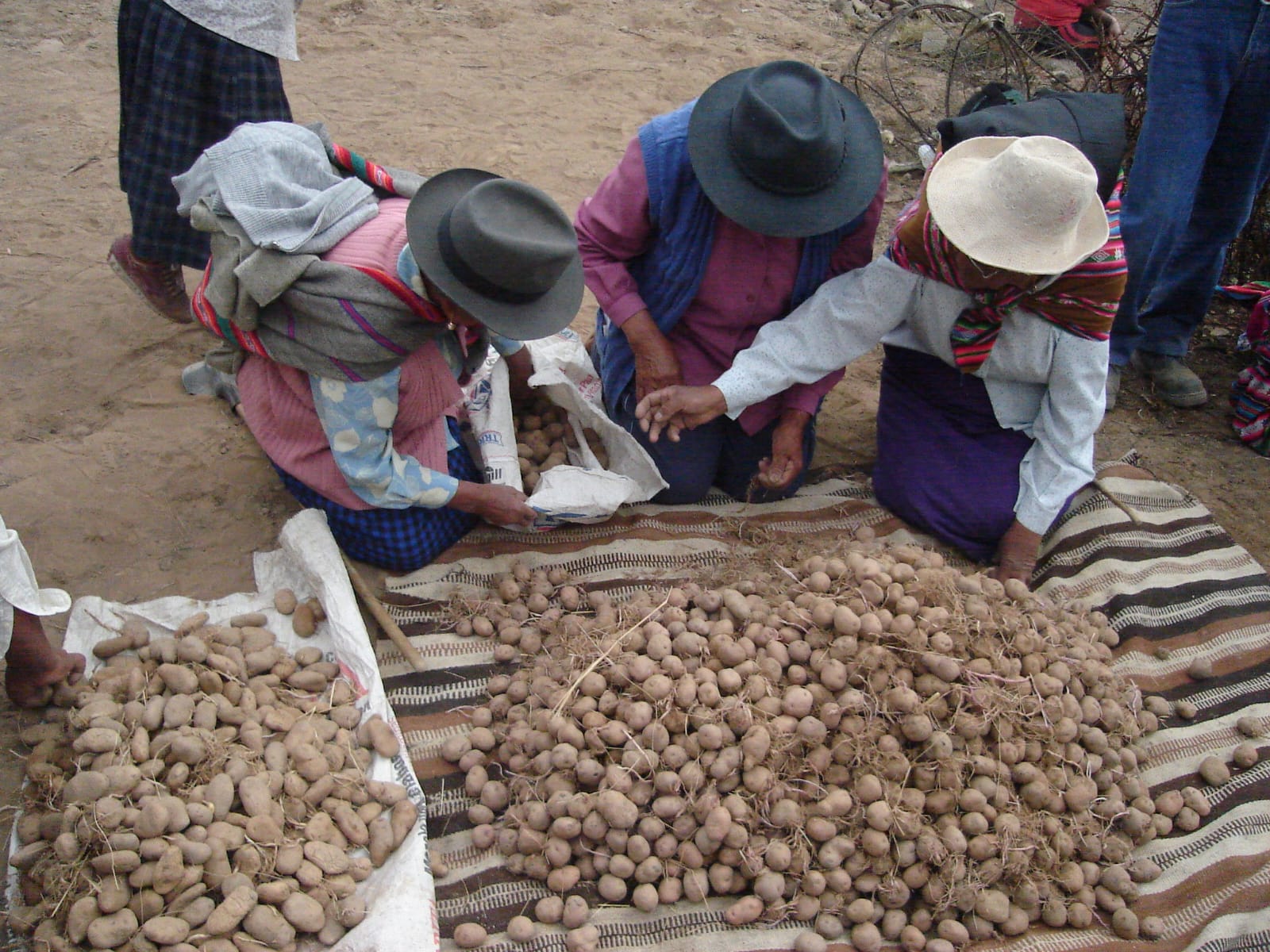
Potatoes and seeds are selected in May, at the end of the harvest; this is a taxonomic process carried out by local community members. Potatoes are selected for consumption, for sale, for seed, and for making chuño (a traditional method of dehydrating potatoes).
There are different varieties, shapes, colors, and flavors that have traditionally adapted to extreme conditions such as droughts and frosts—conditions that are now becoming increasingly common as a result of climate change.
Having a variety of seeds is key in the face of the climate crisis, as they serve as a genetic reserve for future generations and the future of agriculture in the region.
Potato farming is closely linked to ancestral knowledge, such as:
- Agricultural calendar
- Terrace farming technique
- Rituals for Mother Earth (Pachamama).
The Pachallampe: the spiritual dimension of agriculture
Agricultural production is accompanied by the Pachallampe, an ancient agricultural ceremony held during the potato planting season. Etymologically:
- Pacha: earth, world or space-time
- Llampe: to sow.
Pachallampe therefore means ‘sowing the earth’, but its meaning goes beyond the literal: it implies the renewal of the bond between the community, the land and spiritual forces.
The ritual marks the preparation of the land into terraces and is generally performed between October and November, before the start of the Altiplano rainy season. It is accompanied by traditional music, creating a true celebration of production. The ritual aspect reaffirms the reciprocal relationship with Mother Earth and acknowledges that fertility depends as much on human labor as on spiritual balance. In this ritual, the mayordomos (a system of religious offices) and the community members interact. The ch’onteros (men) wear chontas (tools for turning the soil) to make holes in the ground, and the women place the potato seeds in these holes. This takes place in the fields, alongside coca leaves and flower wreaths. It is a ritual that honors the community’s memory and traditional history, in which offerings are made to the deities in order to ensure a bountiful harvest.
The rhythm of the music in the Pachallampe ritual is played on traditional instruments: guitar, violin, and accordion.
Community organisation and collective working systems
Potato production is organized according to traditional principles such as ayni, minka, and yanapa:
- Ayni: reciprocity between families
- Minka: collective community work
- Yanapa: charitable aid.
These systems not only optimize the workforce under challenging environmental conditions, but also strengthen social cohesion and the intergenerational transmission of knowledge.
Strategic importance
Pachallampe and traditional potato farming are essential because:
- They keep Aymara culture and spirituality alive
- They strengthen the sense of community and collective organisation
- They preserve traditional farming practices adapted to the highlands
- They protect traditional potato varieties, which are essential for biodiversity and food sovereignty.
In this regard, the work in Socoroma is not merely cultural; it is a concrete strategy for territorial defense, biocultural preservation, and the strengthening of indigenous governance in the face of contemporary environmental challenges.
Activities
- Reviving and strengthening traditional knowledge relating to potato production as a strategic pillar of food and cultural sustainability in the Andean region
- A livelihood plan centred on potato production, such as the protection of potato seeds, to strengthen sustainable production systems
- Fortalecimiento de las autoridades tradicionales, con énfasis en la participación de las mujeres indígenas, condición para asegurar la alimentación familiar y colectiva
- Reviving cultural practices relating to potato production as measures to mitigate and adapt to climate change
- Restore the variety of potato seeds that remain in Socoroma.
Links to the Kunming-Montreal Global Biodiversity Framework
All the actions undertaken by the Aymara community of Socoroma contribute to Targets 8, 10 and 23 of the Kunming-Montreal Global Biodiversity Framework (KMGBF), through their experience of potato production.
Target 8, which aims to minimise the effects of climate change on biodiversity and promote resilience, contributes to the achievement of the 2030 Agenda for Sustainable Development. At the same time, progress towards achieving the Sustainable Development Goals and realising sustainable development in its three dimensions (environmental, social and economic) is necessary to create the conditions required to meet the objectives and targets of the KMGBF. In this context, potato production by the Aymara community of Socoroma contributes to both agendas by being based on integrated management and the conservation of soil and water, under the concept of fallow land and productive land, in accordance with the land-use rotation system.
Target 10 aims to promote more sustainable agricultural practices. Traditional knowledge about the potato reflects the vision of the KMGBF, as it promotes a harmonious relationship with nature through the conservation of multiple native varieties, the sustainable use of resources and the maintenance of ecosystems. These practices, developed by the Aymara people, enable biodiversity to be valued and protected, whilst ensuring essential benefits such as food security and the well-being of communities, in line with the goal of living in harmony with nature by 2050.
Target 23 highlights the importance of gender equality in biodiversity conservation. In this context, women play a vital role in seed selection and conservation, and their traditional knowledge forms an essential foundation for research and sustainable development. Women’s indigenous knowledge and expertise in potato seed collection highlight the importance of capacity-building, promoting innovation and facilitating inclusive access to technology.
Potato production in the Andean regions is not merely an agricultural system; it is a way of life that integrates biodiversity, culture, spirituality and social organisation. Reviving and strengthening this system represents a comprehensive strategy for climate resilience, food sovereignty and indigenous self-determination.
Biodiversity conservation
Protecting native potatoes means protecting ecosystems:
- Traditional agricultural soils
- Pollinators
- Cultural landscapes such as Andean terraces.
The conservation of traditional seeds is the key customary practice for food sovereignty among Aymara communities. By safeguarding and exchanging seeds, indigenous farming families maintain control over their territories and crops, avoiding dependence on commercial seeds and preserving the unique varieties that are part of their territorial identity. This knowledge is passed down from generation to generation, strengthening the continuity of traditional knowledge.
Conservation is a comprehensive strategy that integrates biodiversity, food security, and climate resilience, and is essential for the sustainable development of Andean communities.
Food for thought
Potato production, within the framework of the Kunming-Montreal Global Biodiversity Framework Targets, must focus on conserving biodiversity through the protection and use of native varieties, as well as on implementing agroecological practices that protect the soil, water, and ecosystems. It is also essential to promote sustainable agricultural systems that strengthen climate resilience, such as crop diversification and the revival of traditional knowledge, including agricultural calendars and ancestral techniques.
Similarly, it is essential to recognize and strengthen indigenous knowledge, particularly the role of women in seed selection and conservation, by ensuring their participation, access to training, and recognition in decision-making. Integrating this knowledge with technical cooperation enables progress toward more sustainable production systems that are adapted to the local context. Together, these actions contribute to food sovereignty, biocultural preservation, and the achievement of global biodiversity goals.