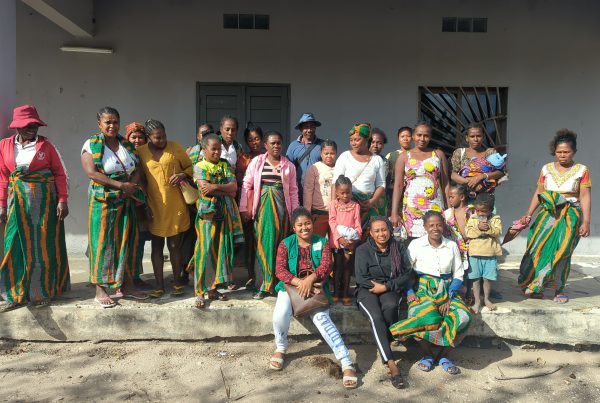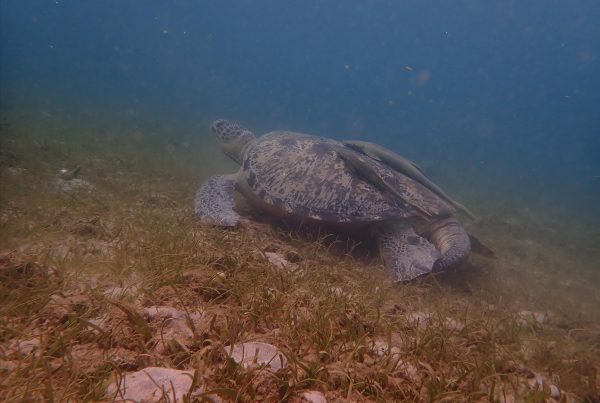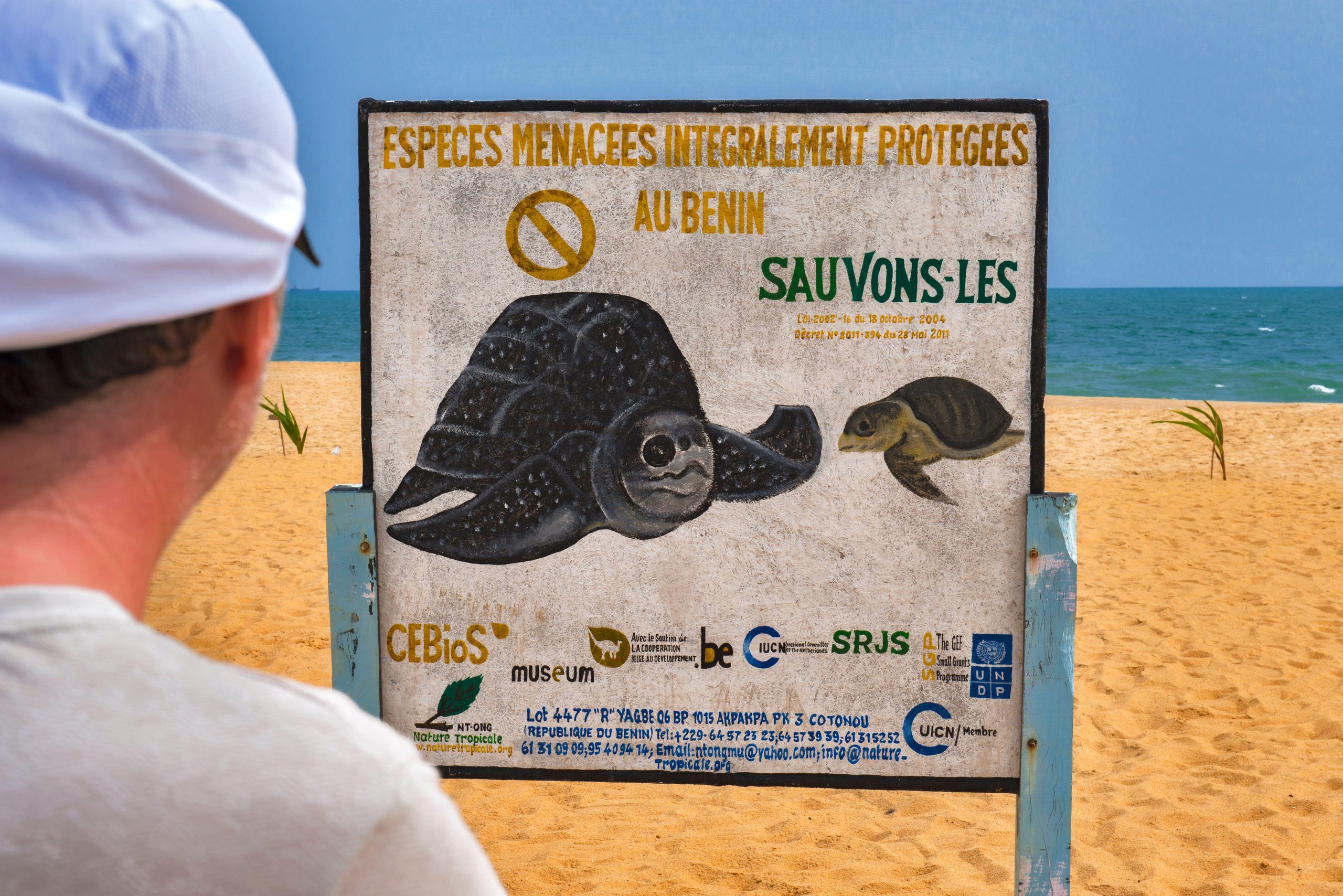

Benin, a French-speaking country in West Africa, has a coastline of 125 kilometres with several beaches where small-scale fishermen, fishmongers and their children live and carry out their small-scale fishing activities. Three species of sea turtle regularly visit the beaches along the Beninese coast each year. These are the olive ridley turtle, the leatherback turtle and the green turtle.
Sea turtles are highly endangered in Benin and local communities are very active in their sustainable conservation
Sea turtles are migratory species, very peaceful and defenceless marine reptiles that spend almost their entire lives at sea; only the females come ashore periodically to lay their eggs on safe beaches in order to perpetuate and sustain the species. Sea turtles feed on jellyfish. They help to maintain the balance of their natural habitat, the sea. Sea turtles make a significant contribution to the local economy through ecotourism; Costa Rica is an excellent example of this.
These sea turtles are very often exposed to several proven threats, including: injuries and mortality at sea caused by boats, fishing gear such as nets, the destruction of nests containing large quantities of eggs – which are also destroyed by coastal communities – stray dogs on beaches, the death of hatchlings caused by ghost crabs, and the systematic collection of eggs and turtles by local communities for sale and for consumption of their meat. The shells are also sold to be used as art objects.
“At first, some people tried to capture or poach turtles and their eggs with impunity, which made our work somewhat risky, difficult and complicated. But as the days, months and years went by, thanks to the support of the authorities and forest rangers, these practices have decreased considerably. Awareness-raising continues and remains essential for the sustainable protection of sea turtles in Benin.”
Testimony provided by the eco-rangers Amidou, Eric Alavo, August Agbotrou and Bienvenu Djossou
Organising local communities as eco-guards to protect sea turtles on the beaches of Benin
Faced with these threats to sea turtles in Benin – which, if left unchecked, will lead to their extinction – local communities have come together and organised themselves into eco-guards with the support of the NGO Nature Tropicale, with a view to protecting these iconic species.
“We are committed to this cause because sea turtles are threatened with extinction, yet they are essential to the marine ecosystem. Protecting these aquatic wildlife species also means preserving the environment and the future of current and future generations, whilst raising awareness amongst the public, communities, decision-makers, young people, children and so on.”
Testimony given by the eco-guards Amidou, Eric Alavo, August Agbotrou, Bienvenu Djossou, Martin Agbotrou, Sylvain Dehou and Prosper Kosouho
Local communities carry out night-time patrols equipped with torches, information collection forms, tongs, rings, pens and tape measures. They monitor the pathways and nests of sea turtles, as well as nests containing eggs laid by sea turtles. If local communities find sea turtles laying eggs, they wait until the laying process is complete, measure the turtles and release them back into the sea.
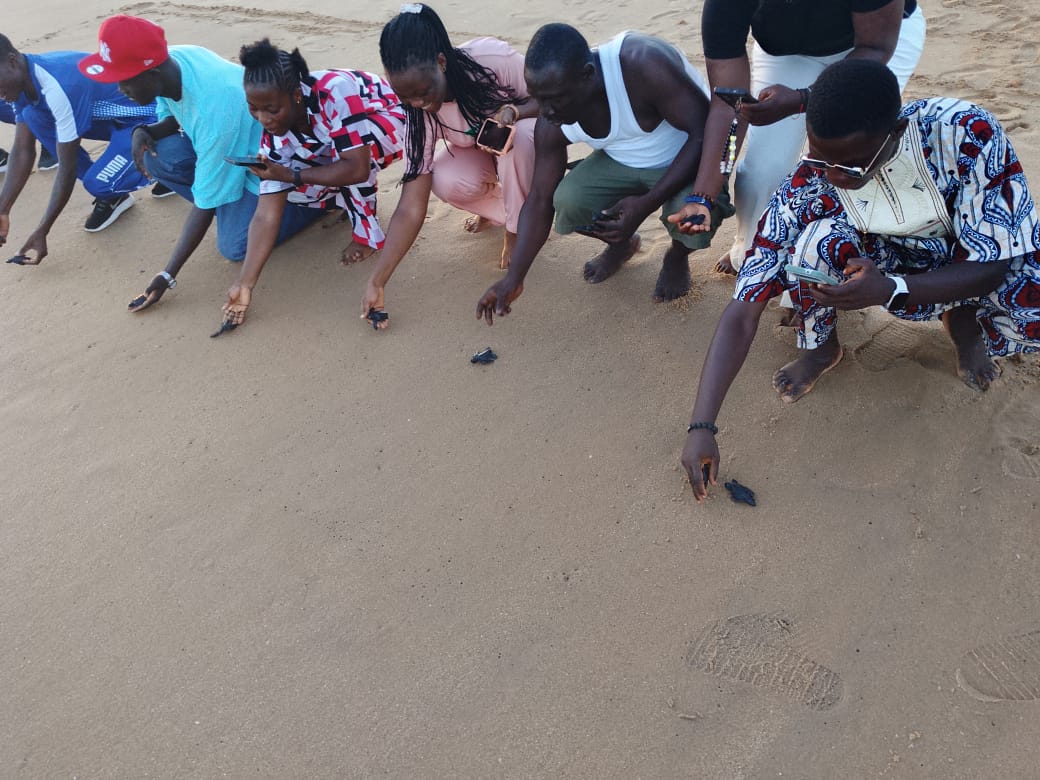
They then collect the eggs and store them in secure enclosures to protect them from predators such as poachers, stray dogs and ghost crabs. The eggs hatch after a maximum of 45 days and the hatchlings are released into the sea, sometimes under the watchful eye of the tourists who have sponsored them.
The role of ecotourism
After the eggs hatch, around 1 per cent of the hatchlings are kept for a few days so that they can be sponsored by tourists before being released into the sea. As soon as they are placed on the beach, the hatchlings instinctively and systematically make their way towards the sea, no matter where on the ground they are placed: a mystery??? Intuition??? The strongest, liveliest and fastest hatchlings reach the sea more quickly, within a few minutes, and are carried away by the waves; the others, who are less vigorous, get a helping hand from the tourists who accompany them to the sea.
It is a real spectacle, much enjoyed by everyone, with shouts of joy and voice messages of farewell and good luck to these released baby turtles, which will continue their life cycle in the sea, facing further threats, to the extent that only 2 per cent of them will grow up to become adults, amongst whom the females will return to the beaches to lay their eggs. This is how the cycle of sustainability and perpetuation of this marine biodiversity resource is fulfilled.
“Our work as eco-guards has enabled us to meet visitors, including many foreigners as well as locals, schoolchildren, university students and sixth-formers, which has allowed us to build networks of friendship. It has also enabled us to receive donations from tourists. On a personal level, seeing the baby turtles reach the sea gives us great satisfaction and a sense of fulfilment.”
Testimony given by the eco-guards Amidou, Eric Alavo, August Agbotrou, Bienvenu Djossou, Martin Agbotrou, Sylvain Dehou and Prosper Kosouho
Raising public awareness
Before 2000, despite Benin’s ratification of the Convention on Biological Diversity, the existence of the Abidjan Memorandum on the Protection of Marine Turtles in West Africa and other regulatory texts, the situation regarding marine turtles was a cause for concern. They faced several well-documented threats, known to all, due to a general lack of awareness of the conventions and regulations designed to protect them. It was only after the 2000s that, thanks to information, awareness-raising and public education campaigns carried out by the NGO Nature Tropicale, sea turtles – these defenceless and harmless migratory species – began to find some peace on the beaches along Benin’s 125-kilometre coastline.
“Since the start of our work, destructive practices and threats have decreased considerably. The presence of the police, who work in close collaboration with us, the eco-guards, as well as the numerous awareness-raising sessions organised in schools and for the general public by the NGO Nature Tropicale, have raised awareness amongst local residents, schoolchildren and decision-makers at various levels, who are now also involved in the protection of sea turtles.”
Testimony given by the eco-guards Amidou, Eric Alavo, August Agbotrou, Bienvenu Djossou, Martin Agbotrou, Sylvain Dehou and Prosper Kosouho
Public information and awareness-raising campaigns, supported by the media, and the initiative by local communities themselves to establish a National Sea Turtle Day on 8 January each year – dedicated to the protection of sea turtles for over 20 years now – have contributed enormously to the return of sea turtles to Benin.
Following this work, in January 2022 the Beninese government took a historic decision, during a Cabinet meeting, to create two Marine Protected Areas. This could have been a positive development for the communities and for the environment. Unfortunately, the process of establishing the Marine Protected Areas did not involve consultation with the coastal communities holding customary rights in these areas, and the future of their rights in the area remains uncertain.
Furthermore, although these Marine Protected Areas exist on paper, there has yet to be any genuine implementation – for example, there is no management plan. Meanwhile, activities by private actors that are harmful to the environment and infringe upon communities’ rights – such as the sale of beachfront land for high-end tourist resorts catering to international tourists – continue in these areas. To date, therefore, these Marine Protected Areas have significantly undermined communities’ rights, without even offering clear benefits for marine biodiversity.
Despite this situation, there have been some positive developments. For example, the Cotonou Port Authority and other private companies whose activities have a negative impact on the survival of sea turtles have begun to take measures to reduce their negative impact on beaches and sea turtles.
Conclusion
Local communities in Benin, who live alongside marine resources, are doing a tremendous job of protecting sea turtles, which face numerous threats. They need everyone’s support and encouragement to continue their voluntary work in the long term and to give sea turtles a chance of survival.