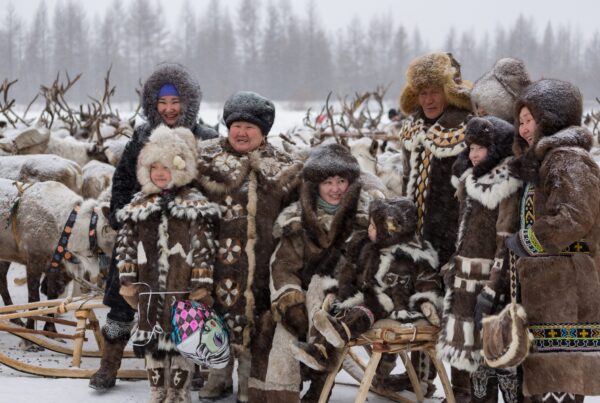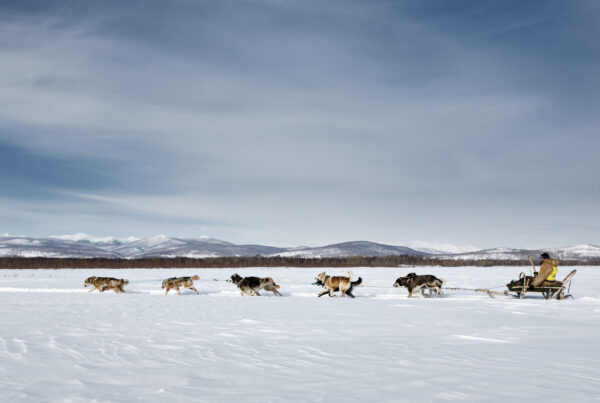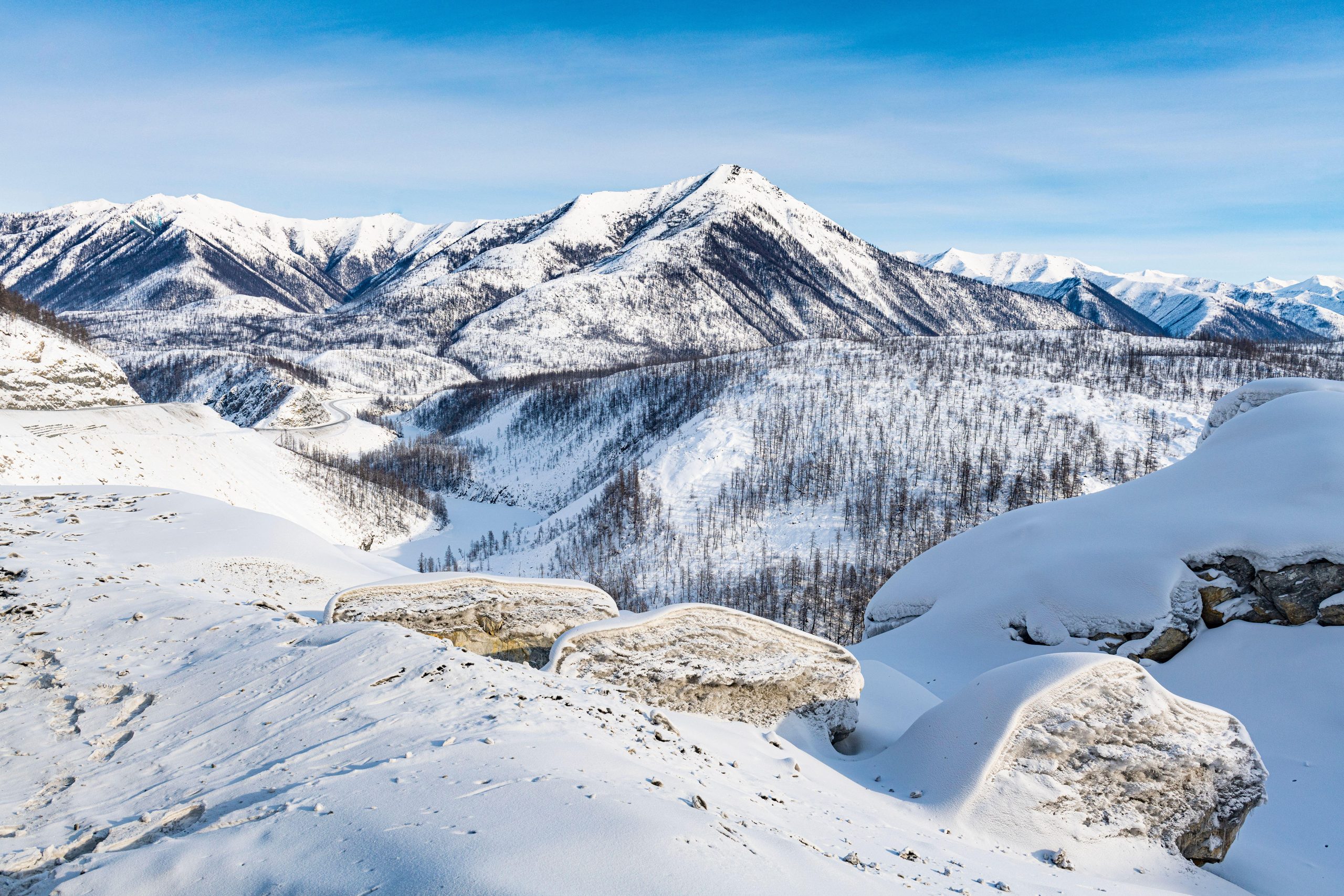

In recent years, the Russian government has been placing increasing restrictions on Indigenous Peoples’ practices and governance, which has led to a worrying rise in the criminalisation of Indigenous Peoples carrying out their customary sustainable practices.
Indigenous Peoples’ freedom to carry out their customary practices is now severely limited. They can only exercise their rights in a small list of territories that the Russian state recognises as Indigenous land, and in the rest of their ancestral territories they have very little power. For example, the government can issue licences to external actors to use natural resources on ancestral lands without any engagement from the Indigenous Peoples who live there, and they are limiting the allocation of plots of land to communities as well.
Equally, Russian legislation has no concept of reindeer pastures, which means the traditional practice of reindeer herding is under significant threat. Getting official recognition as an Indigenous Peoples’ representative, which would allow them to push for more decision-making power, has also become more bureaucratic and harder to achieve.
Territories of Traditional Nature Use: a tool to protect Indigenous rights
Under these circumstances, one of the tools to protect Indigenous rights is the Territories of Traditional Nature Use (TTP in Russian) of the Indigenous Peoples of the North, Siberia, and the Far East of the Russian Federation (hereinafter referred to as TTPs or “territories of traditional nature use”). These are specially protected areas established to enable the traditional use of natural resources and the traditional way of life of the Indigenous Peoples of the North, Siberia, and the Far East of the Russian Federation.
The Republic of Sakha (Yakutia) has enacted Law No. 756-III of July 13, 2006, “On the Territories of Traditional Nature Use of the Indigenous Peoples of the North of the Republic of Sakha (Yakutia).” Territories of traditional nature use are registered and entered into the cadastral registry as zones with special conditions. Today, in Yakutia, 63 territories of traditional nature use of local significance have been established through the decisions of local self-government bodies.
The first Territory of Traditional Nature Use was the Olenek TTP, established on June 5, 2003, and covering the entire 318,000-square-kilometre district. The main goal of the TTP is to preserve the ancestral habitats of the Indigenous Peoples of the North. The right to maintain a traditional way of life and engage in traditional forms of economic activity is protected and guaranteed. This includes through collaboration with industrial companies, such as diamond companies.
The Olenek TТP is home to the region’s leading TTP. Indigenous governance bodies have worked to draft, develop and approve important documents that protect their rights to live a traditional lifestyle even when large companies are working on that land.
Important documents have been developed and adopted, including the:
- Roadmap for Cooperation Between Industrial Companies and Indigenous Peoples of the North in the Territory of Traditional Natural Use and Traditional Economic Activities of the Indigenous Peoples of the Olenek Evenki National District
- Procedure for Issuing Permits for the Right to Be Located on the Territory of Traditional Nature Use of the Indigenous Peoples of the Olenek Evenki National District of the Republic of Sakha (Yakutia)
- Rules of Conduct on the Territory of Traditional Nature Use of the Indigenous Peoples of the Olenek Evenki National District of the Republic of Sakha (Yakutia)
- And others.
It is the status of TTP that Olenek has that allows them to coordinate activities in licensed areas when companies are engaged in intensive industrial development of the territories. For example, current companies in the territories include:
- The diamond company ALROSA, which is implementing a project at the Verkhne-Munskoye diamond deposit
- “Almazy Anabara,” which is operating at several mineral deposits
- Vostokinzhiniring LLC, which is engaged in a project to develop rare earth metals at the Tomtor mineral deposit.
Social cooperation agreements have been signed with each of these companies, and the district receives compensation payments. This also allows them to require that newly established industrial companies be registered in the district. Thus, Vostokinzhiniring LLC is now registered in the village of Olenek and pays taxes to the municipal budget.
Another achievement of the TTP was the establishment of local holidays – Tugunk Day (named after a local fish species that is very popular in Yakutia) and Olenek River Day – to raise awareness about environmental protection and biodiversity conservation.
Creating space for dialogue with scientists, experts and companies
To discuss issues related to the functioning of Traditional Territories of Nature Use (TTPs), republic-wide forums for the TTPs of the Indigenous Peoples of the North have been held in Olenek since 2022. Representatives of various TTPs, scientists, and experts analyse the situation, share their experiences and best practices, familiarise themselves with new legal practices, and develop proposals for legislative and executive authorities, local government bodies, and economic entities.
It is important that representatives of industrial companies participate in the forum, where they discuss practical issues related to establishing dialogue and cooperation aimed at protecting the rights of Indigenous Peoples and local communities.
Most importantly, these forums lead to the implementation of concrete measures aimed at developing traditional occupations such as reindeer herding and protecting the lands of the peoples of the North.
For example, a decision was made to monitor the presence of undocumented individuals who come to the territory to carry out hunting, fishing, or geological scoping exercises without licences within the TTP territory. To this end, agreements were signed with mobile network operators, who began providing information on such violators. ALROSA also recently funded a project to document the sacred sites of the Indigenous Evenks within the district. Additionally, at the republican government level, following the Forum’s recommendation, procedures are being developed to monitor the ethnological situation and the impact on the traditional way of life of the Indigenous Peoples of the North when subsoil users implement industrial development projects.
There are still a number of issues that need to be addressed, including zoning of the TTP, registration and cadastral records of such territories, and inclusion in the federal List of Types of Zones with Special Conditions for the Traditional Territories Nature Use, and much more.
Therefore, the Olenek TTP continues to operate and address its main objective: preserving ancestral lands for future generations.